Introduction
Beef tallow was America's go-to cooking fat for generations — the reliable workhorse in cast iron skillets long before vegetable oils became kitchen staples in the mid-20th century. Today, it's making a strong return. Menu mentions jumped over 40% between 2023 and 2024, and home cooks, steakhouses, and health-conscious households are rediscovering what earlier generations already knew: tallow delivers exceptional high-heat performance and rich, savory flavor that seed oils rarely replicate.
Most home cooks know tallow is worth using — the real question is how to use it well. Getting quantity right, reading pan temperature accurately, and avoiding excess smoke or greasy results takes a bit of know-how.
This guide covers everything you need:
- How to select quality tallow
- How to manage heat for different applications
- When to reach for tallow versus another fat
- How to store and reuse it properly
Key Takeaways
- Beef tallow has a smoke point around 400°F — stable and effective for searing, frying, and roasting
- Pasture-raised, well-marbled cattle produces tallow that tastes cleaner and richer than commodity fat
- Preheat the pan, then add 1–2 tablespoons of tallow for proper browning
- Best applications: steaks, burgers, potatoes, roasted vegetables, and sautéed aromatics
- Store opened tallow in a sealed glass jar — refrigerate up to three months, or freeze indefinitely
When Should You Cook with Beef Tallow?
Tallow earns its place in specific cooking contexts — high heat, direct contact, and savory applications. Use it where you want heat stability and a rich, beefy undertone. Skip it for delicate fish, light vinaigrettes, or anything calling for a neutral flavor profile. Treating it as a one-size-fits-all fat wastes product and muddies flavors.
Where tallow performs best:
- Medium-high to high heat — searing, deep frying, shallow frying, oven roasting
- Direct-contact cooking — cast iron skillets, stainless pans, griddles
- Sustained heat environments — home stovetop cooking, BBQ, professional steakhouse kitchens
The most common mistake is using too much, or applying it to low-heat preparations where the beefy character competes with lighter ingredients. A thin coat in a ripping-hot cast iron pan is where tallow does its best work.
What You Need Before Cooking with Beef Tallow
Equipment
- A cast-iron skillet or heavy-bottomed stainless pan retains and distributes heat evenly, which matters for tallow's high-heat performance
- Kitchen or infrared thermometer — confirms exact oil temperature before food hits the pan; infrared reads surface temps, probe thermometers measure internal food or volumetric oil temps
- Keep a fine mesh strainer and cheesecloth on hand if you plan to reuse tallow after cooking
- Glass jar with tight-fitting lid for storage — plastic absorbs fat odors over time
Sourcing Quality Tallow
Tallow quality reflects the source animal. Fat rendered from well-marbled, pasture-raised beef — like 7 Brown Farms' American Black Angus, USDA-inspected and custom grain-finished in the Missouri Ozarks — produces cleaner, richer-flavored tallow compared to fat rendered from commodity-grade trimmings.
What to look for on labels:
- Single-ingredient, minimally processed
- No additives (though FDA-permitted antioxidants like tocopherols at 0.02% or less are acceptable for shelf stability)
- Off-white to pale yellow color when solid
- Source information (grass-fed or grain-finished, single estate vs. blended)
Starting Quantity Guidance
Most home cooks use too much tallow at first. Use these practical anchors:
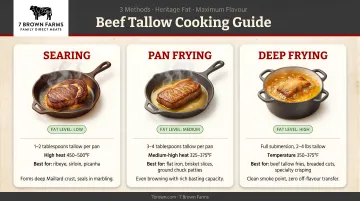
- Pan searing calls for a thin coat — about 1 tablespoon
- Shallow frying: bring tallow one-third up the side of the food
- Deep frying or confit: Full submersion
Measure and have the right amount ready before applying heat.
Prep State of the Fat
One more step worth doing before the pan goes on the burner: let your tallow reach room temperature or pre-soften it slightly. Cold tallow straight from the refrigerator causes uneven initial heat distribution and slows pan recovery time once you add food.
How to Cook with Beef Tallow Step-by-Step
Good results with tallow come down to sequence. Skipping steps — like adding cold fat to a cold pan or eyeballing temperature — leads to poor crust development, excess smoke, or greasy food.
Setup and Preparation
Preheat the pan over medium-high heat before adding tallow. When tallow hits the surface, it should shimmer and flow freely within 30 to 60 seconds — this signals the pan is at working temperature.
Visual cues:
- Thin shimmer across the surface — pan is ready
- Immediate rolling smoke — reduce heat before adding food
The most common setup error is heating tallow and pan together from cold. This produces uneven rendering and weaker browning — two things that undercut everything tallow is good for.
Cooking at Temperature
Tallow's behavior during cooking is a real-time temperature indicator:
- Steady shimmer with fine vapor — Correct working range near 350–400°F
- Active rolling smoke — Reduce heat immediately
Tallow's higher smoke point than butter or olive oil gives a wider working range, but it still requires monitoring.
Quantity behavior by method:
- Searing: Thin layer across the pan bottom
- Shallow frying: Fat reaching one-third up the food
- Deep frying: Full submersion
Avoid overcrowding the pan. Adding too much food at once drops temperature rapidly and stalls crust formation — which is the whole point of cooking with tallow in the first place.
Monitoring and Finishing
What to watch during cooking:
- Consistent, vigorous sizzle — Indicates correct working temperature
- Fading or weak sizzle — Pan is losing heat; adjust burner up slightly
How to properly conclude:
- Remove food and allow excess tallow to drain briefly
- For reuse, strain warm liquid tallow through cheesecloth into a glass jar
Signs tallow should not be reused:
- Dark color
- Off or rancid smell
- Foam that does not dissipate after cooling
Best Foods to Cook with Beef Tallow
Searing Steaks and Burgers
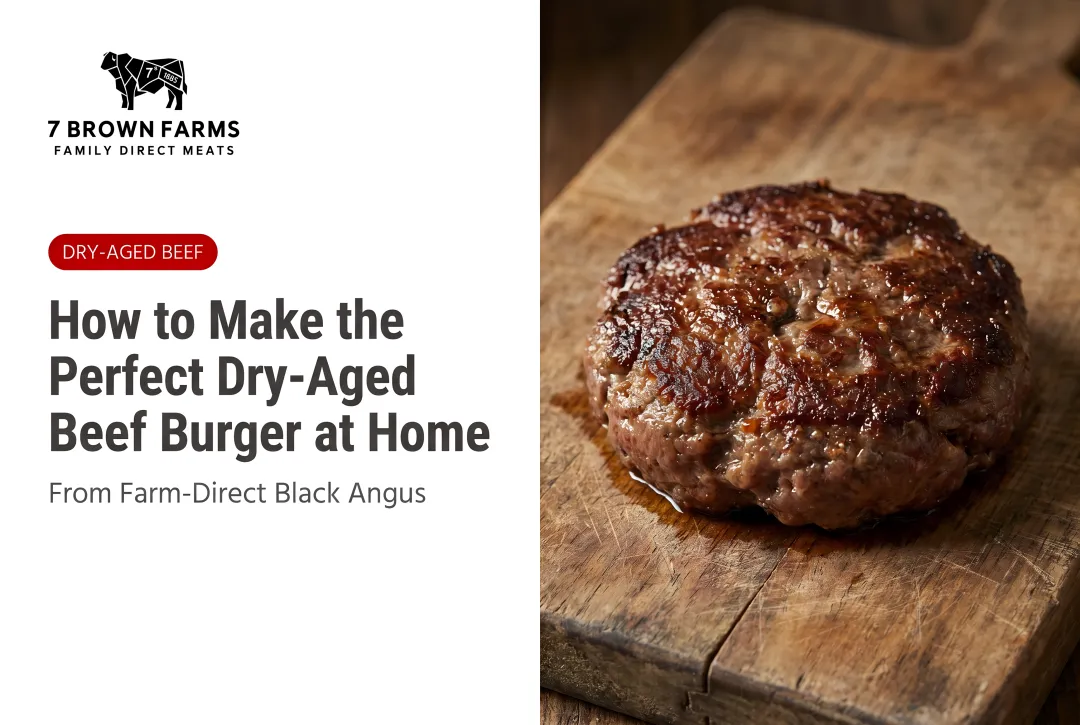
Tallow is the right fat for searing. Its high smoke point and saturated fat composition drive the Maillard reaction — the browning process between amino acids and sugars that builds complex flavor — while the subtle beefy richness produces a crust seed oils simply can't replicate. Add 1–2 tablespoons to a hot cast-iron pan before laying down the protein.
Frying and Roasting Potatoes
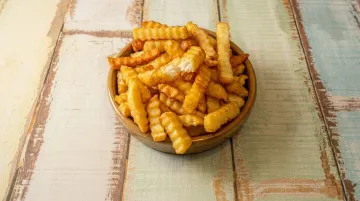
Tallow was the original fat behind the superior french fries of earlier fast-food generations. McDonald's used a blend of 93% beef tallow and 7% cottonseed oil from 1949 until 1990, when they switched to vegetable oil under pressure from anti-cholesterol campaigns.
What makes it work technically:
- High heat stability creates crisp exterior, fluffy interior
- Tallow solidifies as fries cool, limiting oil absorption and maintaining crispness
The same heat-stability that makes tallow ideal for frying also works for roasting. Carrots, parsnips, and Brussels sprouts all caramelize cleanly in tallow without the fat breaking down before the vegetables do.
Sautéing Aromatics and Vegetables
Mushrooms, onions, and garlic cooked in tallow develop deeper browning and more pronounced umami compared to butter or olive oil. Fat stability plus heat retention allows sustained Maillard browning without burning.
What NOT to Cook with Beef Tallow
Tallow does not work well for:
- Delicate white fish (sole, flounder, tilapia) — Savory fat competes with clean, mild ingredient
- Recipes requiring truly neutral flavor — Tallow has a subtle but distinct beefy character
- Traditional Mediterranean-style dressings or preparations — Fruity or herbal oil notes are integral to these dishes
Best Practices for Getting Consistent Results
Use Less Than You Think
Tallow is more calorie-dense and flavor-forward than neutral oils. One tablespoon of tallow delivers the cooking performance of two tablespoons of a lighter oil. Start with a measured amount and adjust, rather than pouring freely.
Match Tallow Quality to the Dish
Reserve your best, cleanest tallow for dishes where fat flavor is front and center — steak searing, fried potatoes, eggs. Use lightly browned or older tallow for cast iron seasoning or vegetable roasting, where flavor precision matters less. This discipline extends your tallow supply and maintains quality.
Control Heat Actively, Not Passively
The most experienced tallow users adjust their burner throughout the cook:
- Reduce heat slightly once food is added to compensate for the temperature drop from cold proteins
- Increase as needed to maintain a vigorous sizzle
- Pull off heat briefly if fat begins to smoke heavily — tallow recovers quickly once you return to medium-high
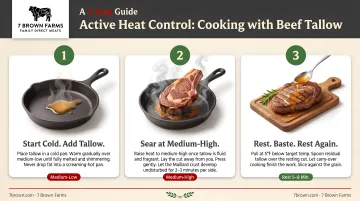
Cooking at maximum heat throughout is a common mistake that produces burned fat, not better browning.
Conclusion
Cooking with beef tallow comes down to one principle: fat follows heat, and your job is to stay ahead of it rather than react. Once that clicks, everything else — temperature control, pan selection, smoke point awareness — becomes second nature.
Done right, tallow:
- Protects and deepens flavor without masking it
- Reduces cooking fat waste through high reusability
- Elevates everyday meals, from a fried egg to a seared steak
The fat you cook with is only as good as the beef it came from. At 7 Brown Farms, our 100% American Black Angus cattle are raised on Missouri Ozark pastures without hormones or additives — which means the tallow rendered from our cuts is clean, rich, and worth keeping.
Frequently Asked Questions
What foods taste best cooked in beef tallow?
Steaks, burgers, french fries, roasted potatoes, root vegetables, sautéed mushrooms and onions, and fried eggs all benefit from tallow's high-heat stability and savory richness. These applications deliver better browning and flavor than neutral oils.
What can you not cook with beef tallow?
Delicate white fish, recipes calling for neutral-flavored fat, and light desserts or Mediterranean-style preparations are poor matches for tallow. Its savory, beefy character competes with rather than complements these ingredients.
Should you refrigerate beef tallow after opening?
Tallow is naturally shelf-stable, so countertop storage works fine if you use it regularly. For longer freshness, refrigerate after opening or freeze in a sealed glass jar for extended reserves.
Can I render beef tallow at home?
Home rendering is straightforward: slowly heat beef fat trimmings (suet or fat cap) at low temperature until liquid, then strain through cheesecloth into a glass jar. The quality of the source fat directly determines the flavor and purity of the finished tallow.
How long does beef tallow last?
Stored in a sealed container away from light: countertop lasts a few weeks, refrigerator up to three months, and freezer up to a year. Discard any tallow with an off or sour smell — that's a sign it's gone rancid.
Does beef tallow make everything taste like beef?
Quality tallow has a mild, savory quality — it enhances rather than dominates. Most foods cooked in tallow don't taste distinctly beefy, though there is a subtle richness absent when using neutral oils.