Introduction
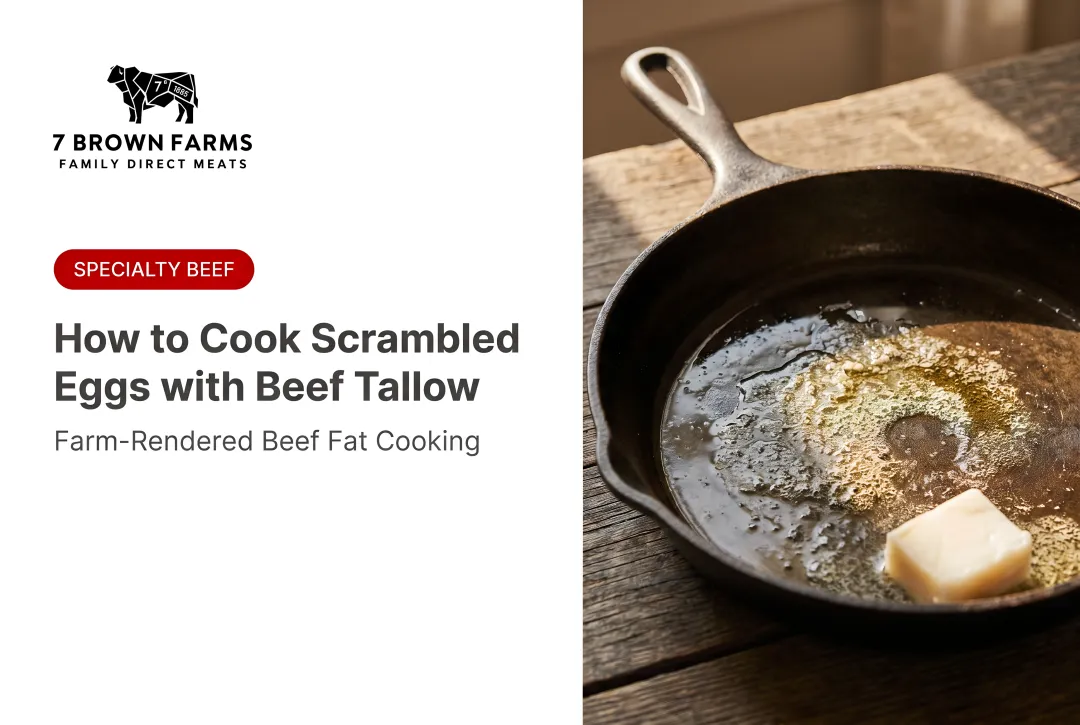
Beef tallow — once a mainstay in American kitchens — nearly vanished from grocery shelves and recipe cards for decades. Today, it's surging back into mainstream conversation, driven by the keto movement, mounting skepticism around seed oils, and a broader cultural return to whole-animal eating and traditional fats. Search interest in beef tallow spiked in 2025, with Whole Foods naming it the year's top food trend.
That resurgence has reignited a real debate. Medical institutions caution against its high saturated fat content, while wellness communities celebrate its heat stability and nutrient density, and both sides have valid points. This article breaks down what beef tallow actually is and what the nutrition science actually says. You'll also find its real benefits, real risks, and how to use it wisely — in your kitchen and your skincare routine.
Key Takeaways
- Beef tallow is rendered beef fat — 50% saturated, with meaningful amounts of monounsaturated fat and CLA
- A 400°F smoke point makes it one of the most stable fats for high-heat cooking
- Delivers fat-soluble vitamins (A, D, E, K), and CLA research points to anti-inflammatory and skin benefits
- One tablespoon carries nearly 50% of the American Heart Association's recommended daily saturated fat limit
- Pasture-raised tallow has a measurably better fatty acid profile than feedlot tallow — source matters
What Is Beef Tallow?
Beef tallow is the rendered fat from cattle, made by slowly heating fatty tissue (especially from around organs) until the fat separates and solidifies into a pale, waxy substance at room temperature. The FDA and USDA formally define it as rendered bovine fat, distinguishing it from lard, which comes from pigs.
Historical Context and Modern Resurgence
Tallow was America's default cooking fat until the mid-20th century. In 1911, Procter & Gamble launched Crisco, marketing vegetable shortening as a "pure" alternative to animal fats. By 1961, the American Heart Association recommended replacing saturated animal fats with polyunsaturated vegetable oils, and the 1977 Dietary Goals for the United States cemented this shift. Tallow virtually disappeared from home kitchens.
The tide turned with the ketogenic diet, which became the most Googled diet in the United States in 2020 with 25.4 million searches. These high-fat, low-carb communities normalized traditional animal fats again.
The momentum has only grown since. In 2024, Steak 'n Shake announced it would cook fries exclusively in beef tallow. Meanwhile, the tallow-based skincare market reached $277.57 million, driven by Gen Z consumers seeking "ancestral" single-ingredient products.
Not all tallow is equal, though. Ruminant animals like Black Angus cattle raised on pasture produce nutritionally richer fat than grain-lot counterparts — a distinction that matters when evaluating what ends up in your pan or on your skin.
Nutritional Profile: What's Actually in Beef Tallow
According to USDA FoodData Central, one tablespoon (13g) of beef tallow contains:
- Calories: 115 kcal
- Total Fat: 12.8g
- Saturated Fat: 6.4g
- Monounsaturated Fat: 5.35g
- Polyunsaturated Fat: 0.51g
- Cholesterol: 14mg
Beef tallow is not a micronutrient powerhouse — it contains virtually no protein, carbohydrates, or fiber. But its fat composition tells a more nuanced story than "just saturated fat."
Fat Types Breakdown
Beef tallow is approximately 50% saturated fat, 40–45% monounsaturated fat, and just 4% polyunsaturated fat. This ratio is comparable to butter and ghee:
| Fat Source (1 Tbsp) | Total Fat | Saturated Fat |
|---|---|---|
| Beef Tallow (13g) | 12.8g | 6.4g |
| Butter, unsalted (14.17g) | 11.55g | 7.7g |
| Ghee (14.17g) | 14.1g | 9.06g |
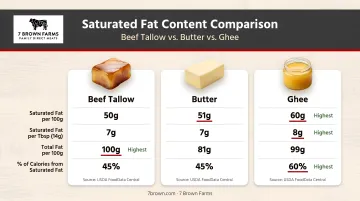
Tallow contains less saturated fat per tablespoon than both butter and ghee — a fact rarely highlighted in health debates.
Stearic Acid
Approximately 19% of beef tallow's fatty acids are stearic acid — a saturated fat that peer-reviewed research shows has a neutral effect on LDL and HDL cholesterol, unlike palmitic or myristic acids. Most health coverage lumps all saturated fats together; stearic acid is a meaningful exception.
Conjugated Linoleic Acid (CLA)
CLA is a polyunsaturated omega-6 fat found in ruminant meat and dairy. Animal studies suggest potential anti-obesity and anti-cancer properties, but human clinical trials show mixed results — the evidence isn't strong enough yet to make definitive claims.
What is clear is that source matters: grass-fed beef fat contains 5.14 mg/g of CLA compared to 2.65 mg/g in grain-fed beef — nearly double. If CLA content is a priority, grass-fed tallow is the better choice.
Fat-Soluble Vitamins
Wellness marketing often touts tallow as a rich source of fat-soluble vitamins. USDA data tells a different story. Per tablespoon, rendered beef tallow contains:
- Vitamin A: 0 mcg
- Vitamin D: 0.09 mcg
- Vitamin E: 0.35 mg
- Vitamin K: 0 mcg
Grass-fed beef fat does contain measurably higher levels of beta-carotene and alpha-tocopherol than grain-fed alternatives. But in absolute terms, the quantities are too small to contribute meaningfully to daily requirements. Tallow earns its nutritional credibility through fat composition — not vitamin content.
Key Health Benefits of Beef Tallow
The benefits below are real but context-dependent. Tallow is not a superfood, but it's not nutritionally empty either. The research picture is more nuanced than viral wellness claims or blanket medical warnings suggest.
High Smoke Point for Safer High-Heat Cooking
Beef tallow has a smoke point of approximately 400°F (refined versions reach 410°F–465°F), making it one of the more stable fats for deep frying, roasting, and searing. When fats are heated past their smoke point, they break down and form harmful compounds, so stability at high heat is a genuine health-relevant advantage.
Why This Matters:
Polyunsaturated fatty acids (PUFAs) oxidize rapidly under high heat due to their multiple double bonds, which are susceptible to free radical attack. Heating high-PUFA oils generates toxic aldehydes like 4-hydroxy-2-nonenal (4-HNE) and acrolein, compounds linked to oxidative stress and cellular damage. Tallow's low PUFA content (~4%) makes it highly resistant to forming these compounds.
This connects to the seed oil debate: many highly refined seed oils (canola, soybean, corn) have been criticized for oxidizing under high heat. Tallow's saturated fat content (normally seen as a drawback) actually makes it more heat-stable.
Supports Absorption of Fat-Soluble Vitamins
Dietary fat is required for the body to absorb vitamins A, D, E, and K. Tallow, being fat itself, inherently aids in this absorption when consumed alongside foods containing these vitamins. It doesn't supply significant amounts of these vitamins directly, but it functions as an effective delivery vehicle alongside nutrient-rich foods.
Potential Anti-Inflammatory Effects from CLA
Beyond vitamins, tallow's fatty acid profile includes conjugated linoleic acid (CLA), studied for potential cardiovascular, metabolic, and anti-inflammatory effects, though evidence remains preliminary. CLA content also varies significantly based on how cattle are raised: grass-fed tallow contains roughly double the CLA of grain-fed tallow.
The research is early-stage, but CLA's presence in pasture-raised beef fat is scientifically documented — a relevant consideration for anyone prioritizing it in their diet.
Skin Moisturization and Topical Uses
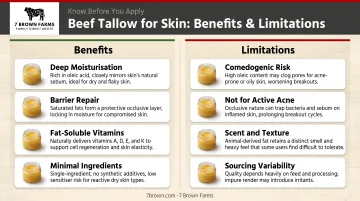
When applied topically, beef tallow is a highly occlusive moisturizer. Its fatty acid composition (particularly oleic acid and palmitic acid) closely mimics human skin's natural sebum, allowing it to integrate into the skin's lipid matrix. This is why tallow has regained popularity in balms and creams.
The Dermatological Caveat:
Tallow is comedogenic (it can clog pores), making it unsuitable for acne-prone or oily skin. It also lacks ceramides, the lipid molecules clinically proven to repair the skin barrier.
Systematic reviews show ceramide-containing moisturizers outperform tallow for atopic dermatitis and barrier repair. Tallow works best for very dry skin or as a body moisturizer, not a facial product.
Health Risks and What the Science Says
The most well-documented concern with beef tallow is its saturated fat content. The risks are real, particularly when consumed in excess over time.
Saturated Fat and Cardiovascular Risk
High intake of saturated fat is associated in research with elevated LDL ("bad") cholesterol, which contributes to arterial plaque buildup and increased risk of coronary heart disease. The American Heart Association recommends limiting saturated fat to less than 6% of total daily calories.
For a 2,000-calorie diet, the AHA limit is approximately 13 grams of saturated fat per day. One tablespoon of beef tallow (6.4g saturated fat) uses nearly 50% of that allowance in a single use.
That said, not all saturated fats behave identically, and overall dietary pattern matters more than any single ingredient. Some meta-analyses conclude that current evidence does not clearly support high PUFA/low saturated fat guidelines, while others find no association between saturated fat and cardiovascular mortality. The science is still evolving, but mainstream cardiology organizations maintain their caution.
Caloric Density and Portion Size
Like all fats, tallow is calorie-dense at approximately 115 calories per tablespoon, comparable to olive oil. Those managing caloric intake should measure portions, since it's easy to overconsume when cooking with it freely.
Who Should Be Particularly Cautious
Consult a healthcare provider before regularly using beef tallow if you have:
- Diagnosed cardiovascular disease or high LDL cholesterol
- Fat-restricted diets for medical reasons
- Acne-prone skin (for topical use)
For most healthy adults, moderate use is unlikely to pose a problem — but context always matters, and individual health history should guide how much tallow fits into your diet.
How to Use Beef Tallow — and Why Source Quality Matters
Practical Cooking Uses
Beef tallow excels for:
- Deep frying (French fries, fried chicken)
- Roasting vegetables at high heat
- Searing steaks
- Brisket and BBQ applications where its rich, beefy flavor is a culinary asset
Use it occasionally rather than as a daily replacement for all cooking fats — variety in fat sources is still worth maintaining.
Skincare and Topical Use
Beef tallow works best as a body moisturizer for very dry skin. Start with a small amount on a patch of skin to test compatibility. For facial use, consult a dermatologist first, especially if you're acne-prone. Look for products made from high-quality, clean-sourced tallow.
Why Source Quality Matters
Tallow's nutritional value depends on where the beef comes from. Pasture-raised cattle consistently produce tallow with higher CLA content and a more favorable omega-3/6 ratio than feedlot beef.
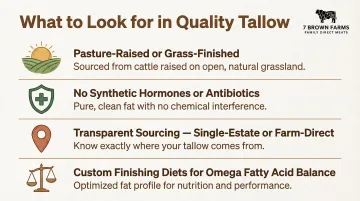
When evaluating tallow sources, look for:
- Pasture-raised or grass-finished cattle with room to graze
- No synthetic hormones or antibiotics in the animal's history
- Transparent sourcing — single-estate or farm-direct operations
- Custom finishing diets designed to balance omega fatty acids
7 Brown Farms is one example of what this looks like in practice. Their American Black Angus cattle are raised on Ozark pastures using a custom grain-finishing protocol built around omega-3 and omega-6 balance — with no hormones, antibiotics, or additives at any stage. They don't sell rendered tallow directly, but their brisket comes with quality tallow trim that's well-suited for home rendering.
The difference in fatty acid profiles between well-sourced and commodity tallow is real — and it's the kind of detail that matters when you're using it for both cooking and skincare.
Frequently Asked Questions
Is beef tallow healthy to cook with?
Beef tallow is stable at high heat and adds rich flavor, but its high saturated fat content means it's best used occasionally rather than as an everyday cooking fat. Moderation and dietary context are what matter most.
How does beef tallow compare to olive oil or butter for cooking?
Olive oil is higher in heart-healthy monounsaturated fats and better for low-to-medium heat. Butter and tallow have similar saturated fat profiles, but tallow has a higher smoke point than butter, making it better for high-heat cooking. Your best choice depends on the dish and heat level.
What do cardiologists say about beef tallow?
Most cardiologists and heart health organizations caution against regular use due to its high saturated fat content and associated risk of elevated LDL cholesterol. They generally recommend unsaturated fats like olive and avocado oil as daily cooking staples.
Is it safe to use beef tallow on your skin — do dermatologists recommend it?
Tallow is an effective moisturizer for very dry skin due to its similarity to skin's natural sebum, but dermatologists caution that it is comedogenic (pore-clogging) and not recommended for oily or acne-prone skin.
Why was beef tallow banned or phased out in the US?
Tallow was not formally "banned" but was largely replaced starting in the mid-20th century due to diet-heart research linking saturated fat to heart disease, public health campaigns promoting vegetable oils, and food industry shifts toward cheaper, shelf-stable seed oils.
Why is beef tallow becoming popular again?
The resurgence is driven by keto and carnivore diet communities, growing skepticism around seed oils and processed fats, a broader "back to basics" food movement, and viral social media content — and evolving nutrition science on saturated fat and cholesterol.