Introduction
You're standing in the meat aisle, staring at packages labeled "ground beef" and "ground chuck," unsure which to grab. The choice genuinely affects flavor, texture, and how well a dish turns out.
Ground chuck is technically a type of ground beef, but the two labels aren't interchangeable. Fat content, source cuts, cohesion, and price all vary—and those distinctions show up clearly whether you're building a burger or simmering a weeknight chili. This guide breaks down exactly what each label means so you can pick the right grind for the job.
Key Takeaways
- Ground chuck comes exclusively from the shoulder/chuck primal; generic ground beef is a blend of trimmings from multiple cuts
- Ground chuck is typically 80/20 fat-to-lean, giving it richer flavor and better cohesion; ground beef ranges from 70/30 to 93/7
- Burgers, meatballs, and meatloaf favor ground chuck; chilis, tacos, soups, and pasta sauces call for leaner ground beef
- A label that just says "ground beef" with no primal listed may include varied cuts and tissues — always read it
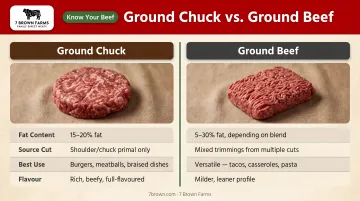
Ground Chuck vs. Ground Beef: At a Glance
- Fat content: Ground chuck is a fixed 80/20; ground beef ranges from 70/30 to 93/7 depending on the blend
- Source: Chuck comes from the shoulder primal only; ground beef blends trimmings from multiple cuts — and may legally include diaphragm and esophagus meat
- Flavor and texture: The higher fat in chuck delivers juicier, richer patties that hold their shape; leaner ground beef crumbles more easily and suits sauced dishes
- Price: Chuck costs more per pound because it draws from a single well-marbled primal; generic ground beef blends cheaper trimmings to keep costs down
What is Ground Chuck?
Ground chuck is meat ground exclusively from the chuck primal—the shoulder and neck region of the animal. The chuck primal is one of the eight USDA-recognized primal cuts, known for its harder-working muscles and higher intramuscular fat (marbling) compared to rear-quarter cuts.
The 80/20 lean-to-fat ratio is widely considered the sweet spot. America's Test Kitchen recommends 80% lean beef for extra juiciness, while Serious Eats explicitly recommends using meat with at least 20% fat content for the best, juiciest burgers. There's enough fat to keep meat juicy under high heat without being greasy.
Ground chuck may also contain some connective tissue from the shoulder area. When ground, this tissue adds richness to the mouthfeel without being noticeable in texture. During cooking, collagen breaks down into gelatin, which improves firmness and juiciness in the finished product.
Single-estate, breed-specific chuck produces more flavorful and nutritionally consistent grinds than commodity chuck assembled from multiple sources. 7 Brown Farms, for instance, sources ground chuck exclusively from American Black Angus raised on their Missouri estate, with each batch dry-aged for 14 days before grinding for deeper, more concentrated flavor.
Best Uses for Ground Chuck
Ground chuck shines when meat is the star of the dish:
- Burgers and smash burgers – The 80/20 ratio keeps patties juicy under high heat and creates the cohesion needed to hold shape on the grill
- Meatballs – Fat helps bind ingredients without added fillers, producing tender, flavorful meatballs that hold together in sauce
- Meatloaf – Higher fat content keeps the loaf moist throughout baking while maintaining structural integrity
- Stuffed peppers – The fat prevents the filling from drying out during roasting
Cooking tip: Because ground chuck has higher fat content, it doesn't need much added fat in the pan or on the grill. Keeping it simple—just salt, pepper, and heat—lets the natural marbling shine.
What is Ground Beef?
Ground beef functions as both an umbrella category and a specific label. As a category, it includes all source grinds (chuck, round, sirloin). As a product label, "ground beef" with no primal listed means a processor-blended mix of trimmings from various parts of the animal, calibrated to hit a target lean-to-fat ratio.
The USDA allows any product labeled simply "ground beef" to legally include meat from multiple primals, smooth muscle, and trim. All ground beef must not exceed 30% fat content.
Three Main Source Grinds:
- Ground Round (from the rump/hind legs) – Typically 85/15, leaner and slightly less flavorful
- Ground Sirloin (mid-back) – Typically 90/10 or leaner, the leanest and mildest
- Generic Ground Beef (blended) – Ratio varies by processor batch, commonly 73/27 to 80/20
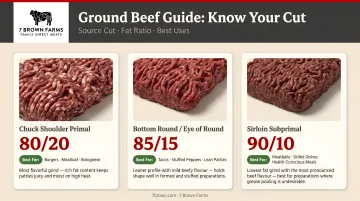
When a package simply says "ground beef," there's no way to know the exact cut composition without a label disclosing the primal source — which makes the lean-to-fat ratio and any source grind designation the only reliable signals for informed shopping.
Best Uses for Ground Beef
Leaner ground beef blends (85/15, 90/10) excel in dishes where the meat is broken up and cooked in liquid or sauces:
- Chili – Lower fat reduces grease pooling and lets spices dominate
- Taco meat – Lean protein absorbs seasonings without overwhelming the toppings
- Bolognese and pasta sauces – The sauce carries the flavor; lean meat provides protein without excess fat
- Soups and casseroles – Maintains structure when simmered without creating a greasy surface
For large-batch cooking — chili for a crowd, weekly meal prep — generic ground beef is the practical call. Any extra fat gets drained off anyway, and bold spice blends easily mask the difference in beefy flavor.
Ground Chuck vs. Ground Beef: Which Is Right for Your Kitchen?
Which Cut Fits the Dish?
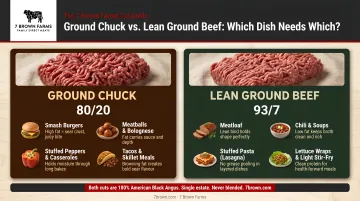
Choose ground chuck when:
- The meat IS the star (burgers, meatballs, meatloaf, sliders)
- You want rich beefy flavor and juicy texture
- You need cohesion for shaped dishes
- You're cooking at high heat (grilling, pan-searing)
Choose leaner ground beef when:
- The dish is sauce-dominant (chili, Bolognese, tacos)
- You're cooking for health-conscious eaters
- The recipe includes liquid or stewing (soups, casseroles)
- You're preparing large batches and want to reduce grease
Health and Nutrition
Both types deliver high-quality protein, B12, zinc, and iron. A 3-oz cooked serving of 90/10 ground beef contains 173 calories and 21.4g protein, while 80/20 ground chuck contains 246 calories with similar micronutrients. Fat content affects caloric density but not the core nutrient profile.
Omega fatty acids: Beef from sustainably raised, no-hormone, no-antibiotic sources may offer better omega-6 to omega-3 ratios. Research shows grass-fed beef has an average ratio of 2.14 compared to 8.28 for grain-fed beef—notably better for health-conscious consumers and athletes.
Reading the Label
These details determine quality far more than price alone:
- Does it say "ground chuck," "ground round," "ground sirloin," or just "ground beef"?
- Is there a lean-to-fat ratio listed (e.g., 80/20)?
- Is there a USDA inspection stamp?
- Is the source a single estate or a commodity processor?
When Sourcing Changes Everything
Labels tell you what's in the package. Where the animal was raised tells you the rest. The ground chuck vs. ground beef debate shifts considerably when you move from commodity grocery store meat to farm-direct, single-estate beef.
Well-raised Black Angus ground chuck from farms like 7 Brown Farms—pasture-raised with no hormones, antibiotics, or additives, USDA inspected, and dry-aged 14 days minimum—produces flavor and nutritional consistency that grocery-aisle blends rarely approach. The fat ratio matters less when the sourcing is right.
Conclusion
Ground chuck and ground beef each have a rightful place in the kitchen. The right choice depends on the dish, the desired fat level, and how much the flavor of the meat itself needs to carry the meal. Knowing which to reach for — and why — is what separates a good cook from a great one.
A quick decision guide:
- Burgers, meatballs, or anything you want to stay juicy: ground chuck's 80/20 ratio is hard to beat
- Sauced dishes, casseroles, or leaner meals: a 90/10 or 93/7 ground beef keeps fat in check without sacrificing protein
When quality and transparency matter, the source makes the difference. 7 Brown Farms raises 100% American Black Angus on a single Missouri estate — USDA inspected, no hormones or additives, with the primal source and fat ratio clearly labeled. That's the kind of ground chuck worth building a meal around.
Frequently Asked Questions
Is ground chuck the same as ground beef?
Ground chuck IS a type of ground beef, but the label "ground beef" (without a primal listed) typically refers to a blended product from multiple parts of the animal. Ground chuck comes exclusively from the shoulder/chuck primal.
Can I use ground beef instead of ground chuck?
Yes, you can substitute, but the result will differ. Leaner ground beef may produce a drier burger or less cohesive meatball, while fattier blends (80/20) can work as a close substitute. Matching the lean-to-fat ratio is key.
Why is ground chuck more expensive than regular ground beef?
Ground chuck is sourced exclusively from the chuck primal, known for its marbling and flavor. Generic ground beef blends lower-cost trimmings from multiple, often leaner parts of the animal, so that single-source quality carries a price premium.
Is ground chuck good to eat?
Ground chuck is nutritious and flavorful, providing high-quality protein, B12, zinc, and iron. Its 80/20 fat ratio is higher in calories than lean options but is entirely appropriate as part of a balanced diet.
Can heart patients eat lean ground beef?
Lean ground beef (90/10 or leaner) is lower in saturated fat and can fit into a heart-conscious diet. The American Heart Association recommends limiting saturated fat to less than 6% of total daily calories. Extra-lean ground beef (under 5% fat by USDA standards) is one of the lower-fat red meat options available. Consult your physician or dietitian for personalized guidance.
Is it worth buying a quarter or half cow?
Buying in bulk typically lowers the per-pound cost and gives you a full range of cuts, including ground chuck. Bulk purchases yield roughly 40% ground beef, making it a strong value for families who cook beef regularly.