Introduction
Flat iron steak is tender, deeply flavorful, and far more forgiving than pricier cuts like ribeye or tenderloin — yet it still delivers a steakhouse-quality result at home. Most home cooks, though, treat it like any other steak and miss what makes it work.
Results vary widely based on seasoning, cooking method, and a few key variables: internal temperature and resting time above all.
This guide covers what flat iron steak is, how to season it, three proven cooking methods with step-by-step instructions, the variables that matter most, and the most common mistakes that ruin an otherwise great steak.
Key Takeaways
- Flat iron steak comes from the chuck (shoulder) and is naturally well-marbled—second only to filet mignon in tenderness among beef cuts
- Simple seasoning works well (salt, pepper, garlic); marinating is optional but adds flavor layers
- Cook to medium-rare (130°F internal) using a hot cast iron pan, grill, or oven-finish method
- Always let the steak rest 5–10 minutes after cooking, then slice thinly against the grain for maximum tenderness
- Beef quality is the foundation: well-marbled, dry-aged Black Angus flat iron sets you up before seasoning or heat ever enters the picture
What Is Flat Iron Steak and Why It's Worth Cooking
Flat iron steak is cut from the infraspinatus muscle in the top blade of the chuck (shoulder). Butchers remove a tough seam of connective tissue running down the middle to produce two flat, uniform pieces. The flat iron gets its name from its resemblance to an old-fashioned clothes iron.
The cut's rich marbling creates a juicy, beefy bite that stays tender when not overcooked. Muscle profiling research by the University of Nebraska and University of Florida ranks the infraspinatus as the second most tender beef muscle, trailing only the tenderloin. Using Warner-Bratzler shear force testing (a standard industry tenderness measurement), the flat iron scored 3.20 kg versus the tenderloin's 3.07 kg — both firmly in the "tender" range.
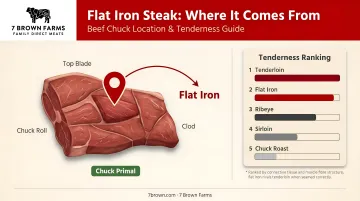
Beef quality determines how good the final result can be. A well-marbled, dry-aged flat iron brings inherent flavor and tenderness that reduces the need for heavy seasoning or long marinades. When sourcing, look for visible marbling throughout the meat. If flat iron isn't labeled, ask your butcher for "top blade steak."
For a farm-direct option, 7 Brown Farms raises 100% American Black Angus on a single Missouri Ozarks estate — no hormones, antibiotics, or additives — with every cut dry-aged a minimum of 14 days and custom grain-finished for optimal omega fatty acid balance.
How to Season Flat Iron Steak
Three seasoning approaches work well for flat iron: simple dry seasoning, spice rub, and marinade. The right choice depends on available time and flavor goals—all three produce excellent results.
Simple Dry Seasoning (Best for High-Quality Marbled Beef)
For well-marbled flat iron, generous kosher salt, cracked black pepper, and garlic powder applied 30–45 minutes before cooking is often all you need.
How it works: Salt draws moisture to the surface through osmosis, then dissolves and re-absorbs into the meat. This seasons the steak from within and dries the surface, helping form a better crust during the sear.
Timing note: Avoid cooking 3–40 minutes after salting — surface moisture in that window actively inhibits browning.
Spice Rub (Best for Grilling or a Bolder Flavor Profile)
If you want more crust complexity, a dry rub delivers it. Combine:
- Smoked paprika
- Garlic powder
- Onion powder
- Cumin
- Kosher salt
- Cracked black pepper
Press the rub into the surface and let the steak sit at room temperature for 20–30 minutes before cooking. This helps the rub adhere and develops a more pronounced crust.
Marinade (Best for Advance Prep or Layered Flavor)
A good marinade works on three levels:
- Acid (red wine vinegar, balsamic, or citrus): Lowers pH and weakens muscle structures to tenderize meat
- Oil: Carries fat-soluble flavors deeper into the cut
- Umami agents (soy sauce, Worcestershire): Deepen the beefy base flavor
Core Marinade Formula:
- Olive oil
- Low-sodium soy sauce
- Red wine vinegar
- Worcestershire sauce
- Brown sugar
- Minced garlic
- Smoked paprika
- Cracked black pepper
Timing: 4–24 hours in the refrigerator is ideal. Beyond 24 hours, acid degrades the texture, leaving the meat mushy. Always pat the steak dry before cooking so excess marinade doesn't steam instead of sear.
How to Cook Flat Iron Steak: Step-by-Step
Flat iron steak cooks well three ways: pan sear on the stovetop, direct grill, or a skillet-to-oven finish. Each method uses the same prep and rest steps — only the heat source changes.
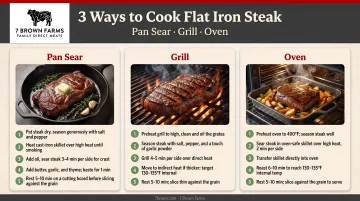
Rest and slice applies to all three methods: pull the steak at 125–128°F, tent loosely with foil for 5–10 minutes, then slice thinly against the grain and drizzle with resting juices.
Pan Sear (Cast Iron Skillet — Stovetop)
Step 1 – Prep:
- Remove steak from refrigerator 20–30 minutes before cooking
- Pat dry with paper towels
- Season generously
- Heat cast iron skillet over medium-high heat until it just begins to smoke
- Add high-smoke-point oil (avocado or vegetable)
Step 2 – Sear:
- Place steak in the pan and do not move it
- Sear 3–4 minutes until the steak releases naturally and a deep brown crust has formed
- Flip once and cook another 3–4 minutes
- Check internal temperature in the thickest part
Step 3 – Rest and Slice:
- Remove from heat at 125–128°F (it will carry-over cook to medium-rare during rest)
- Tent loosely with foil for 5–10 minutes
- Slice thinly against the grain and drizzle with any resting juices
Grill Method (Gas or Charcoal)
Step 1 – Prep:
- Preheat grill to medium-high
- Clean and oil the grates
- Allow steak to come to room temperature, about 20–30 minutes before grilling
- Season as you would for the pan sear method above
Step 2 – Grill:
- Place steak on hot grates and close the lid
- Cook 4–5 minutes per side for medium-rare on a ~1-inch thick flat iron
- Rotate 45 degrees halfway through each side to develop crosshatch grill marks
- Check temperature before pulling
Step 3 – Rest and Slice:
- Remove at 125–128°F internal
- Rest 5–10 minutes tented with foil
- Slice thinly against the grain and drizzle with resting juices
Oven-Finish Method (Skillet Sear + Oven)
Step 1 – Sear:
- Preheat oven to 350°F
- Heat oven-safe skillet over medium-high heat
- Sear steak 3–4 minutes per side to develop the crust
Step 2 – Finish in Oven:
- Transfer skillet directly to oven
- Cook 8–15 minutes depending on thickness and desired doneness
- Check temperature at 8 minutes and adjust
- Ideal for thicker cuts or batches of multiple steaks
Step 3 – Rest and Slice:
- Remove at 125–128°F and tent loosely with foil for 5–10 minutes
- Slice thinly against the grain and drizzle with resting juices
💡 Tip: Baste with butter and a crushed garlic clove during the last minute of the skillet sear for a steakhouse-style finish.
Key Variables That Affect Your Results
Flat iron steak is forgiving, but nailing four variables separates a good cook from a great one.
Internal Temperature
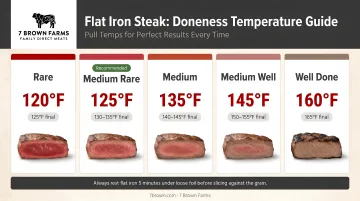
Doneness Guide:
- Rare: Remove at 110°F
- Medium-Rare: 120–125°F (pull temp)
- Medium: 130°F
Medium-rare is ideal for this cut as it preserves juiciness and tenderness. Going past medium risks drying out the muscle fibers. Guessing by time or touch alone isn't accurate enough for a cut this thin — use an instant-read thermometer.
Heat Level
Flat iron requires high initial heat to create a proper Maillard crust—the browned exterior that delivers flavor. The Maillard reaction accelerates between 280–330°F. A cold or insufficiently heated pan or grill produces steaming instead of searing. Cast iron is preferred for stovetop because it holds and distributes heat evenly.
Resting Time
Resting 5–10 minutes after cooking allows juices to redistribute throughout the meat. As the meat cools, internal vapor pressure decreases — meaning fewer juices are forced out when the steak is sliced.
Cutting immediately sends those juices straight onto the cutting board instead of staying in the meat. Tent loosely (not tightly) so the crust doesn't steam and soften.
Slicing Direction
Flat iron has visible muscle fibers running in one direction. Cutting against (perpendicular to) the grain shortens those fibers, creating a tender bite. Cutting with the grain results in a chewy texture regardless of doneness. Before slicing, identify the direction the muscle fibers run and position your knife perpendicular to them.
Common Mistakes When Cooking Flat Iron Steak
Don't cook straight from the refrigerator.
A cold steak placed on hot heat cooks unevenly—the exterior overcooks before the interior reaches the right temperature. Pulling the steak from the refrigerator 20–30 minutes before cooking allows for more even heat penetration.
Stop cooking at medium — not beyond.
Flat iron loses its tenderness advantage past medium. The cut's structure doesn't benefit from extended cooking the way tougher braising cuts do. Use a thermometer, not guessing by time alone.
Always rest the steak and slice against the grain.
These are the most common reasons home cooks are disappointed after an otherwise solid execution. Skipping the rest pushes juices to the surface where they run off; slicing with the grain leaves fibers long and chewy instead of short and tender.
Use the right pan — and get it screaming hot.
A nonstick or thin pan cannot generate the high surface heat needed for a proper crust. Cast iron or stainless steel are required. If the steak sticks when you try to flip it, it hasn't developed its crust yet—wait for it to release on its own.
Frequently Asked Questions
What is the best way to cook flat iron steak?
Pan searing in a cast iron skillet or grilling over medium-high heat are both excellent methods. The key is high heat for crust development and pulling at 120–125°F internal for medium-rare before resting.
How long do you grill flat iron steak?
Approximately 4–5 minutes per side on medium-high heat for a ~1-inch thick flat iron. However, internal temperature (not time) is the reliable indicator—pull at 125°F and rest before serving.
How long should you let a flat iron steak rest?
5–10 minutes tented loosely with foil. During this time the internal temperature rises a few degrees and juices redistribute, making every bite juicier.
Does flat iron steak need to be marinated?
Marinating is optional. A well-marbled flat iron from quality beef already has natural flavor and tenderness. A marinade adds flavor variety and works well for advance prep, but simple salt-and-pepper seasoning on great beef produces excellent results.
Is flat iron steak a good cut?
Flat iron is one of beef's most underrated cuts—ranked second only to filet mignon in tenderness, well-marbled for flavour, and significantly more affordable than premium cuts like ribeye or New York strip.
Which is better, ribeye or flat iron?
Ribeye has more fat and a richer, butterier flavor profile ideal for special occasions. Flat iron is leaner, beefier in flavor, faster to cook, and a strong everyday choice. Quality matters for both, but flat iron offers outstanding value for the result it delivers.