Introduction
Most home cooks have never rendered their own fat — and that's a recent development. Beef tallow—rendered beef fat that served as a kitchen staple for generations—was replaced by industrial seed oils during the 20th century. According to USDA data, animal fat availability declined 58% between 1909 and 2010, while vegetable oils increased 159%. Today, home cooks and BBQ enthusiasts are rediscovering tallow for its high-heat stability and rich flavor.
The process sounds simple: melt fat, strain it, store it. But results vary dramatically based on fat source quality, heat control, and straining technique. A batch made carelessly will taste off, spoil within days, or turn dark and bitter.
Getting it right is mostly a matter of knowing what to watch for. This guide walks through everything — from sourcing fat to storing the finished product.
Key Takeaways
- Beef tallow is made by slowly melting beef fat (suet or quality trimmings) at low heat until liquid, then straining out solids
- Expect 4–8 hours of cook time; equipment is minimal: a heavy pot or slow cooker, mesh strainer, cheesecloth, and glass jars
- Keep heat between 225–250°F the entire time; anything hotter will darken the tallow and compromise the flavor
- Fat from pasture-raised, grass-finished cattle produces cleaner-tasting tallow with better omega fatty acid balance
- Properly rendered tallow lasts up to 3 months refrigerated or 6+ months frozen
What You Need: Equipment and Fat Sources
Before you start, gather these essentials:
- Large heavy pot or slow cooker (4–6 quart minimum) — maintains steady, gentle heat
- Sharp knife or food processor — chops fat into uniform pieces
- Fine mesh strainer — removes large cracklings
- Ultra-fine cheesecloth — filters out micro-particles that cause spoilage
- Wide-mouth glass mason jars — stores finished tallow
- Funnel — makes pouring easier
Ultra-fine cheesecloth is critical. Skipping this step leaves impurities that accelerate rancidity and mold growth within days.
Fat Source Options
Two main fat sources work best:
| Fat Source | Flavor Profile | Best For |
|---|---|---|
| Suet (kidney fat) | Mild, clean, neutral | Baking, pastry, neutral-flavored applications |
| Back fat and brisket trimmings | Rich, distinctly beefy | Searing steaks, frying, savory high-heat cooking |
Quality Matters: Grass-Fed vs. Grain-Fed Fat
Not all beef fat produces the same tallow. Fat from grass-fed, pasture-raised cattle has a significantly different fatty acid profile than conventionally raised beef.
Key nutritional differences:
| Metric | Grass-Fed Beef Fat | Grain-Fed Beef Fat |
|---|---|---|
| Omega-6:Omega-3 Ratio | 1.53 to 2.14 | 7.65 to 8.28 |
| Conjugated Linoleic Acid (CLA) | 0.49% | 0.31% |
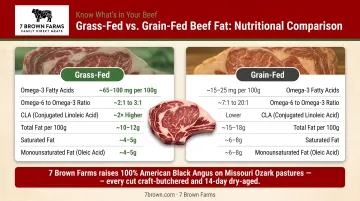
Pasture-raised, grass-finished cattle produce tallow with cleaner flavor and a more favorable omega fatty acid balance. The source of your fat matters as much as the rendering process itself.
Where to source beef fat:
- Ask your local butcher for suet or fat trimmings (often cheap or free)
- Buy from farm-direct suppliers — farms like 7 Brown Farms sell USDA-inspected Black Angus beef raised on Missouri Ozark pasture, and fat trimmings from that quality of cattle render exceptionally well
- Save trimmings from premium cuts like dry-aged brisket
How to Render Beef Tallow Step-by-Step
Step 1: Trim and Prep the Fat
Start with clean, dry fat. Trim off any remaining muscle meat, blood, or connective tissue—these cause off-flavors and accelerate spoilage.
Chop fat into small, uniform pieces (roughly marble-sized or smaller). Smaller pieces render faster and more completely. Pro tip: Chopping is far easier when fat is semi-frozen.
Step 2: Apply Low, Steady Heat
Place chopped fat into your vessel:
- Slow cooker: Set to LOW with lid OFF (lets moisture evaporate)
- Stovetop pot: Use lowest possible heat with heavy-bottomed pot
Target temperature: 225–250°F—the optimal range for melting fat without scorching proteins. The fat should simmer very gently, never boil.
Of the two options, the slow cooker is the easier choice for first-timers—set it and check in every hour rather than watching the stove.
Step 3: Monitor and Stir
Allow fat to render for 4–8 hours depending on batch size, stirring every 30–60 minutes.
Visual cues of proper progress:
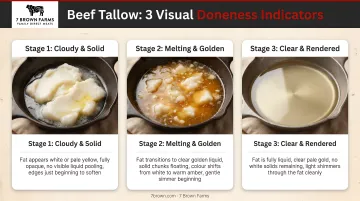
- Fat slowly liquefies into clear, golden liquid
- Cracklings (small solid bits) float and turn golden-brown
- Liquid becomes transparent, not cloudy
Warning signs of trouble:
- Dark orange or brown liquid = heat too high
- Acrid or burnt smell = heat too high or rendering too long
- Black cracklings = overcooked (see Common Mistakes below)
Step 4: Strain the Rendered Tallow
Once about half the cracklings are golden-brown and liquid fat is clear, turn off heat. Let cool for 10–15 minutes until warm but still pourable.
Perform two-stage straining:
- First strain: Pour through fine mesh strainer into large bowl to remove large cracklings
- Second strain: Pour through ultra-fine cheesecloth into glass jars to remove fine particles
Skipping the second strain leaves fine particles in the tallow, which can harbor moisture and cause early spoilage. Strain while fat is still warm and pourable—it solidifies as it cools.
Step 5: Cool and Store
Pour strained tallow into wide-mouth glass jars, leaving lid off until fully cooled to room temperature. Fresh liquid tallow pours golden-yellow; once cooled and solid, it turns creamy off-white or pale yellow.
Once cooled, seal jars tightly.
Storage options:
- Room temperature: 1–2 months in cool, dark spot
- Refrigerator: up to 3 months
- Freezer: 6+ months
Key Variables That Affect Tallow Quality
Two people can follow the same steps and get very different results. The variables below separate good tallow from great tallow.
Fat Source and Animal Diet
The breed, diet, and raising conditions directly impact tallow quality. Grass-fed, pasture-raised fat tends to yield lighter-colored, cleaner-tasting tallow with a more favorable fatty acid profile. That yellow hue in grass-fed tallow comes from carotenoids like beta-carotene, which deposit into adipose tissue from forage-rich diets. Conventionally raised, grain-fed fat produces tallow that's typically paler — and often has a stronger, less neutral flavor.
Temperature Control
The single most controllable variable is heat. Too high causes the fat to fry rather than render, producing dark, bitter-tasting tallow with a burnt smell.
The goal is a temperature just sufficient to melt fat slowly—roughly 200–250°F. According to food science guidelines, this range evaporates moisture without scorching proteins.
Rendering Time and Doneness Indicators
Over-rendering is as damaging as under-rendering. Stopping too early means unrendered fat left behind (reducing yield). Going too long produces an overcooked, funky flavor.
Visual indicators of proper doneness:
- Cracklings are lightly browned (not black)
- Liquid fat is clear (not murky or dark)
- No white solid fat chunks remain visible
Straining Thoroughness
Any remaining meat particles, water, or impurities in the final tallow act as spoilage accelerants. Using ultra-fine cheesecloth — not just a mesh strainer alone — is essential; skipping it dramatically shortens shelf life.
Visible cloudiness in cooled tallow typically signals inadequate straining or residual moisture.
Common Mistakes When Rendering Beef Tallow
Most rendering failures come down to one of four avoidable errors. Knowing them before you start saves a batch of good fat from going to waste.
Turning the Heat Too High
Rushing the render is the fastest way to ruin it. High heat browns the fat instead of melting it, producing dark, bitter, burnt-smelling tallow.
The fix: Patience and the lowest simmer possible. If smoke or a burnt smell appears, immediately reduce heat and stir.
Skipping or Rushing the Straining Step
Leaving cracklings or micro-particles in the tallow shortens its shelf life dramatically and can cause mold within days.
Never skip the cheesecloth step. Don't squeeze the cheesecloth while the fat is still hot — let it cool until warm and manageable before pressing.
Using Wet or Unprepped Fat
Adding fat with excess moisture (not fully thawed or with blood), or leaving meat attached, introduces water and proteins that cause splattering during rendering, cloud the tallow, and accelerate rancidity.
Always start with trimmed, dry fat pieces.
Overcooking Until Cracklings Are Black
Once cracklings turn fully black, the tallow has absorbed burnt flavors that can't be removed during straining. Stop rendering when cracklings are golden-brown, not dark brown or black.
How to Use and Store Homemade Beef Tallow
Cooking Applications
Beef tallow excels anywhere high smoke point and rich flavor are assets. Properly rendered tallow has a smoke point of 400–420°F, making it highly stable for:
- Searing steaks for a deep, even crust
- Deep frying and pan-frying potatoes
- Roasting vegetables
- Flavor-forward substitute for butter or oil in savory dishes
- Baking pie crusts and biscuits
- Seasoning cast iron cookware
If you're sourcing fat for rendering, grass-fed Black Angus beef — like the Missouri Ozark-raised cuts from 7 Brown Farms — tends to produce clean, flavorful tallow with a mild, neutral finish.
Storage Best Practices and Yield
Expect roughly a 50% yield: 3–4 pounds of raw fat produces about 1.5–2 pounds of finished tallow.
Store in airtight glass jars:
- Room temperature (cool, dark pantry): 1–2 months
- Refrigerated: up to 3 months
- Frozen: 6+ months
Tallow is shelf-stable when properly rendered because all moisture has been evaporated and impurities removed.
Signs That Tallow Has Gone Bad
Watch for these indicators of spoiled tallow:
- Rancid or sour smell (distinct from the mild beefy scent of fresh tallow)
- Visible mold
- Unusual discoloration
When in doubt, trust your nose — rancid tallow has a sharp, unpleasant odor that's impossible to miss. If it smells off, discard it.
Frequently Asked Questions
What are the ingredients in beef tallow?
Beef tallow contains only one ingredient—rendered beef fat—with no additives, preservatives, or processing agents. The fat typically comes from suet (kidney fat) or trimmings from cuts like brisket.
How do you cook with beef tallow?
Use beef tallow for high-heat searing, frying, roasting, and sautéing, as well as baking applications. Its high smoke point (400–420°F) makes it ideal for cooking methods that would burn butter or olive oil.
Is beef tallow actually healthy to cook with?
Beef tallow is rich in saturated and monounsaturated fats, contains fat-soluble vitamins (A, D, E, K), and is free from trans fats when properly rendered. Unlike industrial seed oils high in polyunsaturated fats, tallow's saturated fat structure makes it oxidatively stable under high heat.
Is beef tallow healthier than butter?
Both are animal fats with similar saturated fat content (~50%). Tallow's higher smoke point (400–420°F vs. 302°F) makes it better for high-heat cooking; butter's dairy proteins and distinct fatty acid profile suit lower-heat and flavor applications. Neither is universally healthier — the best choice depends on how you're cooking.
What do cardiologists think of beef tallow?
Cardiologists disagree on this. The American Heart Association advises limiting saturated fats to reduce cardiovascular disease risk. Separate research found that replacing saturated fat with polyunsaturated fats reduces cardiovascular events by 17%, but replacing it with refined carbohydrates shows little benefit.
How long does homemade beef tallow last?
Properly rendered and strained tallow lasts 1–2 months at room temperature, up to 3 months refrigerated, and 6+ months frozen. Thorough straining and airtight storage are the key factors that determine shelf life.