Introduction
Many home cooks struggle with scrambled eggs that turn out dry, rubbery, or bland—often without realizing the cooking fat is the culprit. While vegetable and seed oils have dominated American kitchens for decades, beef tallow offers a cleaner, more flavorful alternative rooted in traditional cooking methods. Research shows grass-fed beef fat contains significantly higher omega-3 fatty acids and a more favorable omega-6 to omega-3 ratio compared to grain-fed commodity beef, making tallow from pasture-raised cattle both nutritionally superior and richer in taste.
Even premium tallow won't save scrambled eggs when heat control, fat quantity, or technique goes wrong. This guide covers every variable: pan selection, proper fat ratios, heat management, and exactly when to pull the eggs off the burner, so you get creamy, savory results every time.
Key Takeaways
- Beef tallow adds subtle, savory depth without overpowering eggs
- Use 1 tablespoon per 2–3 eggs in cast iron or non-stick
- Cook at medium-low heat—high heat makes eggs rubbery and burns tallow
- Quality matters: pasture-raised Black Angus tallow (like 7 Brown Farms') delivers cleaner, richer flavor
- Remove eggs while slightly underdone—residual heat finishes cooking
How to Cook Scrambled Eggs with Beef Tallow
Step 1: Prep Your Eggs
Crack 2–3 large eggs into a bowl and whisk thoroughly until yolks and whites blend completely with no streaks. Whisking in air now means fluffier, lighter curds in the pan.
Season with a pinch of salt and freshly cracked black pepper before cooking. Pre-salting allows the seasoning to distribute evenly throughout the eggs rather than sitting on the surface.
Optional add-ins for extra creaminess:
- 1 teaspoon cold water per 2 eggs (creates steam that lifts curds)
- 1 teaspoon heavy cream per 2 eggs (adds richness)
Step 2: Heat the Pan and Melt the Tallow
Place your cast iron or non-stick skillet over medium-low heat for 1–2 minutes before adding fat — an evenly warm surface prevents sticking the moment eggs hit it.
Add 1 tablespoon of beef tallow and let it melt completely, swirling to coat the pan evenly. The tallow is ready when it shimmers—if it smokes, your pan is too hot. Pull it off the heat immediately and let it cool 30 seconds before proceeding.
Step 3: Cook the Scrambled Eggs Low and Slow
Pour whisked eggs into the pan and let them sit undisturbed for 10–15 seconds. That brief pause lets the first layer of curds set before you start folding.
Use slow, deliberate folds with a silicone spatula—scraping from the edges toward the center. Constant stirring breaks the curds down; folding keeps them large and creamy.
Heat management during cooking:
- Keep burner at medium-low throughout
- If eggs cook too fast, lift the pan briefly off the burner
- Avoid the temptation to increase heat—patience delivers creaminess
Step 4: Finish and Serve
Remove the pan from heat when eggs are just set but still look slightly underdone and glossy. Residual heat finishes them in about 30 seconds.
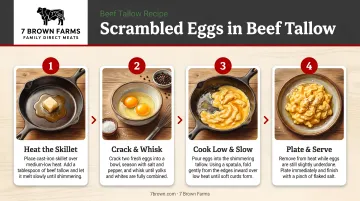
Plate immediately and garnish with one or more of the following:
- Flaky sea salt — draws out richness from the tallow
- Fresh herbs — chives, thyme, or parsley add brightness
- Smoked paprika — a light sprinkle for a mild smoky finish
What You Need Before You Start
Equipment
Recommended skillet options:
- Cast iron (preferred) — retains heat well and builds a natural non-stick surface once seasoned
- Non-stick pan — forgiving for beginners, though it produces less browning on the edges
- Stainless steel — works but requires more technique to avoid sticking
Essential tool: A silicone spatula is ideal for gentle folding without scratching the pan surface.
Tallow Quality and Quantity
Tallow quality directly affects both flavor and nutrition. Tallow rendered from pasture-raised, grass-fed Black Angus cattle—like the beef raised at 7 Brown Farms in the Missouri Ozarks—delivers a better-balanced omega-3 to omega-6 ratio and more nuanced flavor than commodity tallow from feedlot cattle.
How much to use:
- 1 tablespoon per 2–3 eggs (standard serving)
- Adjust slightly up for crispier edges
- Adjust down for a lighter result
- Too little fat = sticking and uneven cooking
- For cast iron, use the full tablespoon — the pan absorbs some fat into its seasoning layer
Key Variables That Affect Your Scrambled Eggs
Even with quality ingredients and correct steps, these four variables determine whether scrambled eggs turn out creamy or disappointing.
Heat Level
Medium-low heat is essential. Beef tallow has a smoke point around 400°F, but soft scrambled eggs cook best around 145–160°F internal temperature. That wide buffer means you should never approach tallow's smoke point.
High heat denatures egg proteins too quickly, tightening the protein network and squeezing out moisture — a process called syneresis. The result is tough, rubbery curds and a burnt-fat flavor that wastes good tallow.
Amount of Tallow
Too little tallow causes sticking and uneven cooking; too much creates greasy, heavy eggs. Use 1 tablespoon for 2–3 eggs as a starting point.
Cast iron requires slightly more tallow than non-stick because the pan absorbs some fat into its seasoning.
Egg Whisking Technique
Thoroughly whisked eggs (until fully homogenous) produce fluffier, more uniform curds. Under-whisked eggs result in uneven cooking with rubbery white streaks.
Adding 1 teaspoon of cream or cold water per 2 eggs dilutes egg proteins, raising the temperature required for them to bond. As that liquid heats, it converts to steam that physically lifts the curds, creating a lighter, airier texture.
Stirring Frequency
Infrequent, slow folding creates large, soft curds with creamy interior texture. Constant stirring breaks curds into small, dry pieces.
Two approaches work well with tallow:
- French-style: Constant low-heat stirring produces a custardy result, but requires precise heat control
- American-style: Less stirring, larger curds — more forgiving and better suited for beginners
Common Mistakes When Cooking Scrambled Eggs with Beef Tallow
Overheating the Pan
The most common error is using medium-high or high heat. This causes tallow to smoke, imparting a harsh flavor, and cooks egg proteins too fast. Eggs begin coagulating at 140°F—you need gentle heat, not aggressive heat. Always start with medium-low.
Adding Eggs Before the Tallow Is Ready
Eggs hitting a cold pan with unmelted fat spread unevenly and cook without proper coating, causing sticking and inconsistent texture throughout. Wait for tallow to melt fully and shimmer.
Overcrowding the Pan
Cooking more than 3–4 eggs at once in a standard skillet lowers pan temperature, causing eggs to steam rather than scramble and releasing excess moisture.
Leaving Eggs on Heat Too Long
Scrambled eggs keep cooking from residual heat after you pull them off the burner. Remove them while slightly underdone. Overcooked eggs turn watery and rubbery as proteins tighten and expel moisture.
Alternative Fats for Scrambled Eggs
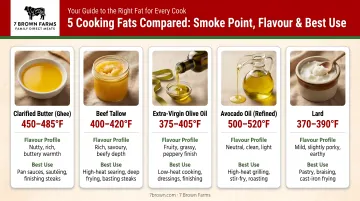
Tallow is the top pick here, but if you're out or want to experiment, a few other fats come close. Each brings its own flavor and heat tolerance — knowing the differences helps you choose confidently.
Butter
Butter adds creamy, dairy-forward flavor that pairs well with herbs and cheese — the taste is milder and lighter than tallow. The catch is heat tolerance. Unsalted butter's smoke point sits around 302–350°F, so it burns more easily and demands careful, low-and-slow heat management.
It's also worth noting that conventional butter from grain-fed dairy lacks the favorable fatty acid profile you get from grass-fed tallow. Less savory depth, less nutritional upside.
Ghee
Ghee solves butter's main problem. Because the milk solids are removed during clarification, its smoke point jumps to roughly 450°F — making it far more forgiving over high heat. The flavor is nutty and rich.
The downside is flavor range. Ghee delivers dairy-adjacent richness, not the beefy umami depth that tallow brings. A solid choice if you want easy heat management without the distinct savory character.
Lard or Duck Fat
Lard and duck fat are the closest relatives to tallow in terms of cooking performance. Both are stable animal fats, free of seed oils, with smoke points that handle real heat. Duck fat also adds a subtle sweetness that complements eggs in its own way.
The flavor profiles diverge, though. Pork fat is fairly neutral; duck fat leans slightly sweet. Neither one brings the specific beefy umami that makes tallow stand out on scrambled eggs.
Quick comparison:
| Fat | Smoke Point | Flavor Profile | Best For |
|---|---|---|---|
| Beef Tallow | ~400°F | Rich, beefy umami | Bold savory eggs |
| Butter | 302–350°F | Creamy, dairy-forward | Herb or cheese eggs |
| Ghee | ~450°F | Nutty, rich | High-heat cooking |
| Lard | ~370°F | Neutral, savory | Everyday cooking |
| Duck Fat | ~375°F | Slightly sweet, savory | Subtle flavor complexity |
Frequently Asked Questions
Is cooking eggs in beef tallow good?
Yes — beef tallow is stable at cooking temperatures, free of seed oils, and adds subtle savory richness to eggs. Grass-fed tallow also provides fat-soluble vitamins and a more balanced fatty acid profile than highly processed vegetable oils.
What is the healthiest fat to cook eggs in?
Pasture-raised animal fats — beef tallow, ghee, and butter — are among the top choices. They're heat-stable, unprocessed, and rich in fat-soluble vitamins A, D, E, and K2, with grass-fed tallow offering a notably favorable omega-6 to omega-3 ratio.
How much beef tallow to use to cook eggs?
Use approximately 1 tablespoon of beef tallow for 2–3 eggs in a standard skillet. This amount coats the pan fully and prevents sticking without making eggs greasy. Adjust slightly based on pan size and desired richness.
Does beef tallow change the taste of scrambled eggs?
Yes, tallow adds a subtle, savory, slightly beefy umami undertone that enhances eggs' natural richness without overpowering them. The result is noticeably deeper and more satisfying than eggs cooked in neutral oils.
Can I use beef tallow instead of butter for scrambled eggs?
Beef tallow is a direct 1:1 substitute for butter in scrambled eggs. The key differences are flavor (more savory vs. creamy) and a slightly higher smoke point, making tallow more forgiving at medium heat.
What temperature should I cook scrambled eggs in beef tallow?
Cook at medium-low heat—around 250–300°F pan surface temperature. This prevents tallow from smoking and allows eggs to cook gently into soft, creamy curds rather than dry, rubbery ones.