Key Takeaways
- Bring the steak to room temperature before grilling — cold ribeye cooks unevenly
- Preheat your grill to 450°F–500°F for a proper Maillard crust
- Use a digital meat thermometer — feel tests and color checks ruin more steaks than anything else
- Rest the steak 5–10 minutes after cooking or the juices end up on the plate, not in the meat
- Marbling quality determines flavor and juiciness before you ever fire up the grill
Why Ribeye Is the Best Cut for Grilling
The ribeye is structurally built for high-heat grilling. It consists primarily of the longissimus dorsi (the eye) and the spinalis dorsi (the ribeye cap) — muscles that see minimal physical activity and carry little connective tissue. That's what makes ribeye naturally tender and suited for fast, dry-heat cooking.
The abundant intramuscular fat (marbling) melts between 110–130°F, self-basting the meat from the inside out. The thick fat cap along the edge crisps into a flavorful crust. Unlike lean cuts that dry out under intense heat, ribeye is forgiving and delivers consistently excellent results.
Bone-in vs. boneless for grilling:
- Bone-in ribeye: The bone acts as a thermal insulator, keeping meat near it up to 10°F cooler than the rest of the steak — so watch for uneven doneness. Contrary to popular belief, bones don't impart flavor during dry-heat cooking; blind taste tests find minimal to no flavor difference vs. boneless. The real upside is presentation and protection during extended grilling.
- Boneless ribeye: Cooks more evenly, easier to handle, and simpler to slice. Both formats are excellent on the grill; this guide applies equally to either.
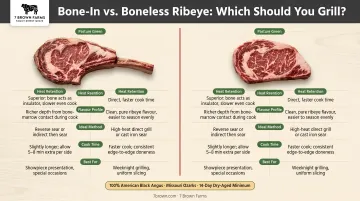
Grilling is the right method for ribeye when you want a hard sear, smoke flavor, and char-kissed crust. The open flame does something a pan or oven simply can't — it renders that edge fat cap while building bark on the surface. That combination is what the next steps are designed to maximize.
What You Need Before You Start Grilling
Preparation determines the outcome as much as technique. A poorly sourced, improperly thawed, or under-seasoned ribeye won't be saved by perfect grill management.
Equipment and Grill Requirements
You'll need:
- Gas or charcoal grill capable of reaching 450°F–500°F
- Reliable instant-read or probe digital meat thermometer
- Long-handled tongs (never a fork, which pierces the surface and releases juices)
- Clean grill grate
- Resting plate or cutting board
- Squirt bottle of water (for managing charcoal flare-ups)
Charcoal vs. gas: Charcoal grills can achieve localized temperatures exceeding 1200°F, whereas standard gas grills peak around 500–600°F. Charcoal combustion produces a broader range of flavor molecules and smoke, while gas combustion yields primarily water and carbon dioxide with less inherent smoke flavor unless wood chips are added.
Selecting and Preparing Your Ribeye
What to look for in a grill-worthy ribeye:
- At least 1-inch thickness (1.5 inches is ideal)
- Visible marbling throughout the muscle, not just around the edges
- Bright red color with white fat
- Higher marbling (Prime or Choice grades) provides a thermal buffer and flavor delivery system essential for high-heat grilling
Once you've identified the right marbling grade, dry aging is the next variable worth considering. Dry-aged beef has reduced moisture content, which means less steam on contact with the grill and a cleaner, harder sear. 7 Brown Farms' 14-day dry-aged American Black Angus ribeyes are a practical example: cut to 1.5 inches and consistently marbled, they're built around the same specs that make high-heat grilling straightforward rather than a guessing game.
Thawing and resting process:
- Thaw frozen steaks in the refrigerator for 24 hours minimum
- Remove 30–45 minutes before grilling to allow the steak to reach room temperature
- A cold steak put on a hot grill will overcook on the outside while remaining raw at the center
How to Grill the Perfect Ribeye: Step by Step
Step 1: Season the Steak
Choose one of two approaches:
For most ribeyes, generous kosher salt and coarsely ground black pepper on all sides is all you need — the cut's marbling is rich enough that it doesn't need a marinade. If you want more depth, a Montreal-style dry rub with garlic, pepper, and paprika works well; apply evenly to all surfaces before grilling.
Overnight salting technique (upgrade):
Dry-brining uses osmosis to improve moisture retention and surface browning. Salt draws moisture to the surface, dissolves into it, and the resulting brine diffuses back into the meat — altering muscle proteins so they hold more moisture during cooking. The surface dries out in the process, which accelerates Maillard browning on the grill.
- Salt the steak generously
- Wrap loosely and refrigerate uncovered for 12–24 hours
- Remove from the fridge and let come to room temperature before grilling as normal
A minimum of 45 minutes is required for reabsorption, though overnight is ideal for thick steaks.
Step 2: Preheat and Prepare the Grill
Preheat the grill on high, targeting 450°F–500°F at grate level, for at least 10–15 minutes. For charcoal, wait until coals are white-hot and ash-covered before adjusting. A hot, clean grill prevents sticking and creates the Maillard reaction crust that defines a properly grilled ribeye.
Two-zone setup:
For thick cuts (1.5 inches or more), a two-zone fire is universally recommended. Pile coals on one side (or leave one gas burner on high) for direct searing, while leaving the other side cool for indirect, gentle cooking. This prevents the exterior from burning before the interior reaches target temperature.
Charcoal grills: Adjust grate height rather than turning down coals. Keep the lid closed to retain smoke and reduce oxygen-fed flare-ups.
Step 3: Sear and Cook to Temperature
Place the steak on the hottest part of the grill. Sear 1–2 minutes per side for a 1-inch cut without moving it. After searing, move to a slightly cooler zone (or reduce gas to medium) and continue cooking, turning once, until the internal temperature reads 5°F below your target doneness.
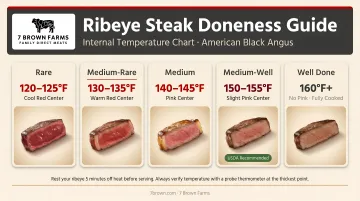
Doneness temperature reference:
| Doneness | Target Temperature |
|---|---|
| Rare | 125°F |
| Medium-Rare | 135°F |
| Medium | 145°F |
| Medium-Well | 155°F |
Thermometer use:
Insert the probe horizontally through the side of the steak into the thickest part of the muscle, avoiding the bone. If you're grilling multiple steaks, check the thinnest one first — it will hit temperature ahead of the rest. Never pierce the top of the steak during searing — it breaks the surface seal.
Flare-up management:
Fat dripping from a well-marbled ribeye will cause flare-ups, especially on charcoal. Use a squirt bottle of water to knock down flames at the base, briefly close the lid to reduce oxygen, or shift the steak to a cooler zone temporarily. Do not douse the coals.
Step 4: Rest and Finish
Remove the steak from the grill when it reads 5°F below target temperature. Carryover cooking will raise it the remaining degrees — steaks cooked at high temperatures can experience a carryover rise of 5°F to 15°F. Tent loosely with foil on a warm plate and rest for 5–10 minutes.
Why resting matters:
During high-heat cooking, muscle fibers at the exterior pinch tightly shut, squeezing moisture toward the cooler center. As the steak rests off the heat, the exterior cools to around 120–125°F and those fibers relax.
That relaxation creates a pressure differential that pulls liquid back from the center toward the edges, redistributing the juices evenly throughout the cut.
Butter finish:
Top the steak with a pat of unsalted butter or compound butter (herb, garlic, or blue cheese) immediately after removing from the grill. The residual heat melts it into the surface and adds richness. For boneless ribeyes, slice against the grain; for bone-in, cut along the bone first, then slice.
Key Variables That Affect Your Grilled Ribeye
Consistent results come from controlling four main variables — not luck. Even an excellent ribeye can be ruined by ignoring any one of them.
Steak Thickness
Thickness determines how long you can maintain high heat without overcooking the interior. Steaks under ¾ inch cook through too quickly for a proper sear, leaving almost no margin for error. 1–1.5 inch steaks give you the window to build a hard sear while keeping the center at the right doneness.
For a 1-inch steak at 450–500°F, expect 4 to 5 minutes per side for medium-rare. A 1.5-inch steak calls for a two-zone method: indirect heat first, then a 2-minute sear per side to finish.
Grill Temperature
Insufficient grill heat produces a gray, steamed exterior instead of a proper sear. The Maillard reaction — the chemical process behind crust flavor — requires surface temperatures between 280°F and 330°F. Because water boils at 212°F, surface moisture has to fully evaporate before browning can begin.
An under-heated grill also extends cook time, drying out the interior before the outside ever properly sears.
Marbling and Beef Quality
Marbling is the primary driver of ribeye flavor. Intramuscular fat renders under high heat, lubricating muscle fibers and deepening that beefy taste. Dry-aged beef takes this further — reduced surface moisture means the sear forms faster and with less steam, producing a better crust. A 14-day dry-aged ribeye like those from 7 Brown Farms will sear noticeably cleaner than a wet-packed commodity cut straight from the case.
The grade difference shows up clearly in outcome data:
- Over 91% of USDA Prime samples rate acceptable for tenderness and juiciness
- Nearly 25% of Select beef fails consumer expectations for palatability
- Lean or low-grade ribeyes turn dry and tough at temperatures that make a well-marbled cut shine
Resting Time
Heat from grilling pushes moisture toward the center of the steak. Cut too soon and those juices run straight onto the cutting board. Resting lets them redistribute evenly through the muscle before the first slice.
Skipping this step produces a noticeably drier steak even when internal temperature was perfect. Plan for a 5-minute minimum — thicker cuts and bone-in ribeyes need the full 10.
Common Mistakes When Grilling Ribeye
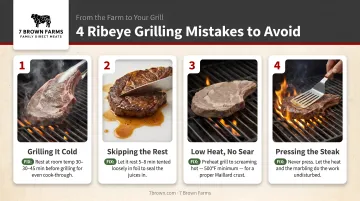
Avoid these four mistakes and you'll sidestep the most common reasons a great ribeye goes wrong:
- Starting with a cold steak. Pulling a ribeye straight from the fridge means the outside chars before the center reaches temperature. Rest it at room temperature for 30–45 minutes before it hits the grill.
- Judging doneness by feel or color. Beef can turn brown before it reaches your target internal temperature — a phenomenon the USDA calls "premature browning." Skip the poke test. A digital instant-read thermometer is the only reliable method.
- Flipping too often. Constant flipping prevents the Maillard crust from forming. Flip once — twice for thick cuts — and leave the steak undisturbed between turns. A properly seared steak releases cleanly from the grate on its own.
- Skipping the rest. Cutting in immediately after pulling the steak is a costly mistake. Even 5 minutes of resting significantly improves juiciness and texture. Tent loosely with foil to hold the heat.
Conclusion
Grilling a perfect ribeye comes down to a few non-negotiable fundamentals: quality beef, a properly preheated grill, a thermometer, and patience at the resting stage. Most failures trace back to two sources — starting with a subpar cut or rushing one of the preparation steps. The grill itself is rarely the problem.
Start with well-marbled, properly dry-aged beef, follow the steps outlined here, and a great result stops feeling like luck. 7 Brown Farms' 100% American Black Angus ribeyes — dry-aged a minimum of 14 days on a single Missouri estate — give you the foundation that makes those steps pay off every time.
Frequently Asked Questions
Is rib eye steak good for the barbecue?
Ribeye is one of the best cuts for the grill. Its heavy marbling renders under high heat to self-baste the meat, while the fat creates the char and smoke character that makes open-flame cooking so distinctive. Few cuts handle a hot grate better.
What is the difference between ribeye and ribeye primal?
The ribeye primal (also called the rib primal) is the full rib section — ribs 6 through 12 — and can be roasted whole as prime rib or sliced into individual steaks. A ribeye steak is one of those individual cuts, made up of the eye muscle and the prized cap that surrounds it.
What internal temperature should a ribeye be when grilling?
Medium-rare is the right call for ribeye — pull it at 130°F and let it rest to 135°F, which gives the marbling enough heat to render without drying out the meat. Always remove the steak 5°F below your target temperature to account for carryover cooking. For reference: Rare 125°F, Medium 145°F, Medium-Well 155°F.
Should I marinate a ribeye before grilling?
Ribeye generally does not need a marinade because its fat content provides sufficient moisture and flavor. A dry rub or simple kosher salt and pepper is preferred. If marinating, avoid acidic marinades (vinegar, citrus) for more than 2 hours as they can break down the texture and create a mushy exterior.
How long should I let a ribeye rest after grilling?
Rest a 1-inch ribeye for at least 5 minutes, and up to 10 minutes for a 1.5-inch or bone-in cut. This lets the juices redistribute evenly through the meat instead of running onto the cutting board — the difference between a good steak and a great one.
How do I prevent flare-ups when grilling a fatty ribeye?
Keep a squirt bottle of water nearby for targeted flame knockdown, use a two-zone grill setup to shift the steak away from flare-ups, and keep the lid closed when not actively monitoring to reduce oxygen flow. Trimming excess hanging fat (but not marbling) before grilling also reduces drip-driven flare-ups.