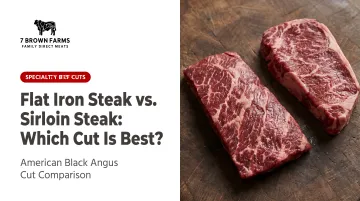
This guide covers everything you need to make the right call: where each cut originates, how they differ in flavor and texture, their nutritional breakdown, the best cooking methods for each, and a clear scenario-based framework to help you choose with confidence.
Key Takeaways
- Flat iron comes from the shoulder, is the second-most tender cut on the animal, and thrives with fast, high-heat cooking
- Sirloin comes from the rear loin, is leaner with firmer texture, and delivers bold beefy flavor at a lower price
- Flat iron runs $1–2 more per pound and is hard to overcook; sirloin rewards careful attention to doneness
- Both cuts are boneless and protein-rich — flat iron carries more marbling; sirloin is the leaner option
- Choose flat iron for consistent tenderness with minimal prep; choose sirloin for lean protein and classic steakhouse flavor
Flat Iron vs. Sirloin: Quick Comparison
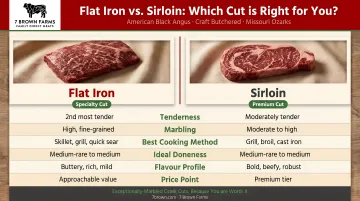
| Factor | Flat Iron Steak | Top Sirloin Steak |
|---|---|---|
| Primal Cut Location | Chuck (shoulder) | Rear loin (behind ribs) |
| Tenderness Ranking | #2 most tender (after tenderloin) | Moderate; benefits from proper slicing |
| Marbling/Fat Content | High intramuscular marbling | Lean with minimal fat |
| Flavor Profile | Rich, buttery, similar to New York strip | Bold, clean, classic "steakhouse" taste |
| Ideal Cooking Method | Grill, pan-sear, broil (medium-rare: 130-135°F) | Grill, broil, stir-fry (medium: 145°F) |
| Approximate Price/lb | $10.94-$12.99 | $8.49-$11.11 |
Both cuts are boneless, making them equally accessible for home cooks with no special carving skills required. That said, sourcing matters as much as the cut itself. A well-marbled, grain-finished sirloin from a single-estate farm can rival a supermarket flat iron in flavor — and a poorly raised flat iron will underdeliver no matter how good its reputation on paper.
What Is Flat Iron Steak?
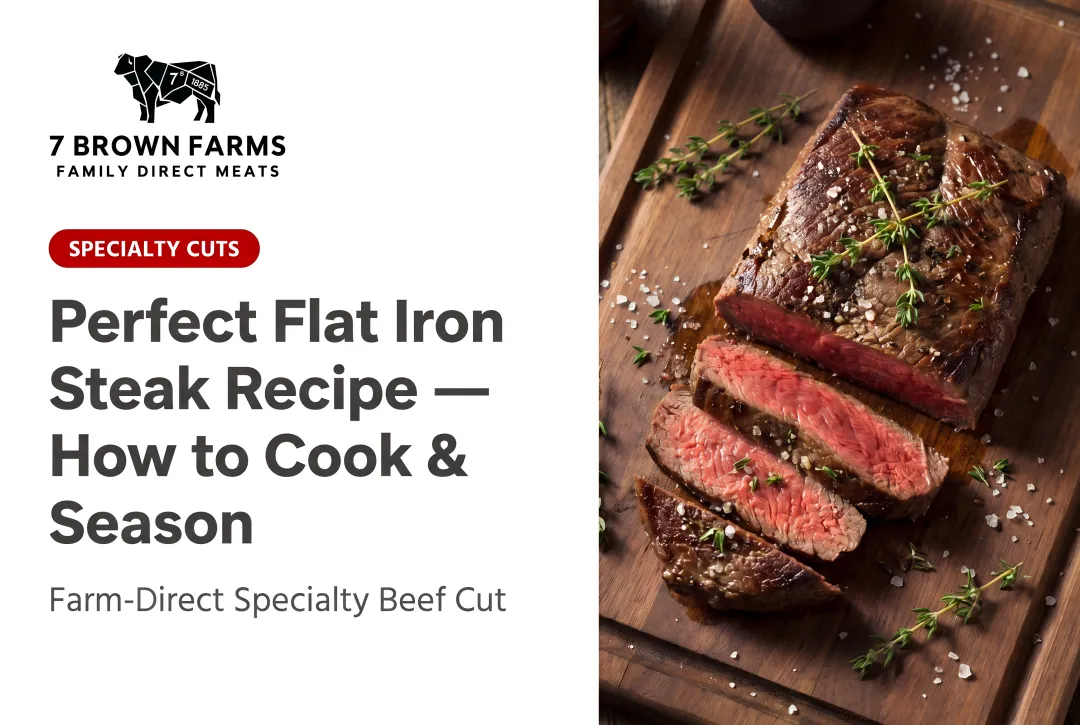
Flat iron steak is cut from the top blade muscle (infraspinatus) in the shoulder (chuck primal). The name comes from its flat, rectangular shape resembling an old-fashioned clothes iron. For decades, butchers discarded this area due to a tough connective tissue running through the center. That changed in the early 2000s when researchers at the University of Nebraska and University of Florida developed a seam-butchering technique to remove the fascia, creating one of the most tender steaks available.
Eating Characteristics:
- Dense intramuscular marbling delivers rich, buttery flavor similar to New York strip
- Nearly as tender as filet mignon, despite originating in the heavily worked shoulder
- Fine-grained muscle fibers stay juicy when cooked correctly
- Second-most tender muscle in the entire beef carcass based on Warner-Bratzler Shear Force testing
Nutritional Profile (3 oz cooked serving):
- Calories: 194 kcal
- Protein: 21g
- Total Fat: 11.6g
- Saturated Fat: 4.6g
- Iron: 2.4mg
- Zinc: 7.5mg
- Vitamin B12: 4.9mcg
The higher fat content means portion awareness matters for calorie-restricted diets, but the iron, zinc, and B12 levels make flat iron a strong nutritional option for athletes and health-focused buyers.
Best Uses and Cooking Methods for Flat Iron
Flat iron's tenderness and marbling make it ideal for fast, high-heat cooking:
- Grilling over direct heat
- Cast-iron pan-searing
- Broiling
Cook to medium-rare (130–135°F) to preserve juiciness. Because the muscle fibers are wider and longer than those in leaner cuts, they need this temperature range to shrink and separate correctly — go beyond medium and the fat renders out fast, leaving a dry, chewy result.
Ideal meal applications:
- Weeknight grilled steaks
- Steak salads and grain bowls (slice thin against the grain)
- Fajitas and steak sandwiches
- Affordable centerpiece for dinner parties
What Is Sirloin Steak?
Sirloin steak comes from the rear loin section, behind the ribs and ahead of the rump. Top sirloin (the more tender version, most commonly sold as "sirloin steak") differs from bottom sirloin (tougher, often used for roasts or tri-tip). Unless otherwise noted, "sirloin steak" refers to top sirloin.
Eating Characteristics:
- Leaner muscle with less intramuscular fat than flat iron
- Firmer texture with pronounced, beefy chew
- Bold, clean flavor often described as the "classic steakhouse" taste
- Lacks the buttery softness of flat iron but rewards proper seasoning and a good sear
Nutritional Profile (3 oz cooked, lean only):
| Nutrient | Amount |
|---|---|
| Calories | 165 kcal |
| Protein | 25g |
| Total Fat | 7g |
| Saturated Fat | 2.5g |
| Iron | 1.5mg |
| Zinc | 4.6mg |
| Vitamin B12 | 1.4mcg |
That lean profile puts sirloin among the highest protein-to-calorie ratios of any beef cut — a practical advantage for athletes, bodybuilders, and health-focused households.
Best Uses and Cooking Methods for Sirloin
Sirloin holds up well across a range of cooking methods without drying out:
- Grilling
- Broiling
- Pan-searing
- Stir-fry or fajitas (thin slicing against the grain combats natural chew)
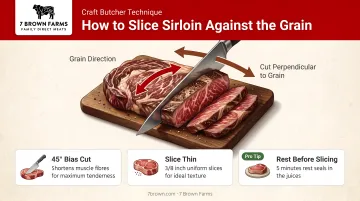
Sirloin benefits from a dry rub or marinade when cooking for longer periods. Slicing against the grain reduces bite-through force by more than 400% — 383 grams of force versus 1,729 grams when sliced with the grain. That single technique makes the biggest difference with this cut.
Compound butters or bold sauces at the table round out the leaner profile and add richness without masking the natural beefy flavor.
Flat Iron vs. Sirloin: Which Cut Should You Choose?
Factor-by-Factor Decision Framework:
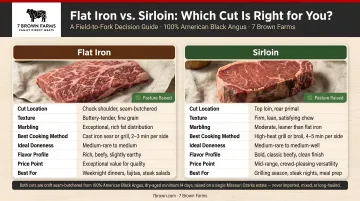
Choose flat iron if:
- You prioritize maximum tenderness and rich flavor with minimal prep work
- You're hosting a dinner party and want impressive results without a premium price
- You're grilling for two and want a steakhouse experience at home
- You value a buttery, marbled bite that requires little technique to perfect
Choose sirloin if:
- You need lean protein with a classic beefy flavor at a lower cost per pound
- You're meal prepping for the week and need protein that reheats well
- You're cooking for a family on a budget without sacrificing flavor
- You want versatility across cooking styles (grill, stir-fry, broil, fajitas)
- You're tracking macros and want the highest protein-to-calorie ratio
How Sourcing Quality Changes Both Cuts
Breed, feed, and aging process impact both cuts measurably. Research shows that aging beef for 14 to 35 days linearly improves tenderness in loin cuts, including sirloin. A flat iron or sirloin from grass-and-grain-finished Black Angus cattle, raised without hormones or antibiotics and dry-aged for 14+ days, will deliver noticeably better marbling, tenderness, and depth of flavor than commodity equivalents.
Quality of the animal will do more to elevate either cut than any technique. That's worth keeping in mind when choosing where to source.
7 Brown Farms raises 100% American Black Angus on a single Missouri Ozarks estate, finished on a custom grain program tailored to Ozark pastures. Every cut is processed with craft seam butchering, 14-day dry-aged minimum, USDA inspected, with no hormones, antibiotics, or additives — shipped frozen-tight directly to your door. Custom bulk orders, nationwide two-day shipping, and white-glove local delivery within 100 miles make it a practical option for families, gift buyers, and dining clubs alike.
Neither cut is objectively superior — the right choice comes down to your occasion, your budget, and how you cook. Get either one from a quality source and the difference between "good" and "great" narrows fast.
Frequently Asked Questions
Frequently Asked Questions
Which is better, flat iron or sirloin steak?
Flat iron wins on tenderness and marbling with a richer, buttery flavor. Sirloin wins on price and delivers a leaner, bold beefy taste. Choose flat iron for special occasions; reach for sirloin as a reliable everyday cut.
Is flat iron steak as good as ribeye?
Flat iron rivals ribeye in tenderness and comes close in marbling, but ribeye carries more fat and a richer flavor. For those who want a tender, well-marbled steak at a lower price point, flat iron is the smarter buy.
What is another name for a flat iron steak?
Alternate names include top blade steak (U.S.), butler's steak or feather steak (UK), and oyster blade steak (Australia/New Zealand). All refer to the same shoulder cut from the infraspinatus muscle.
Is Denver steak the same as a flat iron steak?
No. Both come from the chuck primal, but they're different muscles — flat iron from the top blade (infraspinatus), Denver from the chuck under-blade (serratus ventralis). Denver tends to have slightly more marbling and a thicker profile.
Is sirloin steak good for grilling?
Yes. Sirloin is excellent for grilling—its firm texture holds up well over direct heat. Season generously, grill to medium (145°F), and let it rest before slicing against the grain to maximize tenderness.