Introduction
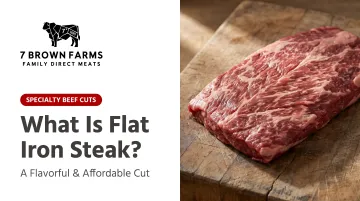
Flat iron steak is one of the best-kept secrets in the butcher case. It's nearly as tender as filet mignon but priced like an everyday cut — which means date-night-quality flavor without the steakhouse price tag. Peer-reviewed muscle profiling ranks the flat iron as the second-most tender beef muscle, trailing only the tenderloin in objective tenderness testing.
Below, you'll find everything you need to buy, cook, and enjoy flat iron steak with confidence — from its anatomy on the cow to how it stacks up against ribeye and flank.
Key Takeaways
- Flat iron comes from the infraspinatus muscle in the chuck primal (shoulder)
- Second-most tender cut on the animal, with rich marbling and bold, beefy flavor
- Best cooked over high, dry heat to medium-rare (130–135°F); always slice against the grain
- Often labeled "top blade steak" at grocery stores — check the package if you can't find it by name
- For the best flavor, look for well-marbled, farm-direct Black Angus beef
What Is Flat Iron Steak and Where Does It Come From?
The Origins of the Cut
Flat iron steak wasn't always a recognized retail cut. The National Cattlemen's Beef Association launched a research initiative in 1998 to find marketable value from underused primal areas. University researchers at the University of Florida and University of Nebraska-Lincoln took on the task.
They identified the top blade's infraspinatus muscle as remarkably tender — but a thick seam of connective tissue (fascia) running through its center made it impractical to sell as-is.
The breakthrough: slice out that connective tissue, fillet the muscle into two flat pieces, and you get a steak that's tender enough to rival far pricier cuts. The NCBA began promoting it in 2001, Applebee's put it on the menu shortly after, and Kroger started stocking it in 2006. The name comes from the cut's rectangular shape — a near-perfect match for an old-fashioned clothes-pressing iron.
Where It Sits on the Cow
The chuck (shoulder) primal is known for bold flavor but typically tough texture — high-activity muscles work hard and show it. The infraspinatus is an exception. It stabilizes the shoulder joint (think: the cow's rotator cuff) rather than driving heavy movement, so the muscle fibers stay under far less stress and come out noticeably more tender.
Here's where it sits relative to neighboring cuts:
- Location: Beneath the shoulder blade (scapula/paddle bone)
- Neighbors: Adjacent to the shoulder clod (the large, well-worked shoulder mass) and above the shoulder tender (teres major muscle)
- Yield: A whole top blade weighs 2–3 lbs and produces four steaks of 8–12 oz each
What Does Flat Iron Steak Taste Like?
Flat iron offers a deeply "beefy" and rich flavor — the chuck's characteristic bold flavor combined with the tenderness of a premium cut. The significant marbling throughout the muscle contributes to juiciness and a buttery mouthfeel when cooked correctly.
Key flavor characteristics:
- Bold and robust: Trained sensory panels rate flat iron significantly higher for "fat-like" and "beefy" aromas than top loin or sirloin
- Highly receptive to seasoning: The marbling makes it ideal for marinades, rubs, and seasonings like garlic, soy, herbs, or chili
- Flavorful enough to stand alone: It shines with just salt, oil, and a hot grill
The source animal has a direct impact on flavor. Well-marbled Black Angus raised on quality forage and grain delivers noticeably richer flavor and texture compared to commodity cuts. Look for visible intramuscular fat threading when selecting your flat iron.
For buyers who want to skip the guesswork, a farm-direct producer like 7 Brown Farms offers USDA-inspected Black Angus raised without hormones, antibiotics, or additives, with custom cut options and nationwide shipping.
That said, sourcing quality beef matters because flat iron can occasionally present "livery" or "metallic" flavor notes due to the high myoglobin content in the heavily exercised chuck primal. Marinades, spice rubs, or light wood-smoking can temper these mineral notes and round out the final flavor.
How Does Flat Iron Steak Compare to Other Cuts?
Flat Iron vs. Flank Steak
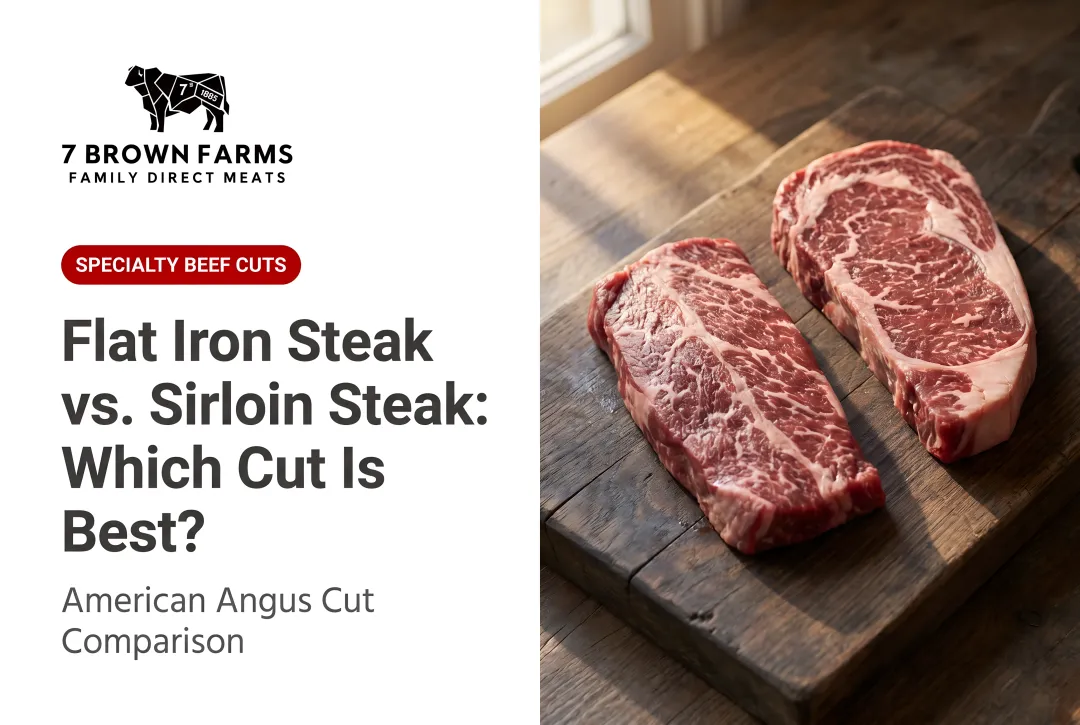
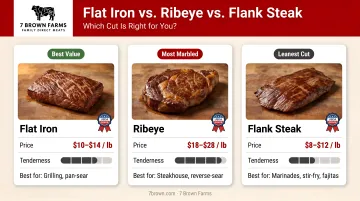
These are two entirely different cuts from different parts of the animal. Flat iron comes from the chuck (shoulder), while flank steak is cut from the belly muscle (flank primal) — a common source of confusion given that both are "flat" cuts that appear in similar dishes.
Texture and fat differences:
- Flat iron: More marbling, thicker (about ½ inch), and more uniformly tender throughout
- Flank: Leaner, wider, and slightly chewier, making it better suited for braising or high-acid marinades used in fajitas and carne asada
Cooking implications:
- Flat iron is best at medium-rare and does not benefit from long braising like flank
- Both benefit from slicing against the grain, but flat iron is more forgiving given its marbling
Flat Iron vs. Ribeye
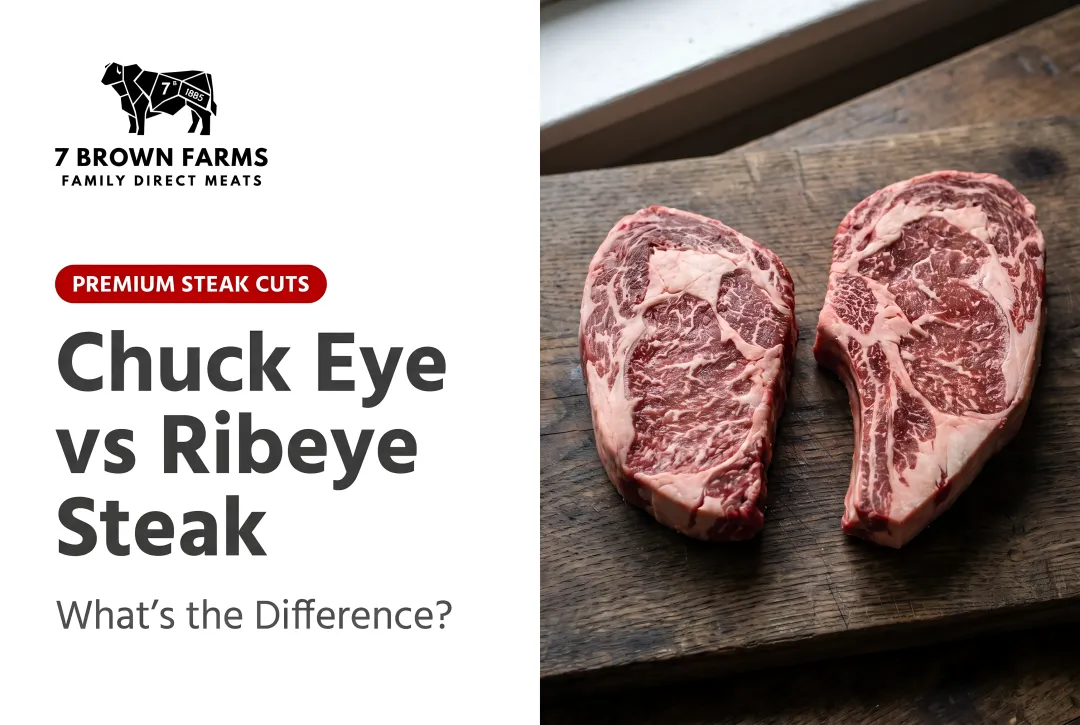
Ribeye and flat iron are both known for marbling and flavor, but ribeye comes from the rib primal (ribs 6–12) and carries more intramuscular fat. Retail pricing varies by region and season, but ribeye typically runs $16–$24/lb at grocery stores. Flat iron averages $10–$14/lb — that's a 30–40% savings for comparable eating quality.
Where flat iron holds its own:
- Similar beefy depth of flavor
- Excellent tenderness (Warner-Bratzler Shear Force testing ranks it second only to tenderloin)
- Grill-friendly characteristics
Other cuts worth comparing:
- Skirt steak shares similar use cases but runs thinner and chewier
- Hanger steak matches flat iron's flavor intensity, though only one comes per animal
- Top blade steak is the same muscle — just with the connective tissue seam still intact
How to Cook Flat Iron Steak the Right Way
Best Cooking Methods
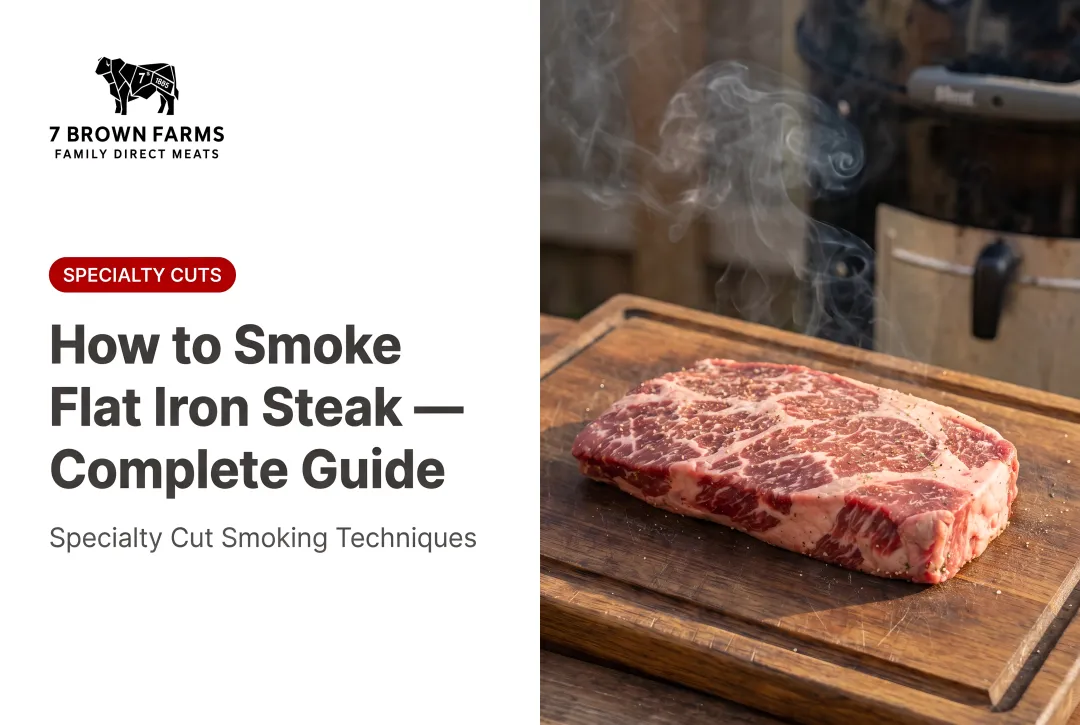
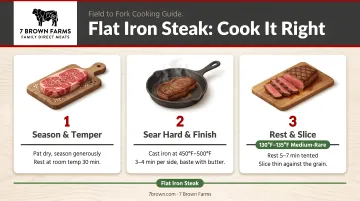
Flat iron's moderate thickness (~½ inch) and dense marbling make it ideal for quick, high-heat cooking methods. The grill is the classic choice, but a cast iron skillet also works exceptionally well for a consistent sear.
Recommended technique:
- Start with a hot sear (medium-high to high heat) for a flavorful crust
- Move to slightly lower temperature or pull off heat to finish to desired doneness
- Target internal temperature: 130–135°F for medium-rare, which is the recommended doneness for this cut
America's Test Kitchen explains that flat iron steaks have wider, longer muscle fibers than cuts like filet mignon. When cooked, those fibers shrink and separate — making medium-rare the sweet spot where they're tender without becoming tight.
A few things to keep in mind before you cook:
- Don't go past medium (145°F) — overcooking tightens the fibers and renders out the marbling that keeps this cut juicy
- Marinating is optional — 30 minutes to 2 hours in an acid + oil + aromatics blend adds depth, especially for tacos, stir fry, or sandwiches
- Skip the long soak — extended marinating breaks down the surface texture without adding much benefit
How to Slice Flat Iron Steak
Finding and cutting against the grain is essential for maximum tenderness. Here's how:
Identify the grain: Look for the long, parallel lines of muscle fibers running along the length of the steak, and always cut perpendicular (90°) to those lines.
Slicing with the grain instead of against it results in long, chewy muscle fibers in each bite. Cutting against the grain shortens those fibers, making each slice noticeably more tender and easier to chew — especially important for dishes where the steak is thinly sliced and served (tacos, steak salads, rice bowls).
Let the flat iron rest 5 minutes after cooking before slicing. This allows the juices to redistribute — cut too soon and the meat runs dry regardless of how well you nailed the doneness.
Get both steps right — proper doneness and correct slicing — and flat iron consistently punches above its price point on the plate.
How to Buy and Store Flat Iron Steak
What to look for in stores:
Flat iron may be labeled as:
- "Top blade steak"
- "Top blade filet"
- "Shoulder top blade steak"
If unavailable, ask the butcher directly. For professional reference, the NAMP designation is #1114D.
Quality indicators:
- Visible marbling throughout the cut
- Deep red color
- No excessive liquid in the package
If you can't find quality flat iron locally, farm-direct sources like 7 Brown Farms ship USDA-inspected, 100% American Black Angus flat iron nationwide — dry-aged a minimum of 14 days, raised without hormones or antibiotics, and finished on a custom grain program native to the Missouri Ozarks. Call Farmer Brown at 314-540-5515 for bulk or specialty cut availability.
Storage best practices:
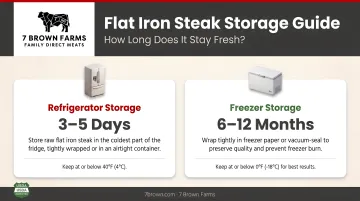
- Refrigerator: Raw flat iron keeps for 3–5 days
- Freezer: Rewrap tightly in freezer paper or a vacuum-sealed bag and freeze for up to 3 months
Thawing: Thaw in the refrigerator overnight. Don't refreeze after thawing.
Frequently Asked Questions
What is a flat iron steak called in the grocery store?
Flat iron may be labeled as "top blade steak," "shoulder top blade steak," or "top blade filet." Asking the butcher by either name should get you what you need. The NAMP designation is #1114D for professional reference.
Is flat iron steak a good cut of beef?
Yes — flat iron is widely considered one of the best-value cuts available. It ranks as the second most tender cut after tenderloin, carries excellent marbling and bold flavor, and costs significantly less than premium cuts like ribeye or strip steak.
Which is better, ribeye or flat iron steak?
Ribeye wins on fat content and richness. Flat iron matches it on beefy flavor and tenderness, though, at a considerably lower price — making it the stronger value for everyday cooking.
What is the closest cut to flat iron steak?
The top blade steak (same muscle, connective tissue intact) is the closest cut, followed by flank steak and skirt steak as substitutes. Hanger steak shares a similar deep, beefy flavor profile.
How should you slice a flat iron steak?
Always slice against the grain (perpendicular to the muscle fiber lines) using a sharp knife, after resting for 5 minutes post-cook. This shortens muscle fibers and improves tenderness in every bite.
How do you find the grain on a flat iron steak?
The grain runs lengthwise and appears as parallel lines or striations in the muscle. Identify them before cooking while the meat is raw — it's easier to see — then cut perpendicular to those lines when slicing.