Introduction
Walk into any grocery store and you'll notice something curious: ribeye steaks command premium prices—often $15 to $27 per pound—while chuck eye steaks, cut from literally the next rib over, run about $7 per pound. Both cuts come from nearly identical muscle groups along the cow's spine, yet one costs more than double the other. This price gap isn't arbitrary—it's driven by scarcity, marbling differences, and consumer perception. So which one actually belongs on your plate—and when?
This guide covers where each cut comes from, how marbling and flavor differ, what drives the price gap, and which cooking methods work best for each—so you can make the right call at the butcher counter.
Key Takeaways
- Chuck eye (rib 5) and ribeye (ribs 6–12) share the same muscle group but differ in tenderness, marbling, and price
- Ribeye is richer and more tender; chuck eye trades some softness for bolder beef flavor at a lower price point
- Chuck eye runs about 50% cheaper per pound, but each steer yields only two—so they're harder to find than ribeye
- Both cuts suit high-heat cooking; ribeye needs little more than salt, while chuck eye benefits from a short marinade
- Pick ribeye for special occasions where richness wins; pick chuck eye for weeknight meals that don't sacrifice flavor
Chuck Eye vs Ribeye: Quick Comparison
| Factor | Chuck Eye | Ribeye |
|---|---|---|
| Flavor Profile | Bold, beefy, robust | Rich, buttery, well-rounded |
| Marbling Level | Moderate | High |
| Tenderness | Moderately tender | Exceptionally tender |
| Price Range | $6.99/lb (Choice) | $14.48–$26.99/lb (Choice to Prime) |
| Best Cooking Methods | Grill, pan-sear, marinate first | Grill, pan-sear, reverse sear |
| Availability | Limited (2 per steer) | Widely available |
The One-Rib Difference
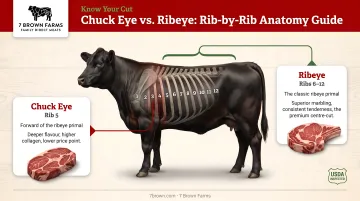
Both cuts originate from the longissimus dorsi muscle running along the cow's spine. Chuck eye sits at the fifth rib, at the boundary between the chuck (shoulder) and rib primals. Ribeye occupies ribs 6 through 12, deeper into the rib section where muscles do minimal work. That one-rib gap means ribeye muscles carry significantly less connective tissue, which directly translates to higher marbling, more consistent tenderness, and a steeper price per pound.
What is Chuck Eye Steak?
Chuck eye steak is cut from the fifth rib of the chuck primal, the cow's upper shoulder region. It's a direct extension of the ribeye muscle into the shoulder, which means it shares much of the ribeye's desirable characteristics: intramuscular fat, flavor intensity, and tenderness, but at a fraction of the cost. Because the shoulder handles more movement than the rib section, chuck eye contains slightly more connective tissue and a firmer texture than its premium neighbor.
The Butcher's Secret
For years, butchers kept chuck eye steaks for themselves. They understood what most consumers didn't: this cut cooked and tasted remarkably similar to ribeye but cost far less. The nickname "poor man's ribeye" stuck as more shoppers caught on. Enthusiasts on platforms like Reddit still praise it as "just good tender marbled goodness" and the "biggest bargain in beef."
Why Chuck Eye Is So Hard to Find
Scarcity drives availability issues. Each steer yields only two chuck eye steaks because the cut comes from a small transition zone at the fifth rib. While grocery stores stock ribeye by the case, chuck eye appears infrequently or not at all. USDA retail data confirms this disparity: boneless ribeye may be featured in over 4,800 outlets nationwide in a given week, while chuck eye appears in as few as 16 stores. Your best bet is building a relationship with a local butcher or asking specialty meat markets to reserve it when available.
Flavor and Texture Profile
That hunt pays off in the pan. Chuck eye delivers bold, intensely beefy flavor with moderate marbling — a different character than ribeye's buttery richness, but equally satisfying in its own right.
The connective tissue that makes it slightly firmer also works in your favor: collagen breaks down during cooking, adding depth and moisture to every bite. Many experienced steak cooks prefer cooking chuck eye to medium (135–145°F) rather than medium-rare, giving that connective tissue time to fully break down.
Use Cases of Chuck Eye Steak
Chuck eye fits best in situations where flavor and value matter more than fork-tender texture:
- Serve it on weeknights when you want steakhouse quality without the price tag
- Throw it on the grill for casual cookouts with friends and family
- Braise or slow-cook it in stews, where moist heat turns connective tissue into tenderness
- Stock it for meal prep if your household goes through beef regularly
Practical example: A family marinating chuck eye steaks for 90 minutes in red wine vinegar, garlic, and olive oil before grilling to medium will enjoy a satisfying, restaurant-quality meal at less than half the cost of ribeye.
What is Ribeye Steak?
Ribeye is cut from the rib primal, spanning ribs 6 through 12, positioned between the loin and the chuck. Because these muscles do minimal physical work throughout the animal's life, they develop fine intramuscular fat (marbling) and remain naturally tender without special preparation. This anatomical advantage makes ribeye one of the most sought-after cuts in beef.
The Marbling Advantage
High intramuscular fat content gives ribeye its signature buttery, melt-in-your-mouth texture. During cooking, this fat melts and bastes the meat from within, creating rich, rounded flavor. Ribeye is forgiving across doneness levels—it stays juicy and tender even at medium or medium-well—and needs little more than coarse salt and pepper to shine.
Ribeye Variations and Grading
Ribeye comes in several forms, and the differences matter:
- Boneless ribeye cooks evenly and is easier to slice; bone-in ribeye (cowboy steak or rib steak) adds flavor and visual drama
- Dry aging (14–45 days) intensifies flavor through moisture loss and enzymatic breakdown — 7 Brown Farms dry ages their American Black Angus ribeye a minimum of 14 days, with 45-day primals available for steakhouse clients
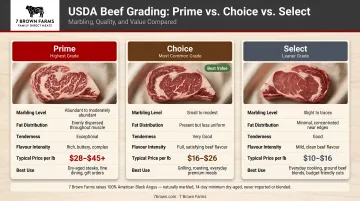
- USDA Prime (11.33% of graded beef) features abundant marbling; expect to pay around $26.99/lb
- USDA Choice (72.31% of graded beef) offers solid quality with moderate marbling, typically $14.48–$18.39/lb
- USDA Select (13.95% of graded beef) is leaner and more affordable but noticeably less juicy
Use Cases of Ribeye Steak
Ribeye is the go-to cut for:
- Special occasions and celebratory dinners where the eating experience is the main event
- Date nights and romantic dinners where a restaurant-quality steak at home makes the right impression