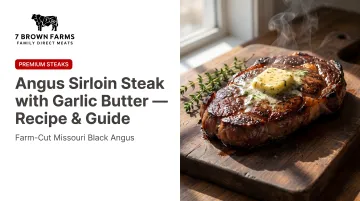
Many home cooks face a frustrating reality: sirloin steaks turn out tough, bland, or overcooked despite their best efforts. The problem usually starts before the pan even gets hot—with the wrong cut or inferior beef. When you combine quality American Black Angus genetics with the right cooking technique, sirloin transforms into one of the most satisfying steaks you can cook at home.
This guide delivers everything you need: a complete recipe with step-by-step instructions, a garlic butter formula, a doneness temperature chart, and pro tips to nail it every time.
TLDR:
- Angus sirloin balances tenderness, bold flavor, and affordability better than pricier cuts
- Pat steaks completely dry and bring to room temperature for a proper sear
- Use high smoke-point oil (avocado or canola), not butter, for the initial sear
- Pull steaks 5°F before target temp—they continue cooking during rest
- Garlic compound butter adds restaurant-level richness without extra work
What Makes Angus Sirloin Steak So Good?
The Angus Advantage
"Angus" isn't just marketing speak. American Black Angus is a specific cattle breed known for superior intramuscular fat—what butchers call marbling. According to USDA specifications, generic "Angus" labeling only requires a predominantly solid black hide, guaranteeing nothing about meat quality. However, Certified Angus Beef (CAB) mandates a minimum "Modest 0" marbling score, ensuring the fat distribution that makes steak tender and flavorful.
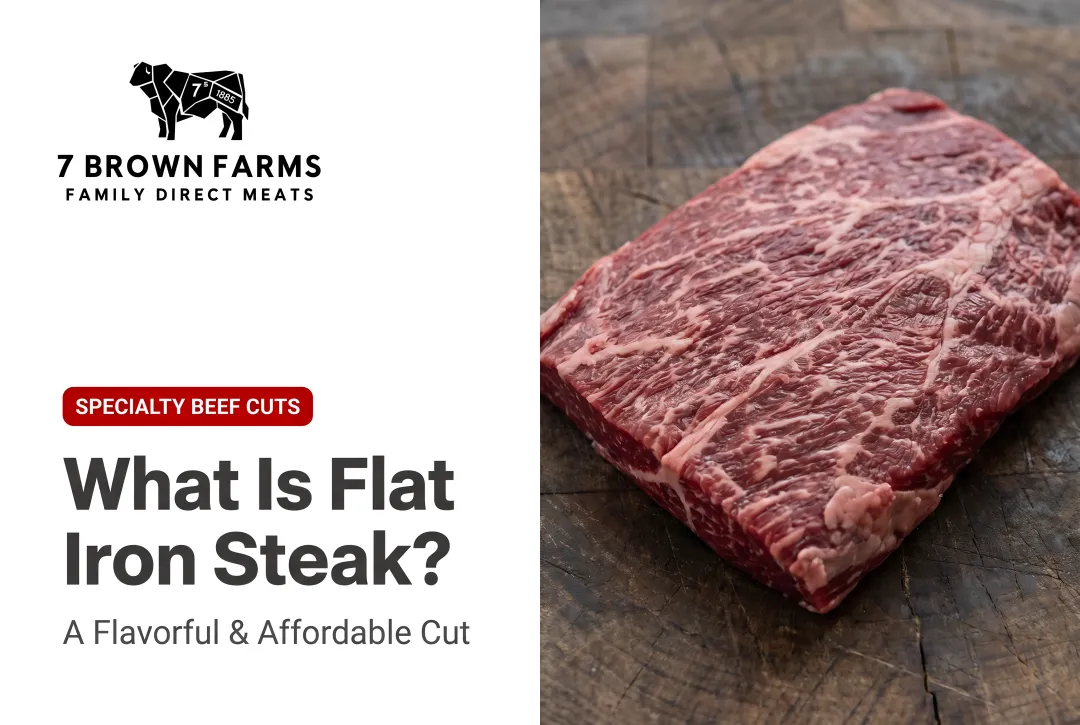
Marbling matters most for leaner cuts like sirloin. Those fine white flecks of fat distributed throughout the muscle melt during cooking, basting the meat from the inside while creating rich, beefy flavor.
Top Sirloin vs. Bottom Sirloin
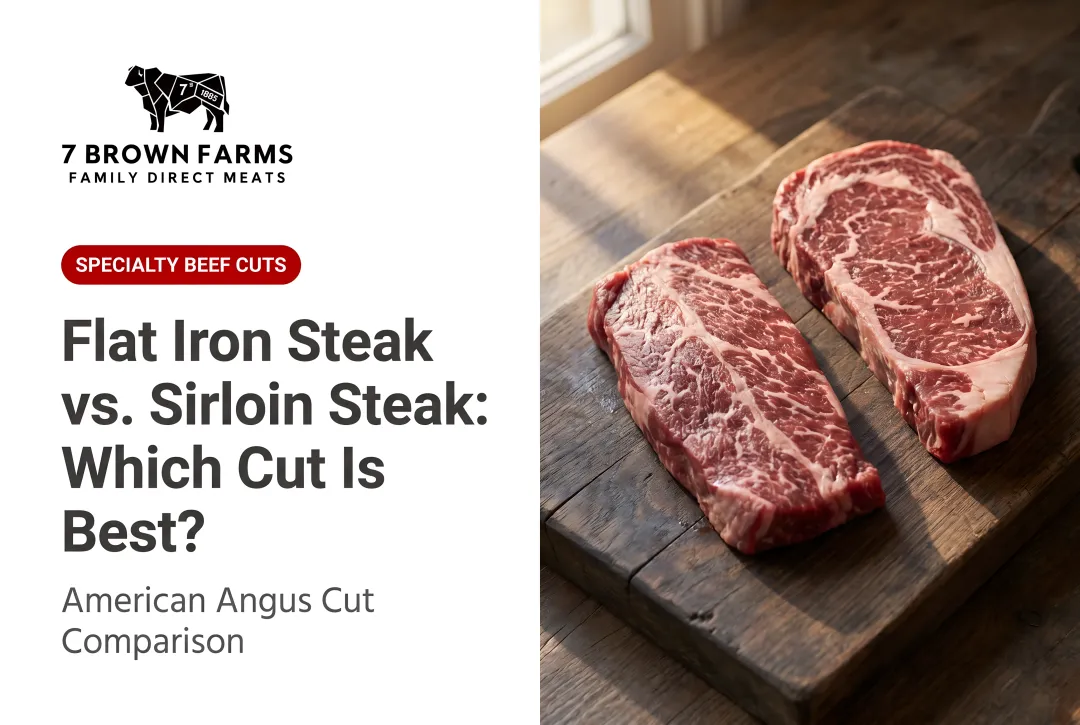
Not all sirloin cuts are created equal. Top sirloin comes from the rear upper loin (primarily the gluteus medius muscle) and delivers more tenderness with excellent flavor—making it ideal for pan-searing and grilling. Bottom sirloin includes cuts like tri-tip and flap meat, which have coarser grain and tougher texture better suited for slow roasting or braising.
When shopping, look for "top sirloin" specifically — it's the cut this recipe is built around, and the one worth spending a few extra dollars on.
The Weeknight Steak Sweet Spot
Angus sirloin occupies the perfect middle ground for home cooks:
- Leaner than ribeye but more flavorful than filet mignon
- More affordable than premium cuts, making it practical for weeknight dinners
- Widely available at butcher counters and quality meat suppliers
- Substantial enough for special occasions yet approachable for regular cooking
Nutritional Profile
According to USDA FoodData Central, an 8 oz (226g) cooked top sirloin provides approximately 60.9g of protein with only 32.2g of fat—considerably leaner than ribeye's 55.8g of fat per comparable portion.
| Metric (8 oz cooked) | Top Sirloin | Ribeye |
|---|---|---|
| Protein | ~60.9g | ~55.8g equivalent |
| Fat | ~32.2g | ~55.8g |
For athletes and health-conscious eaters, that protein-to-fat ratio is hard to beat. Pasture-raised Angus beef can also deliver a more favorable Omega-6 to Omega-3 ratio (as low as 1.6:1 to 2.1:1). Grain-fed beef typically runs closer to 8.3:1. Actual ratios vary based on pasture biodiversity and finishing diet.
Where the beef comes from shapes all of this. 7 Brown Farms raises 100% American Black Angus on a single Missouri Ozarks estate — USDA inspected, no hormones or antibiotics, and 14-day dry-aged before shipping. You skip the grocery store guesswork and start with a steak that's already done the work.
Ingredients for Angus Sirloin Steak with Garlic Butter
For the Steak
- Top sirloin steaks (1.5–2 inches thick, ideally 12–16 oz each from a single-estate Angus source): Thickness matters — thinner steaks overcook before a proper crust can develop.
- High smoke-point oil (avocado or canola): needed for high-heat searing without burning — avocado oil tolerates up to 520°F, canola up to 475°F
- Kosher salt: Generously season both sides
- Freshly ground black pepper: Fresh cracked, not pre-ground
Butter contains milk solids that burn at the temperatures required for proper crust formation (280°F–330°F). Use oil for the sear, and save the butter for basting once the steak is nearly done.
For the Garlic Butter
- Unsalted butter (softened, 4 tablespoons)
- Fresh garlic cloves (minced, 2–3 cloves) — fresh only; garlic powder turns acrid when chilled
- Fresh herbs (parsley, thyme, or chives, finely chopped, 1–2 tablespoons)
- Pinch of salt
- Optional additions: Lemon zest, cracked black pepper, or finely minced shallots
Garlic butter works two ways in this recipe. The compound version is mixed, chilled, and sliced onto the resting steak. The basting version melts directly in the pan with garlic and herbs as the steak finishes. Using both builds flavor at different stages of the cook.
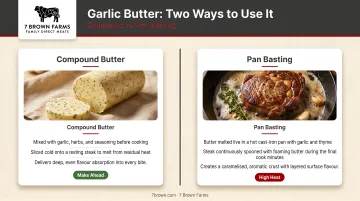
Make-ahead advantage: Garlic butter can be prepared up to 48 hours in advance, wrapped in plastic, and stored in the fridge. Pull it out 15 minutes before serving so it melts cleanly over the hot steak.
How to Cook Angus Sirloin Steak with Garlic Butter
Step 1: Prepare the Steak
Remove steaks from the refrigerator 30–45 minutes before cooking to bring them to room temperature. This ensures even cooking from edge to center.
Pat both sides completely dry with paper towels. Surface moisture blocks crust formation — water on the surface steams instead of sears, killing that deep golden-brown crust before it starts.
Season both sides generously with kosher salt and freshly ground black pepper.
Step 2: Sear on the Stovetop
Preheat a cast iron skillet over medium-high heat until very hot (approximately 5-7 minutes). Add 1-2 tablespoons of high smoke-point oil and let it shimmer—not smoke.
Place steaks in a single layer without crowding the pan. Sear undisturbed for 2–3 minutes per side until a deep golden-brown crust forms.
Don't move the steak. Lifting, flipping prematurely, or shifting position prevents proper crust development. The steak will naturally release from the pan when the crust is set.
Step 3: Add the Garlic Butter Baste
Reduce heat to medium. Add 2-3 tablespoons of butter, 2-3 smashed garlic cloves, and fresh herb sprigs (thyme or rosemary) directly to the pan.
As the butter melts and foams, tilt the pan slightly and use a spoon to continuously baste the top of the steak with hot garlic butter for 1–2 minutes. This builds richness and flavor without overcooking the interior.
Step 4: Check Temperature and Rest
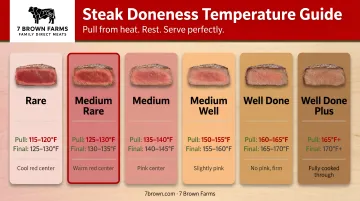
Use an instant-read meat thermometer inserted through the side (not the top) to check internal temperature. Pull the steak off heat 5°F before your target — steaks climb 5°F to 15°F during resting due to carryover cooking.
Use an instant-read thermometer inserted through the side (not the top) to check internal temperature. Pull the steak off heat 5°F before your target — steaks climb 5°F to 15°F during resting due to carryover cooking.
Quick doneness reference:
| Doneness | Pull Temp | Final Temp |
|---|---|---|
| Rare | 120°F | 125°F |
| Medium-Rare | 125°F | 130°F |
| Medium | 130°F | 135°F |
| Medium-Well | 140°F | 145°F |
Transfer to a cutting board, tent loosely with foil, and rest for 5–8 minutes. Resting allows juices to redistribute throughout the muscle fibers — skip it and they'll run straight onto the cutting board.
Step 5: Add Compound Butter and Slice
Place a generous pat of chilled garlic compound butter on top of the resting steak and let it melt into the meat.
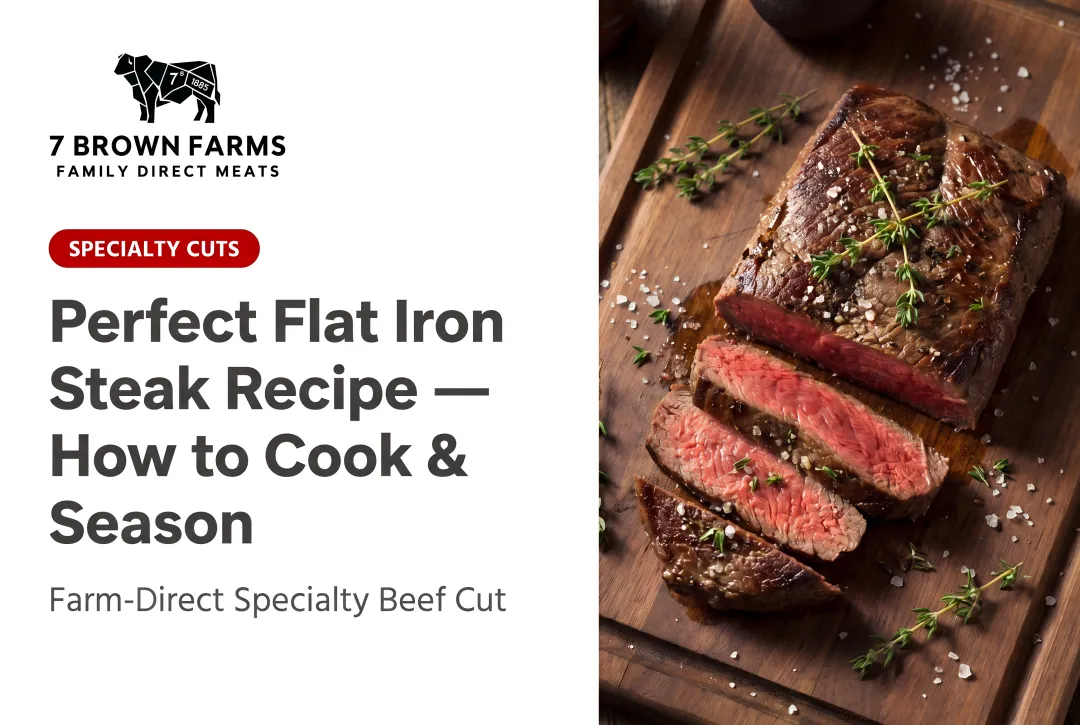
Slice against the grain for maximum tenderness. Look for the muscle fibers running lengthwise through the steak, then cut perpendicular to them. Shortening those fibers makes each bite noticeably more tender.
Garnish with fresh parsley and serve immediately.
Steak Doneness Temperature Chart
| Doneness | Target Temp (Pull From Heat) | Final Temp After Rest | Description |
|---|---|---|---|
| Rare | 120°F | 125°F | Cool red center |
| Medium-Rare | 125°F–130°F | 130°F–135°F | Warm red center (recommended for Angus sirloin) |
| Medium | 130°F–135°F | 135°F–145°F | Warm pink center |
| Medium-Well | 140°F–145°F | 145°F–155°F | Slightly pink center |
| Well-Done | 155°F+ | 160°F+ | No pink (not recommended) |
Use a meat thermometer—always. Visual and touch tests leave too much room for error — a $15 instant-read thermometer is the only way to hit your target temp consistently, every time.
Angus sirloin hits its peak at medium-rare to medium. Push past that, and the intramuscular fat — the marbling that makes Black Angus worth buying — renders out completely, leaving a dry, tough result no sauce can fix.
Pro Tips for the Best Angus Sirloin Steak
Cast Iron is King
Cast iron outperforms stainless steel and nonstick pans for two reasons: thermal mass and emissivity. Its high volumetric heat capacity means the pan stays hot even when cold meat hits the surface — critical for a proper sear.
Cast iron also has an emissivity rating of 0.64 versus stainless steel's 0.07, meaning it radiates heat above and around the contact point, not just directly beneath the steak.
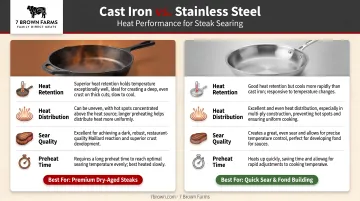
Cast iron also transitions from stovetop to oven if you need to finish very thick cuts — no pan-swapping required.
Don't Skip the Dry Brine Option
If you have 1–24 hours before cooking, apply kosher salt and leave the steak uncovered in the fridge. The process works in two stages:
- Salt draws surface moisture out via osmosis
- That moisture is reabsorbed along with the salt, which denatures proteins and boosts water-holding capacity
- The result: deeper seasoning and a drier surface that sears into a better crust
Dry brining is different from wet marinades and works especially well with Angus beef, which already has superior marbling. That marbling is exactly why the quality of your starting cut matters just as much as your technique.
Start with Quality Beef
The best technique in the world can only take an average steak so far. Starting with premium, single-estate American Black Angus beef like 7 Brown Farms' cuts — raised on a single Missouri estate, dry-aged a minimum of 14 days, and shipped frozen-tight with no hormones or additives — gives you a flavor foundation that technique alone can't manufacture.
What to Serve with Angus Sirloin Steak
Classic Steakhouse Sides
Angus sirloin pairs beautifully with traditional steakhouse accompaniments:
- Mashed or roasted potatoes
- Creamed spinach
- Roasted asparagus
- Sautéed mushrooms
- Wedge salad with blue cheese dressing
These sides let the beef remain the star — and with garlic butter already in the mix, heavy sauces aren't needed.
Light and Fresh Pairings
For health-conscious eaters, balance the richness of the steak with lighter sides:
- Arugula salad with lemon vinaigrette
- Roasted broccoli with garlic
- Tomato-cucumber salad
Sirloin runs leaner than ribeye, so these lighter pairings complement rather than compete with the cut — keeping the plate satisfying without feeling heavy.
Frequently Asked Questions
What is Angus sirloin steak?
Angus sirloin is a top sirloin steak cut from the rear upper loin of American Black Angus cattle—a breed prized for superior marbling, flavor, and tenderness compared to generic commodity beef.
What is the difference between Angus beef and sirloin steak?
"Sirloin" refers to the cut, while "Angus" refers to the breed of cattle. Angus sirloin means a sirloin cut sourced specifically from Angus cattle, which consistently delivers better marbling and flavor than generic commodity sirloin.
Is Angus sirloin steak good?
Angus sirloin is one of the best everyday steaks you can buy. It delivers genuine beefy flavor, solid tenderness, and is far more affordable than premium cuts like ribeye — particularly when sourced from well-marbled, single-estate cattle.
Is a boneless beef sirloin steak good?
Boneless sirloin is ideal for pan-searing because it lies flat for even contact with the skillet, cooks evenly, and is easier to slice—making it the preferred format for this garlic butter recipe.
How do I know when my sirloin steak is done?
Use an instant-read thermometer inserted through the side of the steak. For medium-rare, pull it at 125°F — it will rise to 130°F as it rests. Check the recipe's temperature guide above for other doneness levels.
Can I make the garlic butter ahead of time?
Yes. Garlic compound butter can be made up to 48 hours ahead, stored in the fridge wrapped in plastic wrap or in an airtight container, and brought to room temperature 15 minutes before serving.