Good news: the brisket flat is more manageable than it looks. This lean, rectangular cut delivers clean slices perfect for BBQ plates and family gatherings—without the guesswork of a full packer brisket. This guide walks you through choosing the right flat, trimming it properly, and cooking it low and slow to juicy, tender perfection.
Key Takeaways
- The flat is the leaner half of a whole brisket—easier to slice and more widely available than the point
- Choose even thickness, visible marbling, ¼-inch fat cap, and USDA Choice or Prime grade
- Trim silver skin and excess fat, then season with coarse salt and black pepper
- Smoke at 225–250°F; wrap once the flat hits 165–170°F, then pull at 203–205°F when probe tender
- Oven braising or the slow cooker delivers equally tender results for those skipping the smoker
What Is a Brisket Flat?
Brisket comes from the lower chest of the cow—a heavily worked muscle group packed with connective tissue and collagen. This is why it demands long, low-heat cooking to break down into tender, melt-in-your-mouth beef.
A whole packer brisket contains two distinct muscles separated by a fat layer:
- The flat (first cut): Leaner, rectangular, uniform thickness—typically 4–8 lbs when sold separately
- The point (second cut or deckle): Thicker, fattier, irregular shape with heavy marbling
Whole packers weigh 12–16 lbs and include both muscles—most grocery stores stock only the flat.
Brisket Flat vs. Brisket Point: Key Differences
| Flat (First Cut) | Point (Second Cut) | |
|---|---|---|
| Fat content | Lean, uniform | Heavy intramuscular marbling |
| Shape | Rectangular, even thickness | Thick, irregular |
| Best for | Clean slices, Texas BBQ plates | Shredding, burnt ends |
| Retail availability | Widely available | Rarely sold separately |
| Cook time | Faster; needs moisture management | Longer; self-bastes from fat |
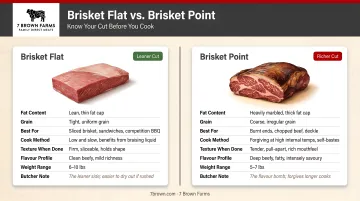
For smaller gatherings (8–10 people), the flat delivers cleaner presentation and a shorter cook. Opt for a whole packer when you want the point's fat to baste the flat through a long smoke.
Once you know which cut fits your cook, the flat's versatility opens up several directions:
- Smoked BBQ slices
- Corned beef
- Pastrami
- Pot roast
- Jewish-style braised brisket
How to Select the Best Brisket Flat
USDA Grading: Why Marbling Matters
USDA grades beef as Select, Choice, or Prime based on marbling (intramuscular fat). Since the flat is naturally lean, marbling is critical to prevent a dry result.
- Minimum: USDA Choice for adequate marbling
- Ideal: USDA Prime if budget allows—superior marbling means better flavor and moisture
The Bend Test
Hold the flat by one end—it should sag and flex under its own weight. A stiff, rigid flat signals very low fat content and will likely cook up dry. Also check for even thickness across the cut to ensure uniform cooking.
The Fat Cap
Look for a thin, even layer of fat on one side, about ¼ inch thick after trimming:
- Under ¼ inch leaves the meat unprotected during a long cook
- Over ½ inch means more trimming and money spent on fat you'll discard
Sourcing Options
- Grocery stores & warehouse clubs: Widely available; quality varies. Warehouse clubs often carry solid Choice-grade flats at good value.
- Farm-direct: Full traceability from a single source. 7 Brown Farms raises 100% American Black Angus in the Missouri Ozarks—USDA inspected, no hormones or antibiotics, 14-day dry-aged, and shipped frozen direct to consumers across the Continental US.
Sizing Guidance
For home cooking:
- A 4–6 lb flat feeds 8–10 people
- Plan for about ½ lb of cooked brisket per person
- Brisket loses 38–50% of its weight during cooking due to moisture and fat loss
Trimming and Prepping Your Brisket Flat
Trimming Steps
- Reduce the fat cap to ¼ inch using a sharp flexible or boning knife. Trim evenly across the surface.
- Remove the silver skin — this shiny membrane on the meat side won't break down during cooking and turns tough and chewy. Slide your knife under it and peel it away.
Pro tip: Chill the flat in the freezer for 20–30 minutes before trimming—it firms up and makes trimming easier.
Seasoning
A two-ingredient rub is all you need:
- Coarse kosher salt
- Freshly ground black pepper
This classic combo lets the beef's natural flavor and smoke shine through. Some cooks add garlic powder or a touch of brown sugar, but avoid heavy or fine-ground rubs that gum up and prevent proper bark formation.
Let the seasoned flat rest at room temperature for 45–60 minutes before cooking (maximum 2 hours for food safety).
Injections and Marinades
Injecting beef broth or tallow is common in competition BBQ. For home cooks, it's optional but can help if using a lower-grade flat. A well-marbled Choice or Prime flat from a reputable source doesn't need injection.
How to Smoke a Brisket Flat
Smoker Setup and Wood Selection
Preheat your smoker to 225–250°F with consistent airflow—stale or heavy smoke creates bitter bark.
Best wood choices:
- Post oak: Traditional Texas choice, burns clean
- Hickory: Bold, deep smoke flavor—excellent with beef
- Pecan: Middle-ground option
- Fruitwoods (cherry, apple): Too mild alone; blend with oak or hickory
Use a water pan to maintain humidity and prevent the lean flat from drying out.
The First Smoke Phase
Place the flat fat side up with the thickest end facing the heat source. Fat renders downward, self-basting the lean meat throughout the cook.
Insert a probe thermometer into the thickest part and smoke uncovered until internal temp reaches 165–170°F — typically 4–6 hours.
After the first 90 minutes, start spritzing lightly with apple cider vinegar or a 50/50 mix with water. Repeat every 45 minutes.
The stall: Expect the temperature to plateau around 150–165°F. Don't chase it — hold your temperature and let it work through.
Wrapping and the Second Phase
Why wrap? The flat loses moisture faster than the point. Wrapping around 165–170°F helps push through the stall, locks in juices, and tenderizes connective tissue.
Wrapping options:
- Butcher paper: Breathable wrap that preserves bark — the preferred method among Texas pitmasters
- Foil: Traps more steam and speeds the cook, but expect softer bark
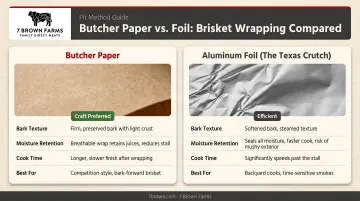
Add a splash of beef broth before sealing the wrap, then bump your smoker to 275°F to finish efficiently.
Doneness and the Probe Test
The flat is done when it reaches 203–205°F internal temperature AND a probe slides through the thickest part with little resistance, the way it moves through warm butter.
Temperature alone isn't enough — tenderness is the real signal. Pull it from the smoker as soon as it probes clean to avoid overcooking.
Resting and Slicing
Rest: Keep the wrapped flat in a cooler or warm oven for 30–60 minutes (up to 2 hours). This allows muscle fibers to reabsorb their juices.
Slicing: Cut against the grain in ¼-inch slices for maximum tenderness. The grain typically runs lengthwise on the flat—look closely and slice perpendicular to those muscle fibers.
A well-rested flat holds together cleanly when sliced and stays moist throughout.
Common Mistakes to Avoid
- Skipping the rest period
- Wrapping too early before bark sets (before 165°F)
- Using fine-ground rubs that turn pasty
- Opening the smoker lid too frequently
- Pulling the flat too early before probe tender
Other Cooking Methods and Leftover Brisket Ideas
Other Cooking Methods
| Method | Temp & Time | Result |
|---|---|---|
| Braising (Dutch oven) | 325°F for 3–4 hours with broth, aromatics, root vegetables | Fork-tender; classic Jewish-style preparation |
| Slow cooker | Low for 8–10 hours with similar aromatics and liquid | Deeply tender, hands-off cook |
| Oven-finishing | 225°F wrapped in foil with broth until probe tender | Smoke-free but still moist and flavorful |
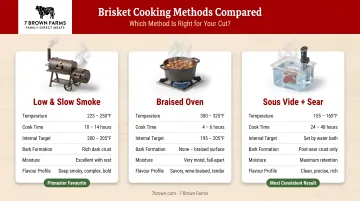
None of these match the depth of a smoked flat, but all three deliver tender, sliceable brisket — and whichever method you use, leftovers are half the reward.
Leftover Ideas
Smoked brisket flat reheats well and works in multiple dishes:
- Brisket tacos
- Brisket sandwiches with pickles
- Brisket hash
- Enchiladas
- Stirred into mac and cheese
To reheat, wrap in foil with a splash of beef broth and warm slowly in a 250°F oven to preserve moisture. Vacuum-sealed portions keep up to 3 months in the freezer.
Serving Suggestions
Pair sliced flat with classic BBQ sides:
- Creamy coleslaw
- Baked beans
- Potato salad
- Pickles
- White bread
The pan drippings from wrapping can be strained, de-fatted, and served as a jus alongside.
Frequently Asked Questions
What's the difference between a whole beef brisket and a brisket flat?
A whole (packer) brisket contains two muscles—the flat and the point—separated by a fat layer. The brisket flat is the leaner, rectangular portion sold on its own. Flats are more readily available at grocery stores and easier to manage for home cooking.
What is the best way to cook a flat brisket?
Low-and-slow smoking at 225–250°F is the most reliable method: wrap around 165–170°F and pull at 203–205°F when probe tender. Braising is a solid alternative for those without a smoker.
Is brisket healthy for cholesterol?
Brisket flat is high in protein and contains monounsaturated fats (oleic acid), but a 3 oz trimmed serving also carries approximately 5.9 grams of saturated fat. Keeping portions moderate and trimming visible fat before eating helps manage the overall fat intake.
What is flat cut brisket good for?
It's ideal for clean sliced BBQ brisket, corned beef, pastrami, pot roast, braised brisket, and any preparation where uniform slices are desired.
What cuts of meat are in a whole beef brisket?
A whole brisket contains two cuts: the flat (first cut, leaner, rectangular) and the point (second cut/deckle, fattier, thicker, irregular shape). Together they typically weigh 12–20 lbs and can be purchased as a full packer brisket or broken down into individual cuts.
What is a brisket called in a grocery store?
Grocery stores typically label it "beef brisket flat," "flat cut brisket," "brisket first cut," or simply "beef brisket." Grocery stores most commonly stock the flat; the point is rarely sold at retail.