Introduction
Picanha is the single most ordered cut at Brazilian steakhouses—and most American home cooks have never heard of it. Coulotte, its French counterpart, turns up on bistro menus but almost never in grocery stores. Both cuts are gaining traction on U.S. restaurant menus, yet remain largely unknown outside enthusiast circles.
What makes this interesting: both cuts come from the exact same muscle on the same part of the cow. They're prepared, marketed, and eaten in distinctly different ways—the differences are cultural and culinary, not anatomical.
This guide breaks down what each cut is, what actually separates them, and how to choose the right one for your next meal.
Key Takeaways
- Picanha and coulotte come from the same muscle: the top sirloin cap on the cow's hindquarter
- The key difference is fat cap management: picanha keeps it thick and intact; coulotte is trimmed lean
- Both deliver bold, beefy flavor, but picanha is richer thanks to fat rendering during cooking
- Picanha excels on high-heat grills; coulotte suits quick weeknight pan-searing
- Quality sourcing shapes the result: breed, diet, and aging all directly impact the final experience
Picanha vs. Coulotte: Quick Comparison
Fat Cap
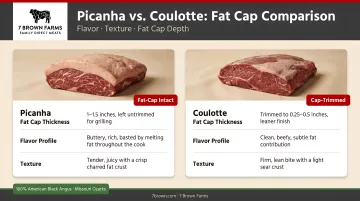
Picanha: Thick fat cap left fully intact through cooking—it's non-negotiable in traditional Brazilian preparation. This layer of subcutaneous fat renders slowly, basting the meat from the outside in.
Coulotte: Fat cap largely trimmed before sale or cooking, reflecting French and American butchery preferences for leaner presentation and faster cook times.
Flavor & Texture
Picanha: Rich, intensely beefy, and self-basted. The fat renders into the meat, producing a caramelized exterior and juicy interior that delivers steakhouse-quality results.
Coulotte: Bold sirloin-style flavor with a leaner bite. Still tender when cooked properly, but less rich without the full fat cap doing its work.
Best Cooking Method
Picanha: Skewered in a C-shape over open flame or high-heat grill. Whole-roasting also works. Always cook fat-side down first to render and build a crust.
Coulotte: Pan-sear individual steaks or oven-roast. Faster cook time due to trimmed fat profile makes it more weeknight-friendly.
Price & Availability
Both cuts are relatively underpriced compared to ribeye or tenderloin. Retail benchmarks show picanha ranging from $9.98 to $12.49 per pound for Choice grade, roughly half the cost of ribeye.
Both cuts are genuinely hard to find at conventional grocery stores. American commercial butchering practices typically don't preserve this primal as a standalone cut, so the top sirloin cap is usually absorbed into generic sirloin steaks or ground beef programs before it ever reaches retail display.
What Is Picanha?
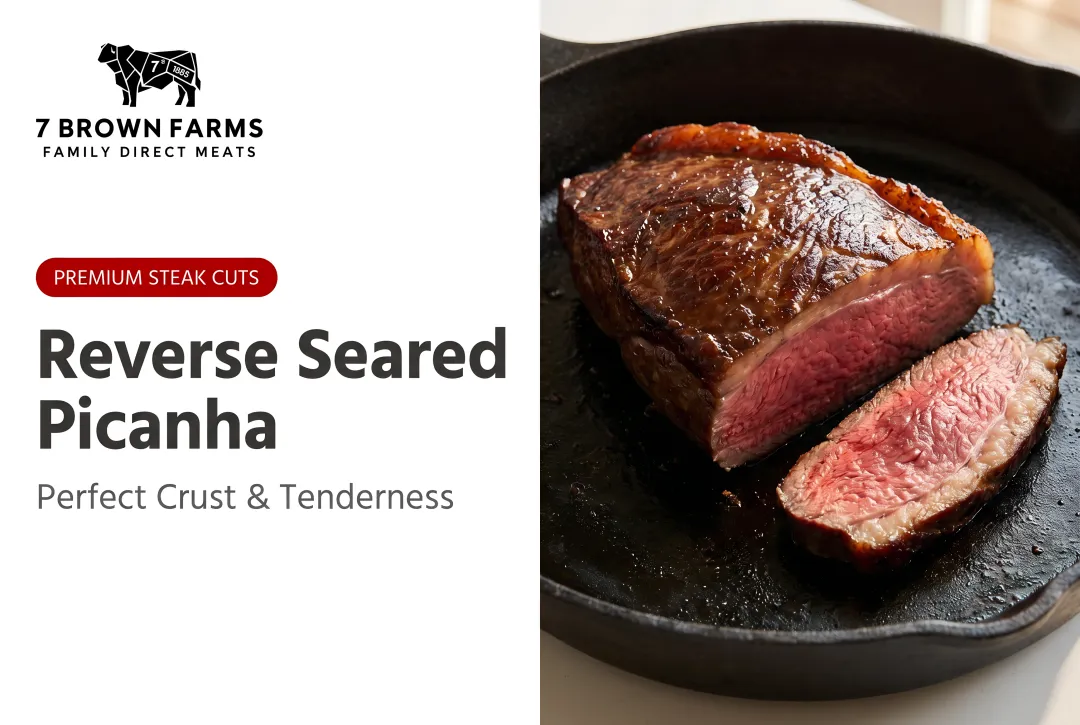
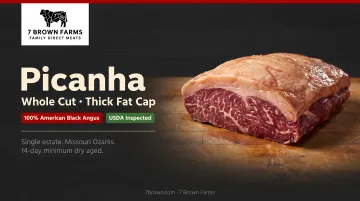
Picanha is a triangular-shaped cut from the top sirloin cap (also called the rump cap or biceps femoris muscle), sitting at the very top of the cow's hindquarter. Each animal yields only two picanhas, typically weighing between 2 to 3 pounds each. This scarcity contributes to its appeal among steak enthusiasts who know what they're looking for.
The Fat Cap: Picanha's Defining Feature
The thick layer of subcutaneous fat covering one side of the muscle is what makes picanha special. During cooking, this fat slowly renders and bastes the meat from the outside in, producing external caramelization and internal juiciness that lean cuts simply cannot replicate. In Brazilian tradition, trimming this fat before cooking is considered a fundamental mistake. The fat is the point — the lean muscle is simply its vehicle.
Cultural Context: Brazil's National Treasure
Picanha is the centerpiece of Brazilian churrasco (open-fire barbecue). It's traditionally skewered in a C-shape and cooked over charcoal so the fat faces the fire, then carved tableside at Brazilian steakhouses (churrascarias). A national culinary institution in Brazil for generations, picanha only gained serious U.S. traction in the late 1990s as Brazilian steakhouses like Fogo de Chão expanded across American cities.
The Eating Experience
Picanha delivers on three fronts:
- Flavor: Bold, intensely beefy — amplified by the rendered fat crust on the exterior
- Texture: Tender throughout, since the top sirloin cap is a low-activity muscle
- Seasoning: Salt, pepper, and garlic are traditional and all you need
Quality and Sourcing Matter
The quality of a picanha varies significantly based on the animal's breed, diet, and aging process. Dry aging concentrates flavor and tenderizes the muscle, while the thick fat cap naturally protects the underlying meat throughout that process. A pasture-raised, properly marbled Black Angus picanha — processed through craft seam butchering and sourced from a single-estate operation like 7 Brown Farms in the Missouri Ozarks — amplifies the natural richness this cut is already known for.
What Is Coulotte?
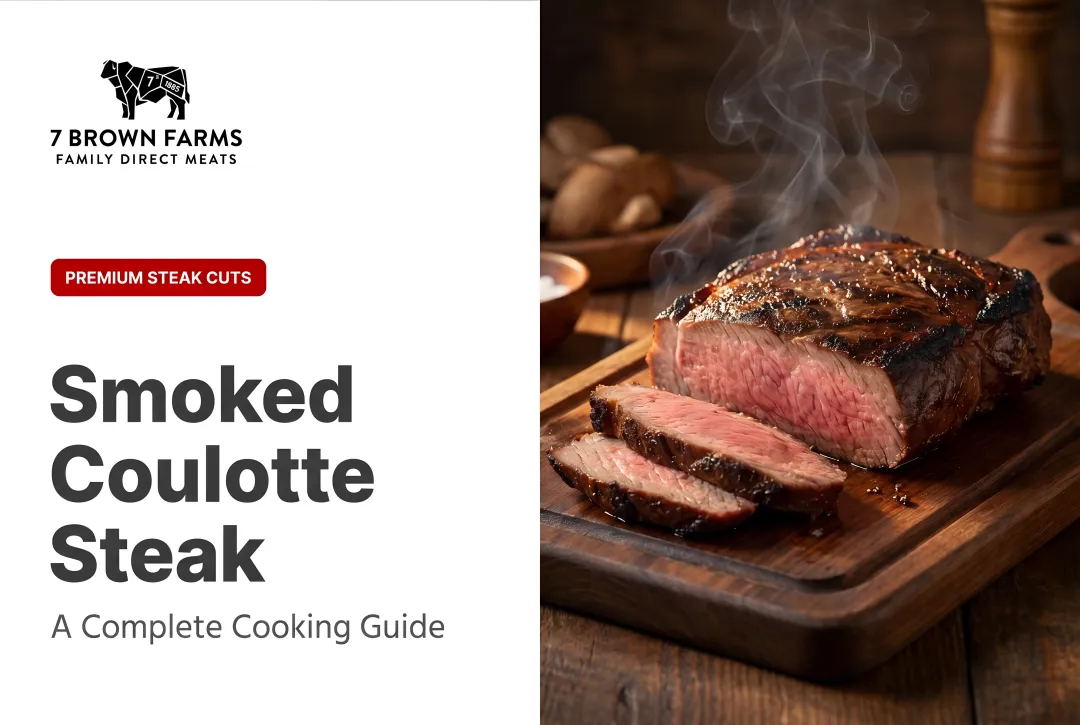
Coulotte is the French name for the top sirloin cap muscle — the same primal location, same structural muscle as picanha. The distinction is almost entirely cultural and linguistic, not anatomical. In American markets, it's also known as top sirloin cap, top butt cap, or rump cap (NAMP 184D).
What Sets Coulotte Apart in Practice
French and American butchery tradition typically trims most of the fat cap before sale. The cut is usually portioned into individual steaks rather than sold as a whole cap with fat intact. This creates a leaner product that cooks faster and presents differently on the plate.
Without the full fat cap, the flavor stays bold and sirloin-forward — still good tenderness and beefy depth — but lighter and less rich than picanha. Some compare it to a leaner ribeye. That trimmed profile also opens up more cooking options.
Versatility for Everyday Cooking
Coulotte steaks work well across a range of methods:
- Quick pan-sear with butter baste
- Oven finish for thicker cuts
- Whole-roasting if some fat cap is preserved
The leaner profile makes it more forgiving for cooks without a live-fire setup.
Picanha vs. Coulotte: What Actually Sets Them Apart?
The "Same but Different" Reality
The anatomy is identical — what differs is the philosophy. Brazilian tradition treats the fat cap as the meal's defining feature and the muscle as its vehicle. French and American tradition treats the lean muscle as the main event, trimming the fat as optional or excess.
Why Fat Cap Management Changes Everything
Subcutaneous fat rendering from the outside in produces a different kind of richness than intramuscular marbling. The caramelized fat crust on picanha creates a textural and flavor contrast that marbled lean meat alone cannot produce. That's why picanha punches above its price class: the fat does the heavy lifting that even expensive cuts rely on marbling to achieve.
The Situational Choice
Choose picanha when:
- You want a showstopper cook for a special occasion
- You're hosting a Brazilian-style backyard feast
- You want maximum flavor with minimal seasoning
- You have access to high-heat grilling or open fire
Choose coulotte when:
- You want bold sirloin flavor in a leaner format
- You need a weeknight-friendly steak that cooks quickly
- You prefer cleaner plating without heavy fat rendering
- You're pan-searing indoors
Of course, knowing which cut to choose only matters if you can actually find it at your butcher counter — and that's where things get complicated in the U.S.
Why Picanha Isn't More Popular in America
U.S. commercial butchering practices break the top sirloin region differently. The top sirloin butt (IMPS 184) is separated along natural seams to isolate the lean center-cut muscle, which becomes premium sirloin steaks. The fat-heavy rump cap is frequently trimmed aggressively, with the lean meat diverted into generic sirloin steaks, stir-fry strips, or ground beef programs.
The naming inconsistency adds to consumer confusion. Picanha, coulotte, top sirloin cap, rump cap—all the same thing. American butchers are trained to use "coulotte" or "top sirloin cap," meaning consumers asking for "picanha" are often turned away or sold the wrong cut.
How to Cook Picanha and Coulotte for Best Results
Cooking Picanha
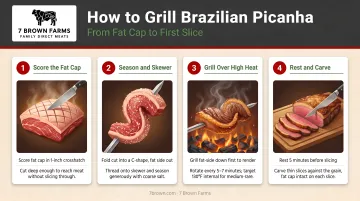
- Score the fat cap in a crosshatch pattern without cutting into the meat—this allows seasoning to penetrate and helps the fat render evenly
- Place fat-side down first over high heat to render and build a crust
- Cook to 125–135°F (rare to medium-rare) for optimal tenderness
- For Brazilian style: Skewer in a C-shape with fat facing out toward the flame and carve thin slices against the grain as outer layers reach doneness
Salt, black pepper, and garlic are the traditional trio. The fat does the heavy lifting on flavor. Finishing with chimichurri or compound butter adds acidity that cuts through richness without overpowering.
Cooking Coulotte
- Bring to room temperature and season well
- Sear in a screaming-hot cast iron pan or grill
- Finish in a 400°F oven if steaks are over 1 inch thick
- Always slice thin against the grain for best texture
Coulotte's leaner profile makes it more forgiving for quick weeknight cooks, but don't push past medium or it toughens.
Sourcing Guidance
Both cuts are genuinely difficult to find at conventional grocery stores because standard American commercial butchering doesn't preserve the top sirloin cap as a whole specialty cut. Seek out farm-direct sources or specialty butchers who practice seam butchering.
If you want to skip the search, 7 Brown Farms ships USDA-inspected, 14-day dry-aged Black Angus cuts direct from the Missouri Ozarks, with custom cut sheets available for bulk orders. It's a straightforward way for home cooks to access these specialty primals without sorting through generic sirloin at the counter.
Frequently Asked Questions
Is coulotte the same as picanha?
Yes, they are the same muscle (top sirloin cap). The names come from different culinary traditions—Brazilian (picanha) and French (coulotte). The key differences lie in how much fat cap is preserved and how each is cooked, not in the animal anatomy.
What is the US equivalent of picanha steak?
In the U.S., picanha is most accurately called the top sirloin cap or rump cap (NAMP 184D). It may also appear as top butt cap or coulotte steak. The inconsistency in naming is a primary reason it's hard to find at standard American grocery stores.
Is picanha more tender than ribeye?
Picanha is a low-activity muscle that is genuinely tender, but ribeye carries more intramuscular marbling throughout. When the fat cap is intact and cooked properly, picanha can rival ribeye in the eating experience—though ribeye's higher marbling baseline makes it more forgiving across different cooking methods.
Is picanha a good cut of steak?
Yes, it's considered excellent by steak enthusiasts—bold flavor, genuine tenderness, and a rich self-basting fat cap that most cuts can't match. It's also typically available at a lower price point than ribeye or tenderloin, making it one of the better-value specialty cuts you can buy.
What is the difference between sirloin and coulotte steaks?
The top sirloin is a broad primal section, while coulotte (top sirloin cap) is one specific muscle cut from the very top of that primal. Coulotte is more tender, has a distinct fat cap (when intact), and is a smaller, more specialized cut compared to a generic top sirloin steak.
Why is picanha not popular in America?
American commercial butchering traditionally breaks the top sirloin primal in a way that absorbs the rump cap into other cuts rather than preserving it separately. The cut also lacks a single consistent name—picanha, coulotte, top sirloin cap, rump cap—which makes it difficult for consumers to identify or request at the counter.