Introduction
Brazilian churrascarias and fine steakhouses have long prized coulotte steak, but backyard smokers are just beginning to catch on. This overlooked cut delivers exceptional beefy flavor with surprisingly simple technique.
Unlike premium cuts that demand your full grocery budget, coulotte rewards patient smokers with deeply flavored, tender results, typically at half the price of comparable ribeye.
This guide walks you through everything you need to transform this crescent-shaped muscle into barbecue gold: what coulotte is, how to prep and smoke it from start to finish, and what to serve alongside it.
TLDR:
- Coulotte (picanha/sirloin cap) is a moderately marbled cut with a thick fat cap that bastes the meat during smoking
- Score the fat cap in a crosshatch pattern before cooking
- Dry-brine at least 2 hours (up to 8) for deeper flavor penetration
- Smoke at 225–250°F until internal temp hits 110°F
- Reverse sear to 125–130°F for medium-rare
- Slice against the grain and serve with chimichurri for authentic Brazilian flavor
What Is Coulotte Steak?
Understanding the Names and Anatomy
Coulotte steak goes by many names — picanha, sirloin cap, and rump cap all refer to the same muscle, the biceps femoris, located at the top of the sirloin above the rump. At most American grocery stores, butchers break the whole muscle into individual steaks and trim away the fat cap in the process.
Finding a whole coulotte with its fat cap intact means going to a dedicated butcher or a farm-direct source — both worth the effort for this cut.
Despite frequent confusion, coulotte is not the same as tri-tip. Both come from the sirloin primal, but they are anatomically distinct muscles that cook and taste differently.
Physical Characteristics That Matter
Look for these defining features:
- Crescent shape with one thick side tapering to a thinner edge
- Thick fat cap on one side (at least ¼-inch thick when intact)
- Moderate marbling throughout the lean muscle
- Relatively lean meat compared to ribeye or strip steak
Why Smoking Suits This Cut
Three characteristics make coulotte a natural fit for the smoker:
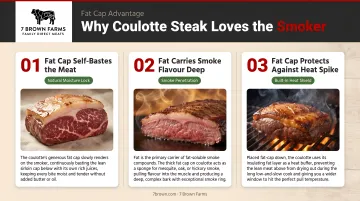
- Fat cap self-bastes the meat. During a low-and-slow cook, that thick layer renders slowly and continuously moistens the lean muscle from above — no spritzing required.
- Lean muscle takes smoke cleanly. Fattier cuts can taste acrid when over-smoked; coulotte builds deep complexity without that risk.
- Strong value for the quality. At $15–18 per pound versus $22–30 for ribeye, it delivers comparable richness when smoked properly.
Choosing and Sourcing Your Coulotte
What to Look for When Buying
Whole muscle with fat cap intact is non-negotiable for smoking. Most big-box stores break coulotte into individual steaks and strip the fat — which removes the very feature that makes this cut worth smoking. Your best options:
- Whole animal butchers who break down primals in-house
- Specialty meat markets serving Brazilian or international communities
- Farm-direct sources that offer custom butchering
Grade matters more here than with quick-cook cuts. Target USDA Choice or Prime. The extra marbling in higher grades protects against dryness during a long smoke, and the beef's natural flavor comes through rather than getting buried.
Inspect the fat cap thickness before buying. You want at least ¼-inch across the entire surface. Up to ½-inch is ideal — thick enough to self-baste during the cook, but not so thick it turns rubbery.
The Farm-Direct Advantage
Once you know what to look for, farm-direct sourcing is the most reliable way to check every box. 7 Brown Farms, a seven-generation family operation in the Missouri Ozarks, ships USDA-inspected, 14-day dry-aged American Black Angus direct to your door — whole cuts with the fat cap intact, raised without hormones, antibiotics, or additives. That combination of consistent marbling and dry-aging is exactly what a long smoke is designed to reward. When the beef is this traceable, the smoker does the rest.
How to Prep Coulotte Steak for the Smoker
Handling the Fat Cap
Scored cap (recommended): Keep the fat cap on and score it with a sharp knife in a crosshatch pattern, cuts about 1 inch apart — through the fat, barely into the meat. Three reasons this works:
- The fat protects the meat from drying out during the long smoke
- Scoring creates channels for seasoning to reach the meat
- Crosshatch cuts help the outer fat crisp beautifully during the finishing sear
Before seasoning, check for tough silver skin between the fat and muscle. Score through it or remove it entirely — it won't render and turns rubbery when cooked.
Trimmed cap alternative: Some pitmasters remove the fat cap entirely for maximum bark coverage and no silver skin concerns. It works — but you trade moisture retention and the buttery richness of rendered fat for a crustier exterior.
Seasoning the Coulotte
Once you've made your fat cap decision, move straight into seasoning. This three-phase approach builds flavor without masking the coulotte's natural beef character.
Phase 1: Dry brine (2-8 hours before cooking)
Apply a generous coating of coarse kosher salt across all surfaces. The salt pulls moisture out, then draws it back in as a seasoned brine — keeping the meat juicier through the smoke.
Place the salted steak uncovered on a wire rack in the refrigerator. Cold air circulation dries the surface, which sets up better bark formation.
Phase 2: Apply the rub (just before smoking)
After the dry brine period, pat the surface completely dry with paper towels. Build a simple rub that enhances rather than overpowers:
- Coarse black pepper as the base
- Garlic powder for savory depth
- A beef seasoning blend if you want a little more complexity
Keep flavors simple — coulotte's natural beef taste is the star.
Phase 3: Temper the meat
Remove the steak from refrigeration 30-45 minutes before it goes on the smoker. Bringing the meat closer to room temperature promotes more even cooking from edge to center.
The Smoking Process: Temps, Wood, and Timing
Setting Up the Smoker
Temperature target: 225-275°F for indirect heat
The tradeoff to understand:
- Lower temps (225°F): Maximum smoke penetration, longer cook window, more forgiving timing
- Higher temps (275°F): Shorter total cook time, still excellent results, less smoke ring development
Pellet grills, offset smokers, and kamado-style cookers all produce excellent coulotte when run in the indirect heat zone.
Wood Selection for Beef
Oak: Provides medium smoke flavor that complements beef's natural taste without competing with it. It's the most traditional pairing because it enhances the meat's depth without masking it.
Hickory: Delivers bolder, sweeter smoke notes with bacon-like undertones. Excellent choice if you want more pronounced smoke character.
Cherry or Pecan: Add subtle sweetness and fruity notes. Best used blended with oak rather than solo.
Mesquite: Burns hot and imparts intense, earthy flavor that can quickly become bitter during long low-temperature cooks. Use it sparingly — or skip it entirely — and save it for quick, high-heat grilling instead.
The Cook: Two-Phase Reverse Sear Method
Phase 1: Low-and-slow smoke (45-90 minutes)
- Place coulotte on the smoker fat cap up (allows fat to baste the meat as it renders). Alternative: fat cap down works well when there's significant direct heat from below—test your smoker's hot spots.
- Insert a leave-in probe thermometer into the thickest part of the meat
- Smoke at 225-250°F until internal temperature reaches 110°F
- Time estimate: typically 45-90 minutes depending on steak size and smoker temp
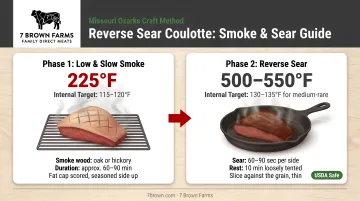
Phase 2: High-heat finish (15-30 minutes)
- Increase smoker heat to 400-450°F (or transfer to a hot grill or cast iron skillet)
- Continue cooking until internal temperature reaches 125-130°F for medium-rare
- Watch the temperature closely—this phase moves fast
- Time estimate: 15-30 minutes depending on heat source
A 2-3 pound coulotte roast generally runs 1.5-2.5 hours from smoker to finish. That said, always cook to temperature — never to time. Starting meat temp, smoker efficiency, and outdoor conditions all shift the clock in ways that make a timer unreliable.
Finishing, Resting, and Slicing Your Smoked Coulotte
The Sear Finish
After the low-and-slow smoke, the exterior remains moist and hasn't developed a proper crust. A quick high-heat sear creates the Maillard reaction—the chemical process between amino acids and sugars that produces browning, crust, and concentrated savory flavor.
How to execute the sear:
- Use the highest heat available: grill set to maximum, cast iron skillet smoking-hot, or smoker cranked to 500°F+
- Sear 1-2 minutes per side, watching internal temperature constantly
- Pull the steak when internal temp hits 125°F (medium-rare)
- Carryover cooking during the rest will bring it to 130-135°F
The fat cap especially benefits from this step, transforming from soft and pale to golden and slightly crispy. Once that crust is set, the final steps are what separate a good coulotte from a great one.
Resting and Slicing
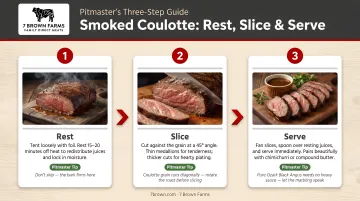
Follow these three steps in order—skipping any one of them costs you quality:
Rest 10-15 minutes. Tent the steak loosely with foil and let it sit. This allows muscle fibers to relax and reabsorb juices. Skip this and watch precious moisture pour onto your cutting board instead of staying in the meat.
Slice against the grain. Identify the direction of the muscle fibers and cut perpendicular to them. This shortens the fibers, making each bite noticeably more tender.
Cut ½-inch pieces. Keep the fat cap attached to each slice for presentation. When properly rendered, that fat is buttery and rich—not chewy—and should be eaten with the meat.
What to Serve With Smoked Coulotte Steak
Smoked coulotte is a rich, bold cut that pairs best with bright, acidic sauces and simple sides that don't compete with the smoke. Here's what works.
Chimichurri: The Traditional Pairing
Chimichurri is the natural match — herb-forward and vinegar-bright, it cuts through the richness of beef and honors the cut's Brazilian roots. Basic recipe:
- Fresh parsley (base)
- Cilantro (brightness)
- Garlic (punch)
- Red wine vinegar (acidity)
- Olive oil (body)
- Red pepper flakes (heat)
Make it in advance and let flavors meld for at least 30 minutes.
Complementary Sides
Brazilian churrascaria:
- Rice and beans
- Farofa (toasted cassava flour)
- Grilled or roasted corn
Straightforward American sides:
- Crusty bread for soaking up drippings and chimichurri
- Green salad to balance the richness
- Roasted vegetables
Leftover inspiration: Smoked coulotte makes exceptional steak sandwiches or tacos the next day. The smoke flavor intensifies overnight.
Frequently Asked Questions
Can you smoke a coulotte steak?
Yes, coulotte (also called picanha or sirloin cap) smokes exceptionally well. The thick fat cap protects and continuously bastes the meat during the low-and-slow cook, while the moderately marbled muscle accepts smoke flavor deeply. The result is tender, deeply flavored beef best served medium-rare.
What temperature should I smoke a coulotte steak to?
Smoke at 225-250°F until the internal temperature reaches 110°F, then finish with a high-heat sear (400-450°F) until internal temp hits 125-130°F for medium-rare. Carryover heat during the 10-15 minute rest adds another 5-10°F, bringing the final serving temperature to 130-135°F.
How long does it take to smoke a coulotte steak?
A 2-3 pound coulotte typically takes 1.5-2.5 hours total when smoked at 225-250°F, including the reverse sear finish. Always cook to internal temperature rather than time. Starting meat temperature, smoker efficiency, and outdoor conditions can all shift the clock significantly.
Should I keep the fat cap on a coulotte steak when smoking?
Keep the fat cap on, but score it in a crosshatch pattern — cuts about 1 inch apart, through the fat but barely into the meat — and trim any tough silver skin between fat and muscle to prevent rubbery texture. Scoring lets seasoning penetrate while the fat shields and self-bastes the meat throughout the cook.
What wood is best for smoking coulotte steak?
Oak is the ideal pairing—it provides medium smoke flavor that enhances beef without overpowering it. Hickory offers a bolder, sweeter alternative with bacon-like notes. Cherry and pecan add subtle fruity sweetness and work well blended with oak. Avoid pure mesquite for low-and-slow cooks, as it can turn bitter; use sparingly if at all.
What is the difference between coulotte and picanha?
They are the same cut—coulotte is the French/American term, while picanha is the Brazilian name. It's also called sirloin cap or rump cap depending on country and butcher. All refer to the biceps femoris muscle from the top sirloin, characterized by a crescent shape and thick fat cap on one side.