This guide covers everything you need to know: what coulotte steak is, how to buy a good one, a simple grilling recipe with step-by-step instructions, alternative indoor cooking methods, and pro tips for slicing and serving.
Key Takeaways
- Coulotte steak comes from the sirloin cap muscle with a thick fat cap that renders during cooking for exceptional flavor
- Look for deep red, well-marbled meat with an intact ¼- to ½-inch fat cap—avoid pre-trimmed versions
- Grill fat-cap-side-down first over direct heat to render fat, then sear the flat sides
- Pull at 130-135°F for medium-rare (the sweet spot for this lean cut) and rest 5 minutes before slicing
- Slice against the diagonal grain—shorter muscle fibers mean noticeably more tender bites
What Is Coulotte Steak and Why Does It Deserve a Spot on Your Grill
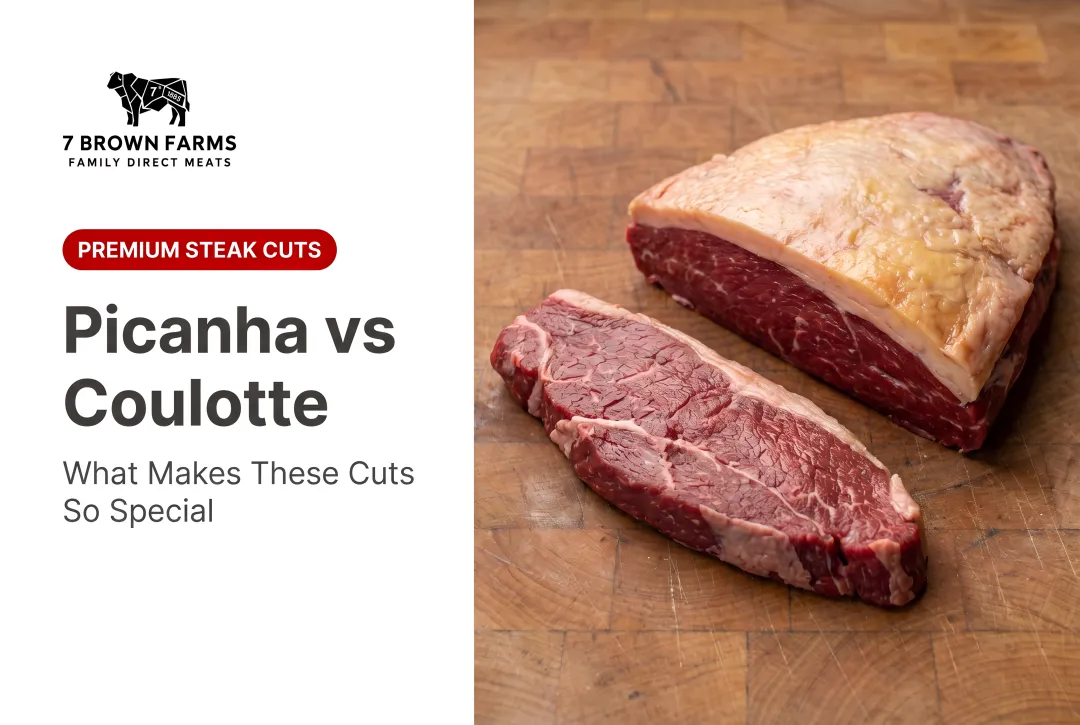
Coulotte steak comes from the sirloin cap muscle at the top of the hindquarter. Officially designated as IMPS 1184D (Beef Loin, Top Sirloin Cap Steak, Boneless), this cut consists entirely of the biceps femoris muscle, separated from the top sirloin along a natural seam. The name derives from the French word culotte, meaning "cap" or "backside," referencing its position on the beef carcass.
The Fat Cap Makes the Difference
The defining characteristic of coulotte steak is its thick, protective fat cap. Because the muscle itself lacks significant intramuscular marbling, this external fat layer acts as a natural baste during cooking. As the fat renders, it melts over the lean meat, delivering a rich, buttery depth that rivals much more expensive cuts.
When buying coulotte, look for a fat cap measuring ¼ to ½ inch thick. Brazilian preparations sometimes feature a full 1-inch cap, but a ¼ to ½ inch cap gives enough flavor without triggering flare-ups on most home grills.
How It Compares to Familiar Cuts
If you're trying to orient yourself, think of coulotte as delivering:
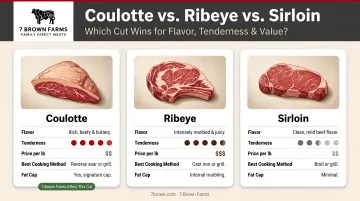
- Beefy, rich flavor comparable to ribeye
- Firmer chew similar to tri-tip
- Leaner than ribeye, yet more tender and flavorful than standard sirloin
While ribeye commands premium prices for its intramuscular marbling, coulotte offers comparable richness through its external fat cap at a fraction of the cost.
Brazilian Heritage and Growing U.S. Popularity
In Brazil, coulotte is called picanha and serves as the centerpiece of churrasco (barbecue) culture. Traditional preparation is minimalist: thick strips folded into a "C" shape with the fat cap out, skewered on large metal swords, seasoned with coarse sea salt, and roasted over open charcoal.
That simplicity travels well. American Black Angus picanha — including grass-and-grain-finished breeds raised in the Missouri Ozarks — develops a fat cap well-suited to both Brazilian skewering and straightforward American grilling. The cut rewards any method you bring to it.
What to Look for When Buying Coulotte Steak
Key Visual Markers of Quality
A high-quality coulotte features:
- Deep red, well-marbled meat with visible fat distributed throughout the muscle
- An intact fat cap measuring ¼ to ½ inch thick — uniform, not shaved down
- Fat cap fully intact: aggressive trimming removes the cut's primary flavor source
Avoid versions where the fat cap has been removed or trimmed too aggressively. The cap is what separates coulotte from generic sirloin steaks.
Where to Find Coulotte
Most standard grocery stores don't carry coulotte regularly. The American beef processing system typically breaks the top sirloin into smaller, trimmed steaks, trimming the fat cap before cuts reach retail shelves.
Your best options:
- Local butcher shops that can cut whole sirloin caps to order
- Latin American markets that stock picanha regularly
- Direct-from-farm suppliers like 7 Brown Farms, which offers single-estate, 100% American Black Angus beef raised in the Missouri Ozarks. Their coulotte is always marbled, 14-day dry-aged, and ships directly to consumers, making it a dependable source for a cut that's genuinely hard to find
Individual Steaks vs. Whole Caps
Coulotte is sold two ways:
| Format | Typical Weight | Best For |
|--------|----------------|----------|
| Individual steaks | 6-10 oz each | Grilling, pan-searing, weeknight meals |
| Whole sirloin cap | 1.5-3 lbs | Roasting, Brazilian-style skewering, entertaining |
For the grilling recipe below, individual steaks are the better starting point. If you're working with a whole cap, the roasting and churrasco methods covered later in this guide apply directly.
Coulotte Steak Recipe: Ingredients
Coulotte has enough natural richness that heavy seasoning works against it. A short ingredient list is all you need:
Core Ingredients:
- Coulotte steaks (approximately 1-1.5 lbs total)
- Kosher salt
- Coarsely ground black pepper
- Unsalted butter or high-heat oil (grapeseed or avocado oil)
Optional Additions:
- Crushed garlic
- Fresh rosemary or thyme (for herb butter)
- SPG rub (salt, pepper, garlic) for a deeper seasoning profile
How to Cook Coulotte Steak on the Grill
Prep Step
- Pat the steaks dry with paper towels—moisture on the surface will steam rather than sear, killing your crust
- Season generously on both sides and edges with salt and pepper
- Let steaks sit at room temperature for 20-30 minutes before cooking
Grill Setup: Two-Zone Method
Set up your grill with hot coals or burners on one side and no heat on the other. This two-zone configuration gives you a direct-heat searing zone and an indirect-heat finishing zone—essential for building a deep crust without overcooking the interior.
Temperature target: The grate over direct heat should reach above 500°F.
Searing Step
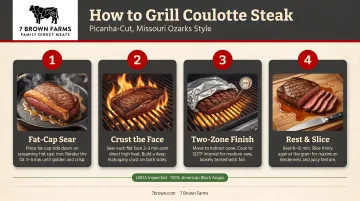
- Start fat-cap-side-down: Place steaks over the hot zone for 2-3 minutes until the fat renders and begins to char slightly
- Sear flat sides: Flip and sear each flat side for 2-3 minutes
- Optional crosshatch marks: Flip back to the first flat side, rotate 45 degrees, and sear another 2-3 minutes
Starting fat-cap-down renders the thick fat layer, letting the steak baste in its own juices as it builds a crisp, deeply browned crust.
Finishing Step
If steaks need more internal temperature after searing, move them to the indirect heat side, close the lid, and cook until they reach desired doneness.
Always use a meat thermometer for accuracy. Pull the steaks 5°F below target temperature to account for carryover cooking.
Doneness Temperature Guide
| Doneness Level | Internal Temperature | Notes |
|---|---|---|
| Rare | 120-125°F | Cool red center |
| Medium-Rare | 130-135°F | Recommended for coulotte |
| Medium | 140-145°F | Warm pink center |
| Medium-Well | 150-155°F | Slightly pink center |
Medium-rare is ideal because the lean interior can dry out at higher temperatures. Culinary experts recommend pulling the steak at 130°F for a perfect medium-rare finish, factoring in the ~5°F carryover rise during resting.
Rest and Serve
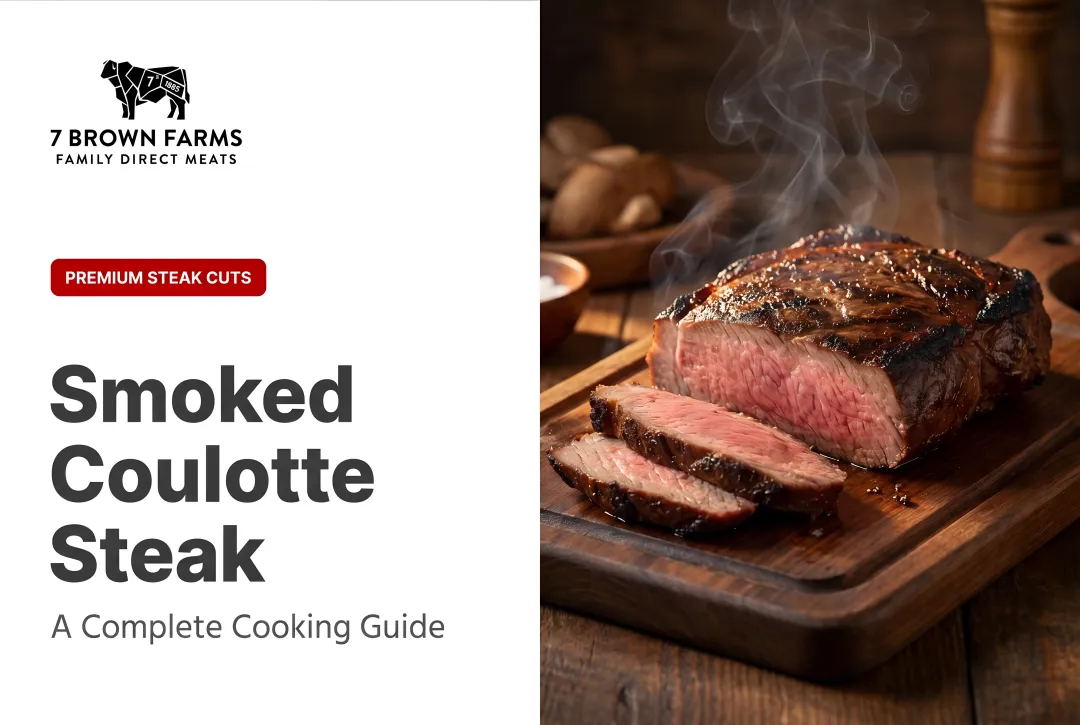
Let the steaks rest on a cutting board for at least 5 minutes before slicing. While resting, melt butter with a smashed garlic clove and fresh herbs in a small pan, then drizzle over the sliced steak for a rich, herb-scented finish that makes every bite count.
Alternative Cooking Methods: Indoor and Stovetop Options
Pan-Sear and Oven Finish
The cast-iron skillet method produces a deep crust without outdoor cooking:
- Heat a cast-iron or heavy stainless pan over high heat until smoking
- Add grapeseed oil and sear the steak fat-cap-down first for 2 minutes
- Sear each flat side for 2-3 minutes
- Transfer the pan to a 375°F oven and continue cooking until desired internal temp is reached
This method is particularly effective for thick steaks or when weather doesn't cooperate with outdoor grilling.
Indoor Grill
Preheat an indoor grill pan to high heat and cook using the same time guidelines as outdoor grilling (2-3 minutes per side). A ¾- to 1-inch steak typically takes 8-10 minutes total for medium-rare — adjust up or down based on thickness, and always verify doneness with a thermometer rather than relying on time alone.
Indoor cooking produces less rendered fat smoke than outdoor grilling, but keep ventilation running to stay ahead of any splatter.
How to Slice and Serve Coulotte Steak
Slicing Against the Grain Is Critical
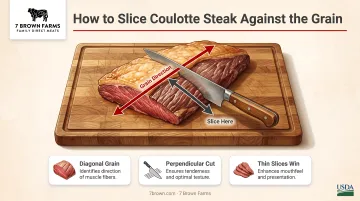
The muscle fibers of the sirloin cap run diagonally along the wedge-shaped cut. Cutting with the grain leaves long, tough fibers intact — the result is a chewy, rubbery bite. Slicing against the grain shortens those fibers and makes every slice noticeably more tender.
Before cooking, look for parallel lines running diagonally across the surface — that's your grain. Cut perpendicular to those lines, angling your knife as needed to keep the fibers short in every slice.
Serving Ideas That Let the Cut Shine
Classic plating:
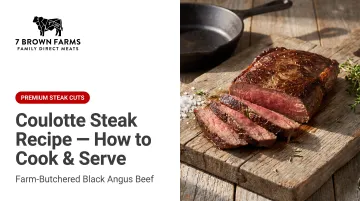
- Slice over a wooden board with herb butter and flaky salt
- Top with chimichurri (the traditional Brazilian pairing)
- Pair with roasted garlic potatoes or grilled asparagus
- Add a simple arugula salad to cut through the richness
Leftovers and meal prep:
- Slice thin over salads for a protein-packed lunch
- Build steak tacos with fresh salsa and pickled onions
- Layer into sandwiches with caramelized onions
- Toss into grain bowls with roasted vegetables
Optional Marinade
Coulotte doesn't need a marinade — its natural beefy flavor holds up with nothing more than salt and pepper. If you want extra brightness before cooking, a simple mix works well:
- Olive oil
- Garlic
- Citrus juice (lemon or lime)
- Fresh herbs (rosemary or thyme)
Keep it to 30–60 minutes. Overnight or heavily acidic marinades can break down the lean interior and soften the texture more than you want.
Frequently Asked Questions
What is another name for coulotte steak?
Coulotte is also called top sirloin cap, sirloin cap steak, and picanha (or picaña)—the Brazilian name used in churrasco culture. In the U.S., it may also appear labeled as beef rump cap or cap steak, though all refer to the same IMPS 1184D cut.
Is coulotte steak expensive?
Coulotte is budget-friendly compared to ribeye or NY strip, offering comparable flavor and tenderness at a lower price point. Pricing varies by sourcing—a well-marbled, dry-aged cut from a farm like 7 Brown Farms costs more than commodity beef, but the quality difference is noticeable.
Is coulotte steak a good cut?
Yes. The fat cap delivers rich, beefy flavor while the lean interior stays tender at medium-rare, and the quick cook time suits both weeknights and special occasions. It's underrated mostly because it's harder to find than mainstream cuts.
What is the best marinade for coulotte steak?
Coulotte is flavorful enough to need only salt and pepper. If using a marinade, keep it simple: olive oil, garlic, citrus (lemon or lime), and fresh herbs like rosemary or thyme for 30-60 minutes. Avoid overnight acid-heavy marinades; they can break down the texture of the meat.
How long should I cook steak on an indoor grill?
On an indoor grill preheated to high heat, a 1-inch coulotte steak takes about 8-10 minutes total for medium-rare (135°F), flipping once or twice. Always verify with a meat thermometer—heat output varies by equipment.
What do you use coulotte steak for?
Serve it as a grilled or pan-seared steak, or slice leftovers over salads, into tacos, on sandwiches, or into grain bowls. It also shines Brazilian-style as part of a churrasco spread with chimichurri and grilled vegetables.