Introduction
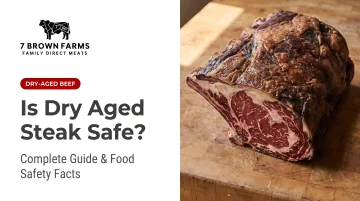
When you unwrap a dry aged steak for the first time, it can look downright unsettling. The dark crust, funky aroma, and sometimes visible mold challenge every instinct about what "fresh" meat should look like. Yet this ancient preservation method is one of the most controlled, safest methods for enhancing beef—when done right.
This guide covers how dry aging functions as a natural safety system, how to identify safe versus spoiled beef, and what to watch for from purchase to plate.
Dry aged beef from a USDA-inspected source is generally safe when properly handled — but a few common mistakes at any stage can compromise that safety.
Key Takeaways
- Commercially dry aged beef is safe because temperature (32–39°F), humidity (75–85%), and airflow are tightly controlled throughout the process
- The dark crust (pellicle) that forms during aging protects the meat and gets trimmed before sale
- Surface mold is typically a quality concern, not a safety emergency
- Trust your nose: nutty, funky, or blue-cheese aromas are normal. Ammonia-like odors mean spoilage
- Cook dry aged steak to the USDA-recommended 145°F internal temperature. Never eat it raw
- Skip home fridge aging. Safe dry aging requires USDA-inspected facilities with precise environmental controls
What Makes Commercial Dry Aging Safe
Dry aging is controlled decomposition, not spoilage. The distinction matters. Every variable that allows dangerous bacteria to thrive—temperature, humidity, oxygen flow—is precisely managed in commercial facilities. This creates an environment where beneficial enzymatic and microbial activity enhances the meat while pathogens are suppressed through what food scientists call a "hurdle effect."
USDA-inspected facilities operate under regulated food safety standards that require consistent monitoring and documentation. The Italian Stagionello cabinets used at 7 Brown Farms, for example, follow University of Florence aging protocols and consistently achieve under 15% shrink loss on primals — well below the industry standard of 20–50%.
The safety framework relies on validated environmental controls that create antimicrobial hurdles through surface desiccation and microbial competition. When temperature drops below 2°C (36°F), the growth of Salmonella and Listeria monocytogenes halts, while controlled humidity restricts spoilage bacteria like Pseudomonas.
The Role of Temperature, Humidity, and Airflow
Commercial dry aging chambers operate within strict parameters that make the process safe:
| Parameter | Standard Range | Safety Function | |-----------|----------------|-----------------|| | Temperature | 0–4°C (32–39.2°F) | Prevents pathogen growth; temperatures below 2°C halt Salmonella and L. monocytogenes | | Relative Humidity | 75–85% | Low enough to restrict spoilage bacteria but high enough to prevent excessive moisture loss | | Airflow | 0.2–2.5 m/s | Ensures uniform drying and prevents moisture pockets that harbor bacteria |
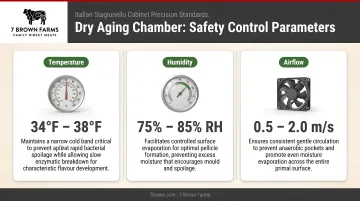
Constant, regulated airflow is critical. It prevents moisture from pooling on the meat's surface—which would encourage dangerous bacterial growth—and ensures the outer layer dries into a protective crust rather than becoming a breeding ground for pathogens. Research confirms that without adequate airflow, humidity imbalances create ideal conditions for harmful bacteria to multiply.
The Protective Pellicle — Nature's Safety Layer
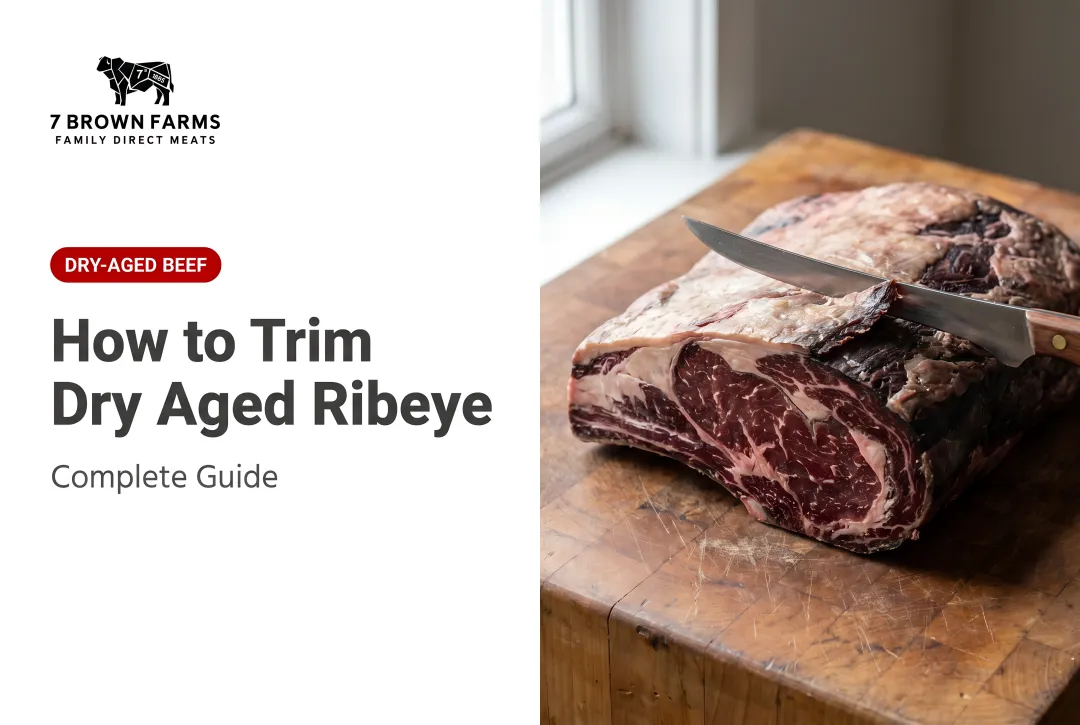
During aging, the outer surface of beef dries into a hard crust called the pellicle. This forms as water activity on the meat's exterior drops from 0.98 to 0.80–0.85, creating a physical and biological barrier that locks in flavor and limits bacterial penetration into the interior. This crust is always trimmed away before the beef is cut into steaks.
Beneficial mold species naturally appear on the pellicle. Genera like Thamnidium produce collagenolytic enzymes that penetrate the meat, breaking down connective tissue to enhance tenderness and develop the characteristic funky, nutty flavor profile. Mucor contributes protease activity that liberates peptides and free amino acids.
While some Penicillium species can appear, authoritative risk assessments confirm they are not capable of producing mycotoxins at dry-aging temperatures. Problems arise only when poor environmental controls allow the wrong molds or bacteria to gain a foothold — which is why USDA inspection and validated chamber protocols aren't optional safeguards. They're what separates craft aging from a food safety risk.
How to Tell If Your Dry Aged Steak Is Safe to Eat
Smell First
Safe dry aged beef smells nutty, funky, umami-forward, sometimes blue-cheese-like. This aroma is expected and desirable—the result of enzymatic breakdown and lipid oxidation that create aldehydes and ketones.
If you're opening vacuum-sealed beef, allow it to breathe for 20–30 minutes before judging. Vacuum-sealed meat often releases an initial off-gas from confined meat juices and lactic acid. If the odor dissipates, the meat is safe.
Spoiled dry aged beef smells acrid, ammonia-heavy, or sour—distinctly off-putting, not just "funky." True spoilage produces ammonia, hydrogen sulfide, and organic amines from protein breakdown. If that rotten-egg or ammonia smell persists after 30 minutes of airing, discard the meat.
Color Guidance
Dry aged beef naturally turns darker—sometimes deep burgundy or brownish—due to moisture loss and myoglobin oxidation. The USDA explicitly states that "change in color alone does not mean the product is spoiled" and that darkening is a normal chemical change.
Do not rely on color alone to judge safety. Smell and texture are more reliable indicators. Extensive green, yellow, or pink discoloration paired with an off smell is a warning sign—one without the other rarely tells the full story.
Texture Check
Professionally dry aged beef becomes firmer and denser as moisture leaves the muscle. Watch for these texture cues:
- Firm, dry exterior crust before trimming — expected and normal
- Slimy or unusually soft patches on trimmed meat — signals bacterial biofilm and surface spoilage
- Uniform density throughout — inconsistent softness in a firm cut warrants scrutiny
Mold Guidance
The same careful eye applies to mold. If mold is visible on dry aged beef from a reputable butcher, the pellicle likely wasn't fully trimmed—a quality concern, not automatically a food safety emergency. Contact your supplier and describe what you see.
Extensive green, black, or pink mold with an off smell is different. This suggests improper environmental controls during aging and is reason to discard the meat.
Sourcing as the First Line of Safety
The single most important predictor of dry aged beef safety is where it came from. Beef dry aged in a USDA-inspected facility with purpose-built aging chambers and controlled protocols carries far lower risk than unverified sources.
Always buy from farms or butchers who can explain:
- Their aging process (temperature, humidity, duration)
- USDA inspection status
- Handling and trimming standards
- Equipment used for aging
Equipment used for aging
For example, 7 Brown Farms ages all beef in a climate-controlled Italian Stagionello cabinet under USDA inspection — the kind of verifiable, documented process that gives you a clear answer to every question on that list.
Safe Handling and Cooking Dry Aged Steak at Home
Storage
Once received, dry aged steak should be kept at or below 40°F and consumed within the timeframe specified by the supplier. The USDA recommends consuming raw beef steaks within 3 to 5 days of purchase when stored at 40°F or below. For trimmed dry aged beef, shelf life is much shorter—ideally 2–3 days—because trimming removes the protective outer crust.
If not cooking within a few days, freeze immediately. Dry aged beef, having already lost moisture, is more susceptible to quality degradation if stored improperly compared to fresh beef.
Cooking Temperatures
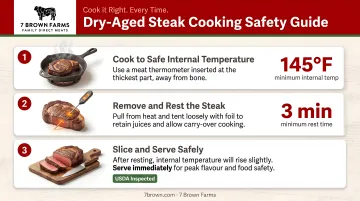
The USDA recommends cooking all whole-muscle beef steaks to a minimum internal temperature of 145°F (62.8°C), followed by a mandatory 3-minute rest. For dry aged beef specifically, where the protective outer crust has been trimmed away, hitting that temperature is your final food safety checkpoint.
A few practical rules for the grill or pan:
- Cook faster than you expect — reduced moisture means dry aged steaks reach temperature quicker than fresh cuts
- Use an instant-read thermometer — don't rely on timing alone; pull the steak at 145°F and rest for 3 minutes
- Expect less shrinkage — research confirms dry-aged beef loses significantly less volume during cooking due to its lower moisture content
Never Eat Dry Aged Beef Raw
The same aging process that builds flavor does nothing to make beef safe for raw consumption. Unlike steak tartare or carpaccio—which use ultra-fresh cuts handled under strict raw-food protocols—dry aged beef is not processed with raw eating in mind. Cooking is what eliminates surface bacteria that handling can introduce.
Why Home Dry Aging Is a Safety Risk
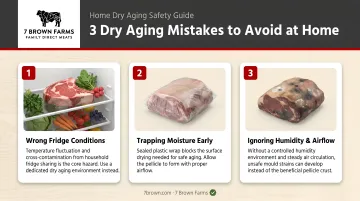
The USDA explicitly warns: "USDA does not recommend aging beef in a home refrigerator." A standard home refrigerator cannot safely replicate commercial conditions.
Temperature Fluctuations
Commercial aging requires stable temperatures near 34-38°F. Comprehensive studies of 200 U.S. homes found that over 66% of refrigerator doors and 25% of bottom shelves averaged temperatures above 40°F, with fluctuations of up to 26°F due to defrost cycles and door openings. These fluctuations push meat into the "Danger Zone," allowing rapid pathogen growth.
Lack of Humidity and Airflow Control
Home refrigerators lack the hygrometers and variable-speed fans required to maintain 75-85% relative humidity and 0.2-2.5 m/s airflow. Without these controls, meat either rots from excess humidity or dehydrates too rapidly, preventing proper enzymatic tenderization.
Contamination Risk
Dry aging requires exposed meat — which is a problem when your fridge also holds dairy, produce, and condiments that harbor competing bacteria and strong odors. Over days or weeks, unprotected meat absorbs those contaminants, producing stale, off-putting flavors instead of the complex, nutty notes that controlled aging develops.
The Surface-Area Problem
Attempting to age individual steaks at home results in losing over 50% of usable meat to surface decay—by the time any legitimate aging effect could occur, the steak is largely inedible. Commercial aging uses large primal cuts where the ratio of protective crust to usable interior meat is favorable. Individual steaks simply don't have enough interior mass to survive the process.
Common Safety Mistakes to Avoid
Three mistakes account for most dry aged beef problems at home:
Buying from unverified sources. "Dry aged" on a label means nothing without USDA inspection, purpose-built aging environments, and controlled handling. Ask any seller directly about their setup and inspection status before purchasing.
Judging safety by appearance alone. Dark color and firm texture are normal aging characteristics — don't discard safe, high-quality meat over them. That said, off smells or unusual surface mold aren't "just part of the process." When something smells wrong, trust it.
Skipping the thermometer. Dry aged beef is denser and leaner than fresh cuts, so it cooks faster and behaves differently in the pan. Time-based rules lead to both undercooking (a food safety risk) and overcooking (a waste of expensive meat). Use an instant-read thermometer every time.
Frequently Asked Questions
Is dry-aged steak safe to eat?
Yes, commercially produced dry aged beef from a USDA-inspected facility is safe when handled and cooked properly. The controlled aging environment prevents pathogen growth while enzymatic activity develops flavor and tenderness.
How can you tell if dry-aged beef has gone bad?
Smell is the primary indicator: nutty, funky aromas are normal, while acrid, ammonia-like, or sour odors signal spoilage. Slimy texture is also a red flag, though dark color alone is not.
Can you eat dry-aged steak raw?
No. Dry aged beef is processed for flavor and tenderness, not raw consumption, and should always be cooked to 145°F. It is not handled under the strict raw-food protocols used for tartare or carpaccio.
Does dry-aged beef have dangerous mold on it?
Some beneficial mold species naturally appear during aging and are trimmed before sale. Residual surface mold from incomplete trimming is a quality issue rather than a safety emergency. Extensive or unusually colored mold paired with off smells warrants contacting your supplier.
Is it safe to dry age beef at home?
No. Home refrigerators cannot replicate commercial conditions—they lack controlled temperature, humidity, and airflow. Beef stored in a home fridge absorbs other food odors and potentially unsafe bacteria rather than developing proper dry aged flavor.
What temperature should dry-aged steak be cooked to?
Cook all whole-muscle beef steaks to a minimum internal temperature of 145°F (62.8°C), followed by a 3-minute rest. Use an instant-read thermometer—dry aged steaks cook faster than fresh cuts due to lower moisture content.