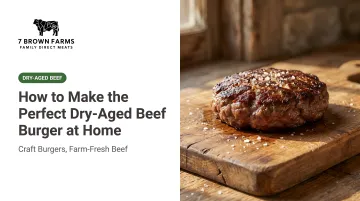
Key Takeaways
- Dry-aged beef concentrates umami and creates richness no fresh-ground beef can replicate
- Start with quality beef aged 14 days minimum; 28-45 days builds deeper umami and a noticeable nuttiness
- Use a 20-30% fat ratio, grind cold, and cook on cast iron to preserve dry-aged character
- Avoid salting the grind, overworking the patty, and pressing down while it cooks
What You Need Before You Start
The quality of your final burger is determined before you touch a pan. Beef source, fat content, and equipment readiness all shape the outcome. Home cooks can skip aging entirely by sourcing already dry-aged beef from a farm or specialty butcher.
Beef Selection
Best Cuts for Grinding:
- Chuck (shoulder): ~20% fat, classic burger choice with balanced flavor
- Brisket: Higher fat content, adds richness and deeper flavor
- Combination: Blend chuck and brisket for optimal fat distribution
Skip expensive cuts like ribeye for grinding. Grinding mechanically destroys muscle fibers, negating the tenderness advantage of premium steaks. Save ribeye for the grill; use chuck for burgers.
Sourcing Already Dry-Aged Beef
If you'd rather skip the aging equipment entirely, sourcing pre-aged beef is a practical shortcut. 7 Brown Farms ships 14-day dry-aged American Black Angus beef direct from the Missouri Ozarks — USDA inspected, no hormones or additives. Their Farmer Brown Grounds product delivers pre-ground chuck in an 80/20 blend, packaged in one-pound bricks, ready to form and cook.
Equipment and Ingredients
Essential Equipment:
- Meat grinder (stand mixer attachment or dedicated grinder) with multiple plate sizes (coarse 10-12mm, medium 6-8mm)
- Cast iron skillet (10-12 inch)
- Instant-read thermometer
- Baking sheet with wire rack
- Kitchen scale (optional — useful for consistent patty weights)
Core Ingredients:
- Dry-aged beef (14+ days aging; 28-45 days for maximum flavor)
- Unsalted butter for cooking
- Coarse salt (applied externally only, immediately before cooking)
- Freshly ground black pepper
- Quality bun (brioche or potato roll recommended)
- Optional toppings: aged cheeses (Gruyère, Comté, sharp cheddar), quality mayo, Dijon mustard, light aioli
Avoid overpowering toppings like heavy BBQ sauce or excessive raw onion that mask the dry-aged character.
How to Make the Perfect Dry-Aged Beef Burger at Home
Step 1: Trim and Cube the Beef
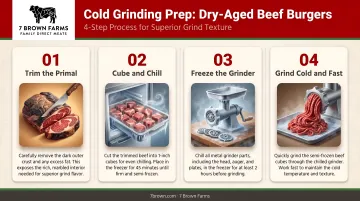
Start with cold beef straight from refrigeration. If grinding a whole dry-aged cut, trim the pellicle—the dark, dried outer crust. Reserve it separately; you can grind it through a fine plate and fold it back in at a 4:1 ratio (fresh meat to pellicle) for added umami depth.
Prep for Cold Grinding:
- Cut meat into uniform 1-inch cubes
- Spread cubes on a baking sheet in a single layer
- Freeze for 20-30 minutes until firm but not frozen solid
- Cold meat grinds cleanly; warm meat smears fat into protein, creating a dense, greasy texture
Step 2: Prepare Your Grinder and Achieve the Right Fat Ratio
Chill Your Grinder:
Place the grinder attachment, auger, blade, and plates in the freezer at least one hour before grinding—ideally overnight. Grinding meat above 40°F causes fats to smear, ruining texture. Meat should be kept near 30°F during grinding.
Calculate Your Fat Ratio:
Target fat percentage based on your cooking method:
- 20% fat: Ideal for pan-seared medium-rare burgers
- 25-30% fat: Better for grilled or well-done burgers
If your chosen cuts are leaner than desired, ask a butcher for fat trimmings to add by weight. An 80/20 ratio is the industry standard for balancing moisture retention and structure. A 70/30 blend causes excessive dripping and shrinkage during cooking.
Step 3: Grind and Form the Patties
Double-Grind Technique:
- Run meat through a coarse plate (10-12mm) for texture
- Grind through a medium plate (6-8mm) for cohesion
- If adding pellicle, grind it separately through a fine plate and fold in by hand
Form Patties Without Overworking:
- Divide into 6-8 oz portions
- Shape gently into a disk with minimal handling
- Press a shallow thumb dimple in the center to prevent puffing during cooking
- Transfer to a cold sheet pan while the skillet heats
Step 4: Cook the Burger
Why Cast Iron Wins:
Cast iron creates a deep, even sear and preserves subtle aged flavor notes that grill smoke can overpower with phenolic compounds. The Maillard reaction progresses rapidly once meat fibers reach 350°F, and cast iron's heat retention delivers that crust.
Cooking Sequence:
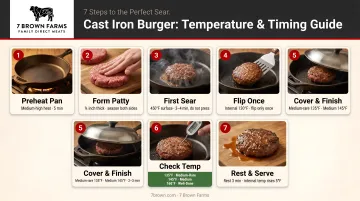
- Heat cast iron skillet on high for 4-5 minutes until wisps of smoke appear
- Reduce to medium-high heat
- Season one side of the patty with coarse salt
- Place patty seasoned-side-down in the pan
- Add two tablespoons unsalted butter
- Season the top side with salt and pepper
- Cook 2-3 minutes per side to reach medium (140-145°F internal)
Dry-aged beef cooks faster than fresh beef due to its reduced moisture content. Never press the patty with a spatula — you'll force out the flavorful juices that make this burger worth the effort.
Step 5: Build and Serve the Burger
Rest and Assemble:
- Remove patty from heat and tent loosely under foil for 3-5 minutes
- Toast bun cut-side down in residual butter for 1-2 minutes
- Build your burger with complementary toppings
Topping Recommendations:
- Aged cheeses like Gruyère, Comté, or sharp cheddar enhance umami
- Keep sauces simple: quality mayo, Dijon, or light aioli
- Avoid overpowering toppings that mask the aged beef's nutty, funky depth
Avoid overpowering toppings that mask the aged beef's nutty, funky depth
If you're starting with a quality dry-aged primal, the sourcing matters as much as the technique. 7 Brown Farms raises 100% American Black Angus in the Missouri Ozarks with a minimum 14-day dry age on every cut — the kind of beef where the flavor does most of the work for you.
Key Variables That Affect Your Dry-Aged Burger Results
Once the basic technique is in place, four specific variables determine the difference between a good burger and an exceptional one.
Aging Duration of the Beef
Flavor intensification from dry aging doesn't meaningfully begin until after 21 days. The first two weeks primarily tenderize meat through enzymatic breakdown; characteristic aged flavor compounds develop between 21-35 days.
Aging Timeline for Burgers:
- 14 days: Tenderization complete, baseline aged flavor
- 21-28 days: Glutamate rises 30-45%, umami intensifies
- 30-45 days: Hypoxanthine accumulates, delivering nutty, funky complexity
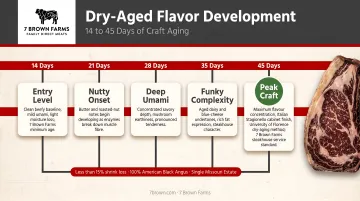
7 Brown Farms' standard 14-day aging delivers a clean, tender baseline well-suited for home cooks. Their 45-day option, processed using Italian Stagionello cabinet methods, achieves full steakhouse-level complexity while keeping shrink loss under 15% — notably below the 20-50% typical of conventional dry aging.
Fat-to-Meat Ratio
Fat carries and amplifies the volatile flavor compounds that dry aging produces. Too little and those aged notes barely register; too much and the burger turns greasy.
The 20/80 Rule:
- 20% fat for medium-rare pan-seared patties
- Push to 30% fat when grilling, cooking well-done, or incorporating very lean cuts
Fat ratio also interacts directly with grind coarseness — the two variables work together to shape texture and how much of the crust you actually taste.
Grind Coarseness
Plate size shapes texture and crust formation:
- Coarse grind: looser, chunkier bite that lets the beef's natural texture speak
- Medium grind: balanced structure and juiciness for most burger styles
- Fine grind: maximum crust surface area (ideal for smash burgers), though the patty can turn dense
The double-grind technique (coarse, then medium) splits the difference.
Cooking Temperature and Doneness
Internal temperature is the most objective guide:
- 130-135°F: Medium-rare
- 140-145°F: Medium
The USDA mandates cooking ground beef to 160°F to eliminate pathogens redistributed during grinding. That said, dry-aged beef enters the pan already lower in moisture content. The pre-existing moisture reduction means even a fully cooked patty holds together better and stays juicier than you'd expect from fresh ground beef.
Common Mistakes When Making Dry-Aged Beef Burgers
Salting the grind: Mixing salt into ground beef draws out myofibrillar proteins, producing a dense, sausage-like texture instead of a tender patty. Season the exterior only, immediately before the patty hits the heat.
Overworking the patty: Excessive handling compresses fat and protein structure, eliminating the loose grind that makes burgers tender. Form with minimal pressure.
Letting meat warm up: Fat smears rather than cuts when warm, creating a greasy, dense patty with poor crust formation. Cold equipment and cold meat are non-negotiable.
Using the grill without adjustment: High char and smoke flavors can mask the complex flavor dry aging develops. If grilling, start over indirect heat to cook through, then finish briefly on direct heat. Cast iron remains the more reliable option for preserving those flavors.
Troubleshooting Common Problems
Dry, Flavorless Patty Beef aged under 21 days rarely delivers noticeable flavor once ground, and a fat ratio below 20% compounds the problem. Increase fat content to 20-25% and confirm aging duration with your supplier before grinding.
Patty Crumbles or Falls Apart The most common causes are a coarse grind, low fat content, or patties that were frozen solid before cooking. To fix it:
- Run the meat through a medium plate on the second grind pass
- Keep fat content at 20% minimum
- Chill formed patties 15-20 minutes in the refrigerator — not the freezer
Excessive Smoke or Burning in the Pan This usually means the butter hit an overheated skillet, or the fat content is high enough to render fast and hard. A few adjustments help:
- Add butter only after pulling heat back to medium-high
- Use a well-seasoned cast iron pan
- Run the hood fan at maximum
- If fat exceeds 30%, consider moving the cook outdoors
Frequently Asked Questions
Is dry-aged beef good for burgers?
Dry-aged beef makes exceptional burgers because grinding distributes concentrated umami flavor throughout the patty. The result is noticeably more complex than standard ground beef, with nuttiness and depth that justify the extra cost.
What does a dry-aged beef burger taste like?
Intensely beefy with a nutty, slightly funky richness similar to aged cheese. More savory and complex than fresh-ground patties, with a tender texture and deeply caramelized crust when cooked in cast iron.
What is the point of dry-aged beef?
Dry aging serves two purposes: enzymatic tenderization (first 21 days) and moisture evaporation that concentrates flavor proteins and fats (21+ days onward). The process yields meat that is both more tender and more flavorful than fresh beef — without additives or shortcuts.
What is prime dry-aged beef?
"Prime" refers to the USDA grading system indicating exceptional marbling. Prime dry-aged beef combines maximum fat marbling with flavor concentration from aging, making it the premium tier for steaks and burgers. Only about 11% of U.S. beef achieves Prime grade.
Is prime beef good for burgers?
Prime-grade beef delivers outstanding fat content and flavor. For burgers specifically, marbling and aging duration matter more than the USDA grade label — grinding equalizes texture regardless of grade.
Do you need a meat grinder to make dry-aged beef burgers at home?
A meat grinder delivers the best results and full control over fat ratio and grind texture. That said, you can ask a butcher to grind dry-aged beef to order, or purchase pre-ground dry-aged blends direct from farms like 7 Brown Farms — no equipment required, and quality stays intact.