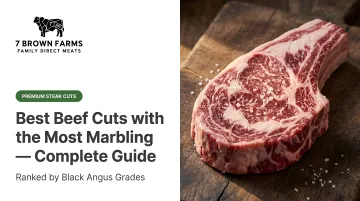
This guide will walk you through everything you need to know about marbled beef: a clear definition of what marbling actually is, the six cuts that consistently deliver the highest levels, the four factors that determine how much marbling develops, and how to shop for it with confidence whether you're at the butcher counter, ordering online, or buying direct from a farm.
Key Takeaways
- Marbling is intramuscular fat distributed through muscle fibers; finer, more even streaks mean better flavor and tenderness
- Ribeye, short ribs, brisket, and chuck roll rank among the highest-marbling cuts; New York strip and T-bone offer moderate marbling
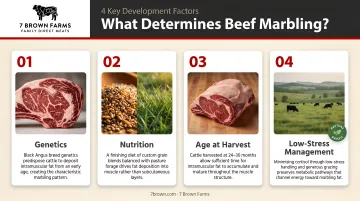
- Breed (Angus, Wagyu), grain-finishing diets, harvest age, and muscle usage are the four primary factors driving marbling development
- USDA Prime carries the highest marbling score; Choice is widely available; Select has minimal marbling
- Choose USDA Prime or top-tier Choice and look for fine white flecks spread evenly across the cut, not thick clumps
What Is Beef Marbling and Why Does It Matter?
Marbling is intramuscular fat (IMF)—fat deposited between bundles of muscle fibers, distinct from exterior fat you trim away before cooking. The visual hallmark is thin white flecks or streaks woven through red muscle tissue, resembling the patterns in marble stone.
The Science Behind Marbling's Impact on Flavor
As steak cooks, intramuscular fat melts and bastes the meat from the inside, increasing juiciness and preventing dryness. This fat carries fat-soluble flavor compounds that lean muscle tissue alone cannot deliver, producing richer, more intense savory notes. The more marbling present, the more pronounced these effects become.
How USDA Grading Measures Marbling
The USDA grades beef by evaluating marbling in the ribeye muscle exposed between the 12th and 13th ribs. The grade assigned at this single reference point applies to the entire carcass.
| USDA Grade | Marbling Requirement | 2024 Production Share | Practical Meaning |
|---|---|---|---|
| Prime | Slightly Abundant | 11.33% | Highest marbling, exceptionally tender and juicy, sold primarily in upscale restaurants |
| Choice | Small | 72.31% | Moderate marbling, representing most retail beef supply |
| Select | Slight | 13.95% | Leaner, less juicy, lacks rich flavor of higher grades |
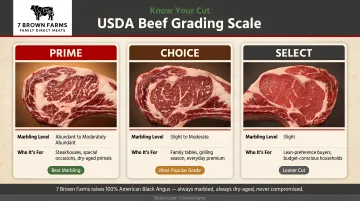
USDA Prime represents just over 11% of federally graded beef—a highly exclusive product. Buyers seeking maximum flavor should target Prime or the upper tiers of Choice.
The Health Profile of Marbled Beef
Marbling fat is predominantly unsaturated, containing high levels of monounsaturated fatty acids (MUFA), particularly oleic acid—the same heart-healthy fat found in olive oil. Well-raised, grain-finished Black Angus beef can provide a favorable omega-6 to omega-3 ratio, making marbled beef a smart nutritional choice, not just a culinary one. 7 Brown Farms' custom grain-finishing program in the Missouri Ozarks is built around this balance—developing intramuscular fat distribution while maintaining the omega fatty acid composition their single-estate Black Angus is known for.
The Best Beef Cuts with the Most Marbling
Muscles that do the least physical work during the animal's life develop the most intramuscular fat. The rib and loin sections of the steer consistently outmarble cuts from the leg, shoulder, and rump because these muscles experience minimal exertion.
Ribeye (Rib Section)
The ribeye is the single highest-marbling steak cut available, taken from ribs 6 through 12 where the longissimus muscle does minimal work. The cut features a distinct "eye" of lean meat surrounded by a cap of marbled fat called the spinalis muscle, widely considered the most flavorful part of the entire steer.
Both bone-in versions (cowboy cut and tomahawk) and boneless ribeyes deliver the most consistently marbled eating experience of any steak. The spinalis dorsi cap wraps around the longissimus and is celebrated for its intense marbling and exceptional tenderness.
Best cooking approach: High-heat grilling or cast iron searing to medium-rare allows the marbling to render fully into the meat. Overcooking depletes the advantage that marbling provides.
Short Ribs (Rib Section / Short Plate)
Short ribs are one of the most intensely marbled beef cuts, taken from the lower rib and short plate area. They feature thick bands of intramuscular fat between layers of rich muscle.
Unlike steak cuts, short ribs excel in slow cooking (braising, smoking, or low-and-slow roasting) where extended gentle heat fully renders the marbling into a deeply flavorful, fall-off-the-bone result. English-cut (bone-in, single rib segment) and flanken-cut (cross-cut across several ribs) are the two main butchering styles, and both carry exceptionally high marbling scores.
Best cooking approach: Braise low and slow at 275–300°F for 3–4 hours, or smoke over indirect heat. Patience is what converts the fat layers into flavor.
Brisket (Brisket Primal)
Brisket comes from the chest/pectoral muscles — one of the hardest-working areas on the steer. Yet it develops significant fat marbling because of the large amounts of connective tissue and intramuscular fat needed to support the animal's weight.
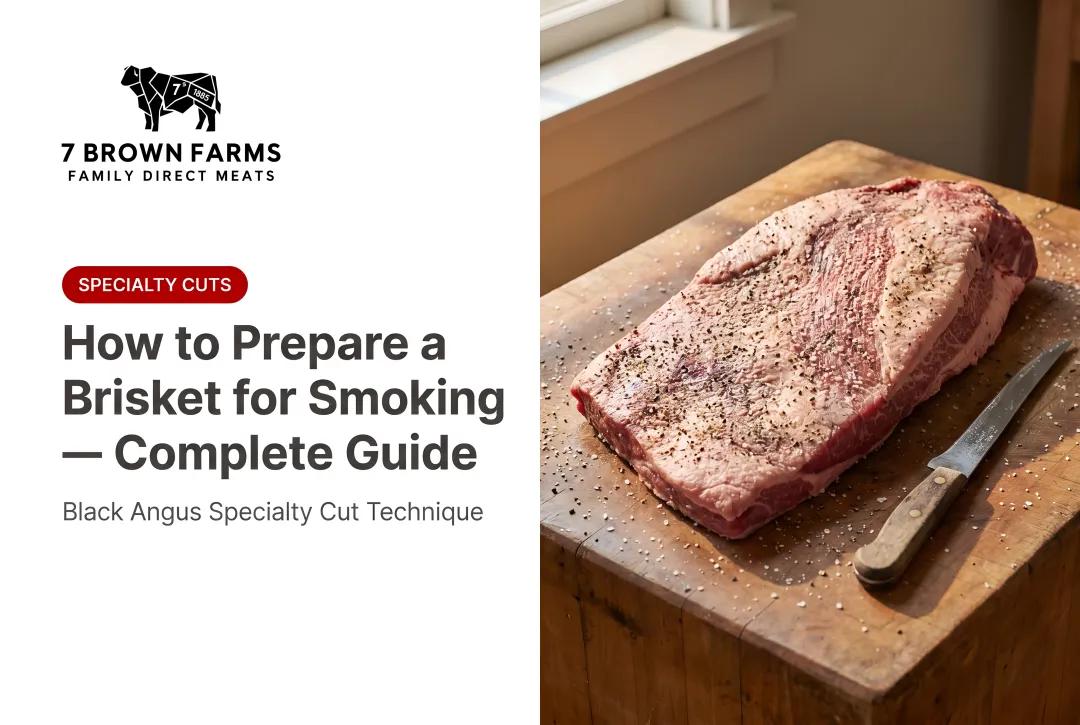
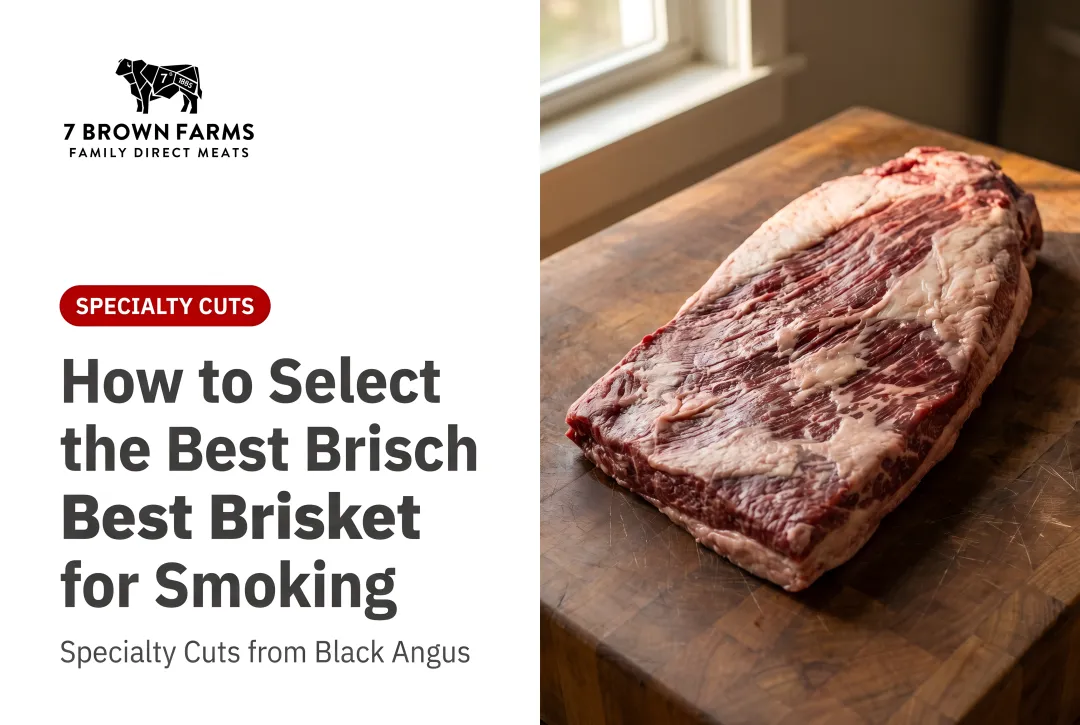
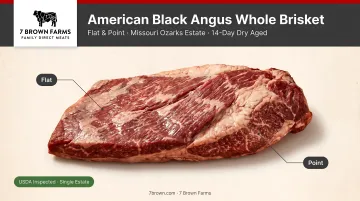
The brisket consists of two muscles: the flat and the point. The point end carries far more marbling and is prized in competitive BBQ for its richness. The flat is leaner and requires careful cooking to avoid dryness.
Brisket requires long, low-and-slow cooking (smoking, braising) to break down collagen while the marbling bastes the meat. This combination is what makes Texas-style smoked brisket one of the most celebrated applications of beef marbling. For cooks who want to start with a better brisket, 7 Brown Farms dry-ages their brisket a minimum of 14 days — a process that concentrates the deep marbling developed through a custom grain-finishing program unique to the Missouri Ozarks.
Best cooking approach: Smoke at 225–250°F, targeting an internal temp of 195–205°F. Rest for at least one hour before slicing to let the marbling redistribute.
Chuck Roll (Chuck Primal)
The chuck roll is a sleeper cut with surprising marbling levels, taken from the neck and shoulder area. While the shoulder works hard, the chuck roll contains a mix of heavily worked muscles and heavily marbled connective tissue zones. Chuck's fat content rivals many premium cuts and rewards slow cooking.
Chuck roasts, braised preparations, and smash burgers all benefit from chuck's marbling. Ground chuck at an 80/20 lean-to-fat ratio is the most marbled ground beef option available. It's the standard for premium burger patties — delivering the right balance of flavor and juiciness without drying out on the grill.
New York Strip / Strip Steak (Short Loin)
The strip steak (New York strip) is a steakhouse classic from the short loin: moderately well-marbled with a tighter grain than ribeye. It produces a balance of tenderness and substantial, beefy chew. The strip has less overall marbling than ribeye but delivers a firmer texture some beef lovers prefer.
The strip side of a T-bone or porterhouse is the same muscle. Buying a T-bone or porterhouse gives access to both the strip's moderate marbling and the tenderloin's lean tenderness in one cut.
Tenderloin / Filet Mignon (Short Loin / Sirloin)
The tenderloin is the least-used muscle in the entire steer, running along the spine. While it is the most tender cut of beef, it is among the lowest in marbling. Tenderness and marbling are separate qualities: tenderloin owes its texture to minimal muscle use and fine grain, not fat content.
Filet mignon's lack of marbling means it has a milder, cleaner flavor compared to ribeye or strip. It's often wrapped in bacon or served with butter sauces to compensate for the limited intramuscular fat.
What Factors Create Well-Marbled Beef?
Breed
Cattle breed is one of the most predictable determinants of marbling potential. Angus cattle are genetically predisposed to produce consistent intramuscular fat throughout the carcass—one of the most reliably marbled breeds raised in the U.S.
Wagyu (Japanese Black) genetically produces the highest marbling scores globally. While USDA grading caps out at Prime, the Japanese Meat Grading Association uses a Beef Marbling Standard (BMS) scale from 1 to 12. Fullblood Wagyu can achieve BMS scores of 10 to 12, corresponding to intramuscular fat levels of 35% or higher.
That far exceeds the 8–13% IMF found in USDA Prime — the ceiling most American beef never breaks.
7 Brown Farms raises 100% American Black Angus on a single Missouri Ozarks estate — a breed and environment pairing chosen specifically for consistent marbling potential.
Diet and Finishing
Grain-finishing (providing a high-energy corn or grain diet during the final months before harvest) accelerates intramuscular fat deposition over strictly grass-finished cattle. Virtually all USDA Prime beef comes from grain-finished animals.
Custom grain-finishing programs unique to specific farms and regions can further differentiate marbling quality. 7 Brown Farms employs a custom grain blend designed to optimize omega-6 and omega-3 balance while maximizing marbling development during the final 100+ days before processing. The Ozark climate — temperate summers, mild winters — supports steady fat deposition that aligns with this finishing window.
Age at Harvest
Cattle harvested too young haven't had time to deposit intramuscular fat; harvested too old, they become lean and tough from muscle breakdown. Most premium beef cattle are harvested between 18–30 months—a window that optimizes marbling without sacrificing tenderness.
Muscle Usage (Anatomy)
Cuts from low-movement muscles (rib, loin, short loin, short plate) consistently outmarble cuts from high-movement muscles (round, shank, flank). Knowing where on the steer a cut comes from is the fastest way to predict its marbling potential.
Quick reference — what drives marbling:
- Breed: Angus and Wagyu genetics produce the highest IMF levels
- Finishing diet: Grain-finishing accelerates intramuscular fat over grass-alone programs
- Harvest timing: 18–30 months balances fat development with tenderness
- Muscle location: Low-movement muscles (rib, loin) consistently outmarble active muscles (round, shank)
How to Spot and Buy Well-Marbled Beef
Visual Inspection
Look for fine marbling—thin, evenly distributed white streaks throughout the cut, resembling a spider web pattern. Avoid coarse marbling—thick clumps of fat unevenly distributed, which won't melt uniformly and can result in inconsistent texture.
Trained sensory panels have found that steaks with coarse-textured marbling are juicier and carry more intense beef flavor than fine or medium-marbled cuts—though fine marbling remains the visual preference for most consumers.
Brighter cherry-red muscle color paired with bright white fat is a sign of freshness.
Grade Labels and Sourcing
USDA Prime is the highest-marbled grade commercially available but represents only 11% of all beef produced. Most grocery store beef is Choice or Select.
Buying directly from USDA-inspected, single-estate farms gives buyers access to consistently well-marbled cuts that rarely reach retail shelves. 7 Brown Farms, for example, ships grain-finished Ozark Black Angus nationwide within two days, with every cut carrying a 14-day minimum dry-aging baseline.
Dry Aging as a Marbling Enhancer
Dry aging concentrates flavors and tenderizes beef by allowing moisture to evaporate and enzymes to break down muscle fibers. This amplifies the effect of marbling on taste.
Dry aging timeline:
- 14 days: Significant improvement in tenderness compared to unaged beef
- 21 days: Peak development of brown-roasted and nutty flavor notes
- 45 days: Development of intense, complex flavors including bold umami notes
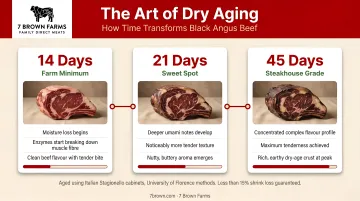
When evaluating dry-aged beef, shrink loss is a practical quality indicator — lower loss means less waste and more concentrated flavor. Industry processors typically see 20–50% shrink loss; tighter operations using precision curing equipment, like 7 Brown Farms' Italian Stagionello cabinets, hold that figure below 15% on their 45-day primals.
Conclusion
Now that you know which cuts carry the most marbling — ribeye, short ribs, brisket, chuck — you can make confident calls at the butcher counter, a restaurant, or when ordering direct from a farm. The difference between a forgettable steak and one worth talking about almost always traces back to fat distribution before the cut ever hits heat.
If you want to know exactly where your beef comes from, 7 Brown Farms raises 100% American Black Angus on a single Missouri Ozarks estate — and ships directly to your door. Every order is:
- USDA inspected and custom grain-finished in the Missouri Ozarks
- Minimum 14-day dry-aged for deeper flavor and tenderness
- Raised without hormones, antibiotics, or additives
- Shipped nationwide in two days, arriving frozen tight
Appointment-based delivery is available within 100 miles of the farm. Contact Farmer Brown at 314-540-5515 or visit 7 Brown Farms to place a custom order.
Frequently Asked Questions
Frequently Asked Questions
What cut of beef has the most marbling?
The ribeye consistently holds the highest marbling of any steak cut, followed by short ribs, brisket, and chuck for slow-cooking cuts. USDA Prime ribeye represents the peak of marbling available in the U.S. grading system.
What does well-marbled beef mean?
Well-marbled beef contains an abundant, evenly distributed network of fine intramuscular fat streaks throughout the muscle (distinct from exterior fat) that melts during cooking. The result is superior flavor, juiciness, and tenderness.
How do you tell if beef is well marbled?
Well-marbled beef displays thin, evenly spread white streaks woven through cherry-red muscle. Coarse, thick clumps of fat are less desirable. USDA Prime or top-end Choice grade labels are reliable shorthand for confirmed marbling quality.
What does marbled beef taste like?
Marbled beef tastes richer, more buttery, and more intensely beefy than lean cuts. The intramuscular fat melts during cooking, basting the meat from within and carrying fat-soluble flavor compounds that lean muscle simply can't match.
Which cut of beef has the least marbling?
The round (eye of round, top round, bottom round), shank, and flank are the leanest, least-marbled cuts because they come from the hardest-working muscles on the steer. The tenderloin (filet mignon) is also low in marbling despite being the most tender cut.
What is the poor man's ribeye?
The chuck eye steak is widely known as the "poor man's ribeye" because it is cut from the same longissimus muscle as the ribeye, just slightly further forward toward the shoulder (ribs 4 and 5). It delivers comparable marbling and flavor at a notably lower price.